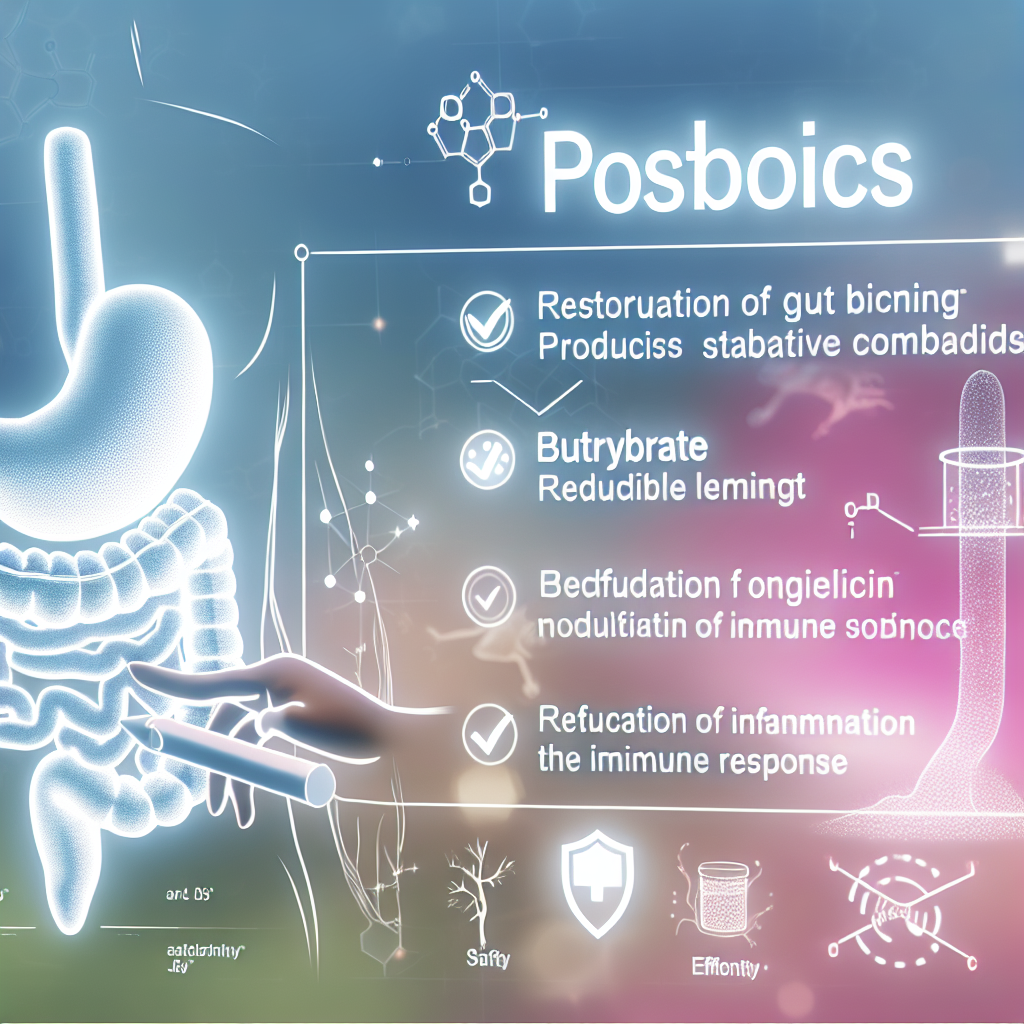
Postbiotic Metabolite Supplementation: Directly Introducing Beneficial Bacterial Byproducts for Gut Lining Repair
Introduction
The human gut microbiome—a vast and intricate ecosystem made up of trillions of microorganisms—continues to reveal its vital importance in maintaining digestive health, immune function, and overall well-being. While probiotics (beneficial bacteria) and prebiotics (their food source) have traditionally dominated research and product development aimed at supporting gut wellness, a third emerging category—postbiotics—is now gaining significant attention.
Postbiotics are the metabolic byproducts generated by beneficial microbial fermentation, particularly during the breakdown of dietary fibers. These include short-chain fatty acids (SCFAs) such as butyrate, acetate, and propionate, along with bioactive peptides, enzymes, organic acids, and microbial cell wall components. Remarkably, these compounds can be delivered directly to the body without requiring live bacteria—a key advantage for individuals with immune sensitivities, who may not tolerate traditional probiotic supplements.
The gut lining, also known as the intestinal barrier, consists of a tightly regulated layer of epithelial cells and tight junction proteins, which control what enters the bloodstream from the intestines. When compromised—a condition referred to as intestinal permeability or “leaky gut”—potentially harmful substances like bacterial toxins, food antigens, and pathogens can cross into the bloodstream. This can trigger chronic inflammation, contribute to autoimmune diseases, and exacerbate gastrointestinal disorders such as Irritable Bowel Syndrome (IBS), Crohn’s disease, and ulcerative colitis.
Butyrate, one of the most well-studied SCFAs, stands out due to its unique ability to fuel colonocytes (the cells lining the colon), promote tight junction integrity, reduce inflammation, and enhance mucin production—a gel-like layer that protects gut tissues. By providing postbiotics like butyrate directly, supplementation offers a promising therapy aimed at reinforcing the gut barrier and modulating immune responses without needing to rebalance or repopulate the gut flora.
Features and Supporting Studies
Butyrate and Gut Barrier Function
Increasing amounts of both clinical and preclinical research underscore the efficacy of postbiotic supplementation, particularly butyrate, in gut lining repair. A pivotal paper in Nature Reviews Gastroenterology & Hepatology emphasized how butyrate strengthens the intestinal barrier by upregulating tight junction proteins, enhancing epithelial regeneration, and reducing intestinal permeability. This is critically important for those with inflammatory bowel disease (IBD) or intestinal dysfunction due to antibiotic overuse, chronic stress, or poor diet.
Moreover, butyrate has been shown to reduce oxidative stress, inhibit nuclear factor-kappa B (NF-κB)—a major pathway in chronic inflammation—and foster epithelial cell differentiation. It also serves an essential role in colonocyte metabolism, providing up to 70% of their energy needs, thereby helping to maintain mucosal integrity.
Lactobacillus-Derived Postbiotics and Anti-Inflammatory Effects
In a study published in the Journal of Functional Foods, postbiotic compounds produced by Lactobacillus plantarum exhibited strong anti-inflammatory, antimicrobial, and barrier-enhancing properties. These metabolites not only lowered the expression of pro-inflammatory cytokines like IL-6 and TNF-alpha but also increased the production of mucin and tight junction proteins in intestinal tissues.
This protective action is especially useful in offsetting gut lining damage caused by infections, environmental toxins, and autoimmune responses, making Lactobacillus-derived postbiotics a compelling therapeutic tool in gut health protocols.
Clinical Evidence in IBS Treatment
A double-blind, placebo-controlled trial published in Clinical Nutrition ESPEN explored the effect of sodium butyrate supplementation in individuals with Irritable Bowel Syndrome (IBS). Over six weeks, participants who received oral sodium butyrate reported significant improvements in abdominal pain, bloating, and irregular bowel movements compared to the placebo group. These results highlight butyrate’s potential to alleviate symptoms by directly influencing intestinal homeostasis and visceral sensitivity.
Postbiotics and Ulcerative Colitis
In patients suffering from ulcerative colitis, SCFA (particularly butyrate) administration via enema has demonstrated measurable improvements in mucosal healing, according to a study in The American Journal of Clinical Nutrition. This supports the notion that local delivery of postbiotics can help restore barrier integrity in affected regions of the colon, thereby improving symptom relief and minimizing flare-ups.
Regulation of Immune Responses
Beyond local gut effects, postbiotics help train the immune system. As shown in a study from Frontiers in Immunology, SCFAs and bacterial cell wall fragments support the differentiation of regulatory T cells (T-regs). These cells are responsible for maintaining immune tolerance, preventing excessive immune reactions, and balancing Th1/Th2 cytokine responses—key functions in controlling inflammatory diseases and autoimmune conditions.
Advantages Over Probiotics
Because postbiotics are non-living, they eliminate concerns associated with infectious risks, bacterial overgrowth, or the need for microbial colonization. This makes them especially suitable for:
– Individuals with immunocompromised systems
– People undergoing antibiotic or chemotherapy treatments
– Patients with severe gut dysbiosis
Moreover, postbiotic formulas offer standardized dosing, consistent potency, and longer shelf life compared to probiotics, providing a highly accessible and safe alternative for enhancing gut resilience.
Conclusion
Postbiotic supplementation marks a pivotal shift in natural gut health strategies, offering a direct, targeted way to support intestinal barrier function, modulate inflammation, and enhance gut-immune interaction. Rather than relying on live bacterial colonization, postbiotics deliver the precise therapeutic metabolites—like butyrate—needed to immediately reinforce and repair the gut lining. From treating IBS, ulcerative colitis, and leaky gut, to supporting general digestive vitality, postbiotics may represent the next generation of functional gut therapeutics. Their stability, safety, and efficacy underscore their growing relevance in both clinical settings and daily health routines.
Concise Summary
Postbiotics—non-living metabolic byproducts of beneficial bacteria—offer a powerful, stable approach to healing the gut lining. Unlike probiotics and prebiotics, postbiotics like butyrate directly enhance gut barrier integrity by fueling colon cells, tightening junctions, and reducing inflammation. Supported by clinical studies, they’ve shown benefits in IBS, ulcerative colitis, and immune regulation. Because they don’t require live microbes, they’re ideal for those with compromised immunity. With growing evidence of their advantages, postbiotic supplementation represents a revolutionary step in digestive health and inflammation management.
References
1. Parada Venegas, D., De la Fuente, M.K., Landskron, G. et al., 2019. Short Chain Fatty Acids (SCFAs)-Mediated Gut Epithelial and Immune Regulation and Its Relevance for Inflammatory Bowel Diseases. Nature Reviews Gastroenterology & Hepatology
2. Banasiewicz, T., Kowalski, T., Paradowski, L. et al., 2013. A Controlled, Double-Blind, Randomized Study on the Effects of Sodium Butyrate in Treatment of Patients with Irritable Bowel Syndrome. Clinical Nutrition ESPEN
3. Rooks, M. G., Garrett, W. S., 2016. Gut Microbiota, Metabolites and Host Immunity. Frontiers in Immunology
4. Rodríguez-Daza, M.C., Pulido-Mateos, E.C., Lupien-Meilleur, J. et al., 2021. Postbiotics and Their Potential Applications in Early Life Nutrition and Beyond. International Journal of Molecular Sciences
5. Sivaprakasam, S., Prasad, P.D., Singh, N., 2016. Benefits of Short-Chain Fatty Acids and Their Receptors in Inflammation and Carcinogenesis. Pharmacology & Therapeutics

Dominic E. is a passionate filmmaker navigating the exciting intersection of art and science. By day, he delves into the complexities of the human body as a full-time medical writer, meticulously translating intricate medical concepts into accessible and engaging narratives. By night, he explores the boundless realm of cinematic storytelling, crafting narratives that evoke emotion and challenge perspectives.
Film Student and Full-time Medical Writer for ContentVendor.com