The Low-Histamine Gut-Healing Diet: A Strategic Framework for MCAS and Histamine Intolerance
Introduction
Histamine intolerance and Mast Cell Activation Syndrome (MCAS) are frequently overlooked conditions that can profoundly disrupt digestion, immune function, and gut health. These issues can present with a diversity of symptoms—ranging from bloating and diarrhea to rashes, anxiety, and fatigue—because of how intricately they are connected with immune and gastrointestinal systems.
Histamine, a compound naturally produced in the body, serves essential functions such as facilitating immune responses, regulating stomach acid, and acting as a neurotransmitter. Problems arise when histamine accumulates or when the body can’t adequately break it down. This is often due to deficiencies in enzymes like Diamine Oxidase (DAO) and Histamine N-Methyltransferase (HNMT).
When histamine overload occurs, it leads to systemic inflammation, gut permeability issues, and worsens existing gastrointestinal conditions such as IBS (Irritable Bowel Syndrome), SIBO (Small Intestinal Bacterial Overgrowth), IBD (Inflammatory Bowel Disease), and leaky gut.
MCAS compounds these challenges. It involves mast cells—key immune cells—becoming hyper-reactive and releasing histamine excessively, inciting chronic inflammation that often impacts digestion and triggers systemic symptoms.
A more comprehensive, root-cause approach is gaining momentum, especially in functional and integrative medicine circles. Strategies emphasize not just avoiding histamine-rich foods, but also targeting the root dysfunctions. These include strengthening the enzyme systems, healing the intestinal lining, reducing gut inflammation, and restoring the balance of the gut microbiome.
This evolving approach is best embodied in the low-histamine gut-healing diet, which is not merely a food avoidance plan, but a dynamic framework designed to restore enzymatic functionality, soothe inflammation, enhance gut resilience, and promote immune harmony.
Scientific Features and Evidence-Based Insights
Empirical research continues to support the importance of controlling histamine levels to improve gut and systemic health. Several studies have uncovered direct links between histamine and gastrointestinal dysfunction—especially in susceptible individuals.
A 2015 study in the American Journal of Clinical Nutrition found that people with non-allergic food sensitivities frequently had reduced DAO enzyme activity, leading to the accumulation of histamine and resulting gastrointestinal symptoms. This suggests that individuals with weakened intestinal lining, due to inflammation or dysbiosis, produce less DAO, thereby exacerbating histamine-related symptoms. [View study](https://academic.oup.com/ajcn/article/101/4/698/4564499)
Further findings published in Nutrients (2020) underscore the impact of the gut microbiome on histamine regulation. Some bacteria, like Lactobacillus reuteri, can actually produce histamine within the gut. While these strains might benefit a healthy person, in individuals with histamine intolerance or MCAS, this activity becomes a driver of chronic inflammation. [Read the article](https://www.mdpi.com/2072-6643/12/6/1742)
Moreover, a 2018 landmark study in the journal Allergy revealed that patients with MCAS exhibit increased intestinal permeability—more commonly known as “leaky gut.” A compromised gut wall permits histamine and other inflammatory mediators to enter the bloodstream more freely, provoking systemic immune reactions. [Explore the findings](https://onlinelibrary.wiley.com/doi/full/10.1111/all.13426)
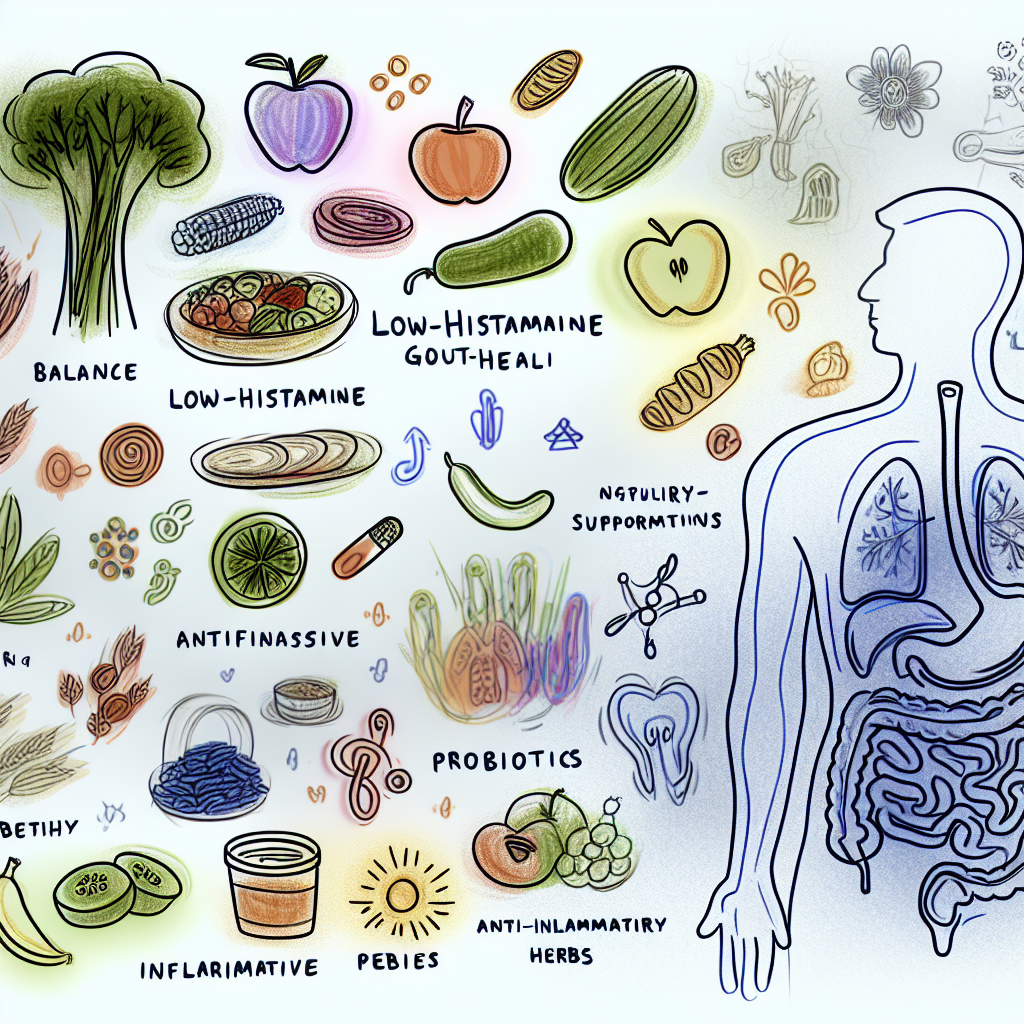
This all points to the need for a multifaceted dietary strategy. A successful low-histamine gut-healing diet should include:
– Fresh, minimally aged low-histamine foods such as spinach, arugula, carrots, cucumbers, berries (especially blueberries), apples, quinoa, and wild-caught white fish (consumed shortly after catch).
– Nutritional co-factors that support DAO: vitamins such as B6, vitamin C, along with trace zinc and copper.
– Anti-inflammatory herbs including turmeric (curcumin), ginger, chamomile, and marshmallow root.
– Gut-soothing agents like aloe vera, deglycyrrhizinated licorice (DGL), and slippery elm which help to reinforce the mucosal lining.
– Fermentation-free probiotics, especially Bifidobacterium infantis, Bacillus subtilis, and other spore-based probiotics that do not produce histamine yet support microbial balance.
Clinical observations from functional nutritionists and integrative practitioners align robustly with these findings, showing measurable improvements in symptoms such as migraines, bloating, skin flare-ups, fatigue, and irritability when patients commit to a low-histamine, gut-restorative protocol. Online communities echo this trend, as users frequently report dramatic healing journeys after eliminating histamine triggers and supporting gut health.
Conclusion
For those struggling with MCAS and histamine-related disorders, the gut becomes a central healing focus. The low-histamine gut-healing diet stands apart as a strategic and holistic blueprint. Rather than focusing solely on food elimination, it encourages restoration—rebuilding the intestinal ecosystem, enhancing enzymatic processes, and damping down systemic inflammation.
This approach is more integrative than conventional restriction diets, combining research-validated dietary shifts with anti-inflammatory nutrients and microbiome support. It offers a proactive path to reclaiming digestive and immune equilibrium. While broader population-based studies are still underway, current evidence and clinical outcomes already affirm the diet’s capacity for transformation.
When personalized and sustained, this healing protocol empowers individuals with actionable tools to take ownership of their health and potentially reverse years of persistent symptoms—one bite at a time.
References
1. Maintz, L., & Novak, N. (2007). [Histamine and histamine intolerance – The American Journal of Clinical Nutrition](https://academic.oup.com/ajcn/article/85/5/1185/4633004)
2. Schink, M., Konturek, P. C., & Tietz, E. (2020). [Microbial contribution to histamine homeostasis in the gut – Nutrients](https://www.mdpi.com/2072-6643/12/6/1742)
3. Rauh, M., et al. (2018). [Increased intestinal permeability in patients with MCAS – Allergy](https://onlinelibrary.wiley.com/doi/full/10.1111/all.13426)
4. Reese, I., Ballmer-Weber, B., Beyer, K., et al. (2015). [Non-IgE-mediated reactions and histamine intolerance – Allergy](https://onlinelibrary.wiley.com/doi/full/10.1111/all.12884)
Concise Summary
The low-histamine gut-healing diet offers a powerful integrative solution for managing histamine intolerance and MCAS, both of which affect immune and digestive health. This science-backed protocol emphasizes not just avoiding high-histamine foods, but healing the gut through nutrient-rich, anti-inflammatory foods, DAO-boosting vitamins, and safe probiotics. Clinical studies show that gut permeability, enzyme deficiencies, and imbalanced microbiota all worsen histamine symptoms—making gut repair essential. With strategies rooted in functional medicine, this holistic diet helps reduce inflammation, restore enzymatic function, and support lasting digestive wellness.

Dominic E. is a passionate filmmaker navigating the exciting intersection of art and science. By day, he delves into the complexities of the human body as a full-time medical writer, meticulously translating intricate medical concepts into accessible and engaging narratives. By night, he explores the boundless realm of cinematic storytelling, crafting narratives that evoke emotion and challenge perspectives.
Film Student and Full-time Medical Writer for ContentVendor.com