The Future of Gut Health: AI-Driven Personalized Protocols for Chronic Digestive Disorders
In recent years, the confluence of artificial intelligence (AI) and medical research has opened new frontiers in healthcare, offering unprecedented possibilities for diagnosis, treatment, and management of chronic conditions. Among these advancements, AI-driven personalized protocols are poised to revolutionize the management of chronic digestive disorders—a spectrum of conditions that includes irritable bowel syndrome (IBS), Crohn’s disease, and ulcerative colitis. These disorders affect millions of individuals worldwide, causing chronic pain, discomfort, and a significant impact on quality of life. Traditional treatments often follow a one-size-fits-all approach, primarily focusing on symptomatic relief rather than addressing the root causes.
The gut microbiome, a diverse ecosystem of trillions of microorganisms residing in our digestive tract, plays a crucial role in maintaining gut health. Recent advances in genetic sequencing and bioinformatics have unraveled the immense complexity of these microbial communities, revealing their significant influence on digestion, immunity, and even mental health. Yet, the intricate interactions within this microbiome are unique to each individual, influenced by genetics, diet, lifestyle, and environment—hence a need for highly individualized treatment strategies.
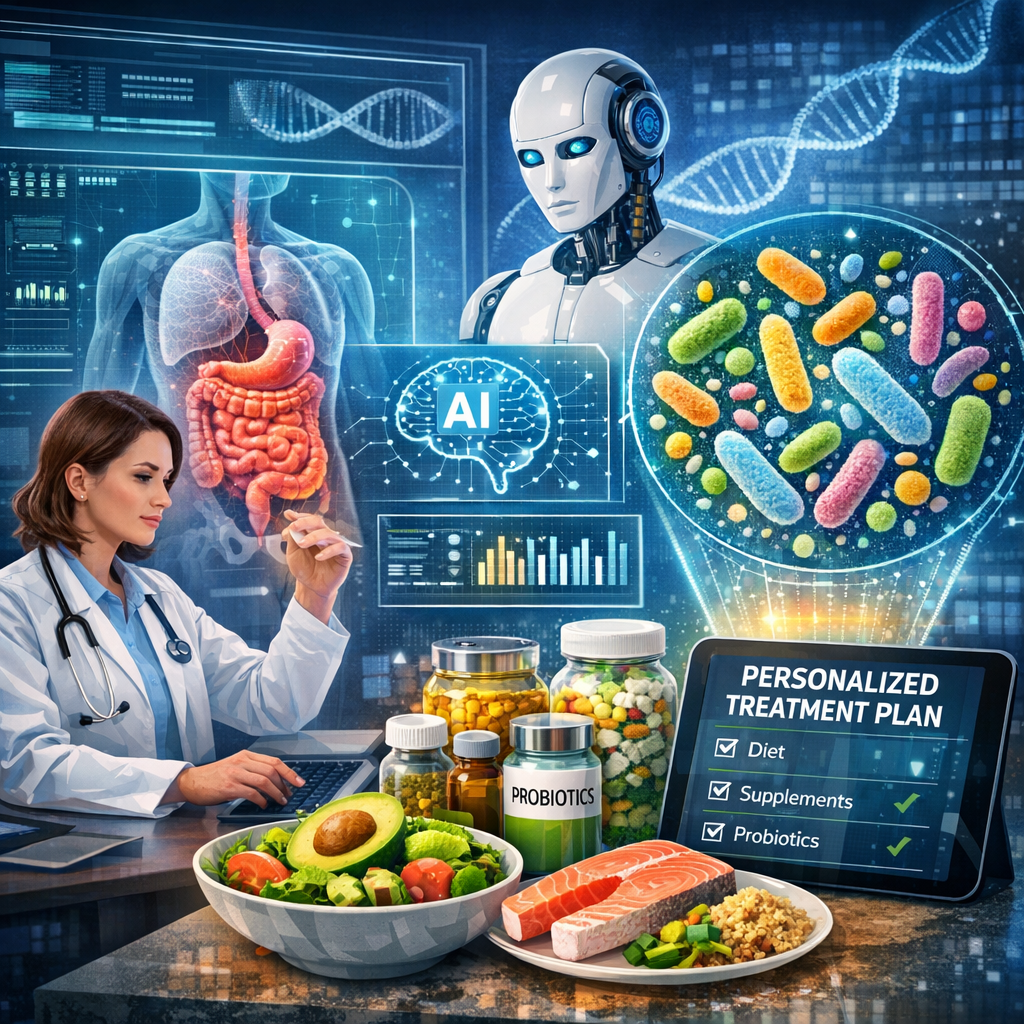
Enter artificial intelligence—a game changer in personalizing medicine. By harnessing the power of machine learning algorithms and vast datasets from gut microbiome analyses, AI systems have the potential to develop personalized treatment plans tailored to the unique needs and microbial makeup of an individual. AI-driven models can predict how different people will respond to specific dietary changes, probiotics, and herbal supplements, ultimately promoting better gut health outcomes.
The role of AI extends beyond individual care. By integrating data from millions of users, AI can also identify novel patterns and insights, leading to the discovery of new treatment modalities and a deeper understanding of gut health dynamics. This transformative approach promises not only more effective management of chronic digestive disorders but also the potential for early detection and risk assessment, allowing for preventive measures to be implemented well before symptoms manifest.
Features: Scientific Studies Supporting AI-Driven Gut Health Management
Several cutting-edge studies have underscored the efficacy and potential of AI in the realm of gut health management. A landmark study published in [“Nature Medicine”](https://www.nature.com/articles/s41591-019-0410-x) in 2019 demonstrated that AI algorithms could accurately predict blood sugar responses to different foods based on individual gut microbiome profiles. This research highlights the capacity of AI to consider the unique gut composition of individuals, suggesting significant potential for managing IBS and similar conditions through personalized dietary recommendations.
Moreover, a 2021 study in [“Gastroenterology”](https://www.gastrojournal.org/article/S0016-5085(21)00193-X/fulltext) explored AI utilization in evaluating gut microbiome composition to identify patients at risk for inflammatory bowel disease (IBD). Using machine learning, the research effectively distinguished between healthy individuals and those at high risk, showcasing AI’s role in early diagnosis and personalized intervention strategies.
Another promising field is the application of AI in analyzing data from wearable health devices. These devices collect real-time data on various health parameters such as heart rate, activity levels, and sleep patterns, which can be correlated with gut health metrics to provide comprehensive insights. In a study published in [“Frontiers in Microbiology”](https://www.frontiersin.org/articles/10.3389/fmicb.2021.644511/full), researchers used AI to process data from wearable sensors, revealing correlations between lifestyle factors and gut microbiome dynamics, paving the way for lifestyle modifications tailored to enhance gut health.
Additionally, AI can aid in the development of new probiotic and herbal supplement formulations. By analyzing extensive microbiome datasets, AI can identify specific strains of beneficial bacteria and plants that may positively impact gut health for individual profiles. Current AI-driven research focuses on creating custom probiotic solutions and herbal blends that optimize gut flora balance, a significant advancement over traditional, cookie-cutter probiotic solutions.
The synergy between AI and gut health research exemplifies a paradigm shift from conventional treatment approaches to personalized, precision medicine. By leveraging the insights provided by AI, healthcare providers can offer more targeted interventions, reduce trial-and-error periods for patients, and enhance the overall effectiveness of treatments for chronic digestive disorders.
Conclusion
The integration of artificial intelligence into gut health management heralds a new era of personalized medicine, transforming the diagnosis and treatment of chronic digestive disorders. By leveraging extensive data analysis and machine learning, AI-driven protocols offer the promise of tailored therapeutic interventions that address the unique microbiome composition of each individual. This approach not only enhances treatment efficacy but also empowers patients with insights into their gut health, improving overall well-being. As AI technology continues to evolve, the future of gut health lies in personalized, data-driven care, ushering in an era of precision medicine that was once the realm of science fiction.
References
[“Nature Medicine.”](https://www.nature.com/articles/s41591-019-0410-x) AI Predicts Postprandial Glycemic Response to Food.
[“Gastroenterology.”](https://www.gastrojournal.org/article/S0016-5085(21)00193-X/fulltext) AI Predicts Inflammatory Bowel Disease Risk.
[“Frontiers in Microbiology.”](https://www.frontiersin.org/articles/10.3389/fmicb.2021.644511/full) Wearable Health Devices and Gut Microbiome.
### Concise Summary
AI-driven personalized protocols are revolutionizing chronic digestive disorder management by leveraging machine learning to create individualized treatment plans based on unique gut microbiomes. Recent studies highlight AI’s ability to predict individual responses to dietary changes, assess risks for inflammatory bowel disease, and integrate data from wearable health devices. This approach facilitates early detection, personalized interventions, and even the development of tailored probiotics and supplements. Emphasizing data-driven, precision medicine, AI-enhanced gut health care promises improved outcomes and patient empowerment in managing chronic digestive conditions.

Dominic E. is a passionate filmmaker navigating the exciting intersection of art and science. By day, he delves into the complexities of the human body as a full-time medical writer, meticulously translating intricate medical concepts into accessible and engaging narratives. By night, he explores the boundless realm of cinematic storytelling, crafting narratives that evoke emotion and challenge perspectives.
Film Student and Full-time Medical Writer for ContentVendor.com