Gut Microbiome: The Next Frontier in Personalized Precision Medicine
In recent years, the human gut microbiome has emerged as a key player in the complex interplay between health and disease. As a dense ecosystem of trillions of microorganisms residing in our gastrointestinal tract, the gut microbiome plays a crucial role in digestion, immune function, and even mental health. Advances in research and technology have revealed that not only does the gut microbiome impact overall health, but it also holds promise as a frontier in personalized precision medicine.
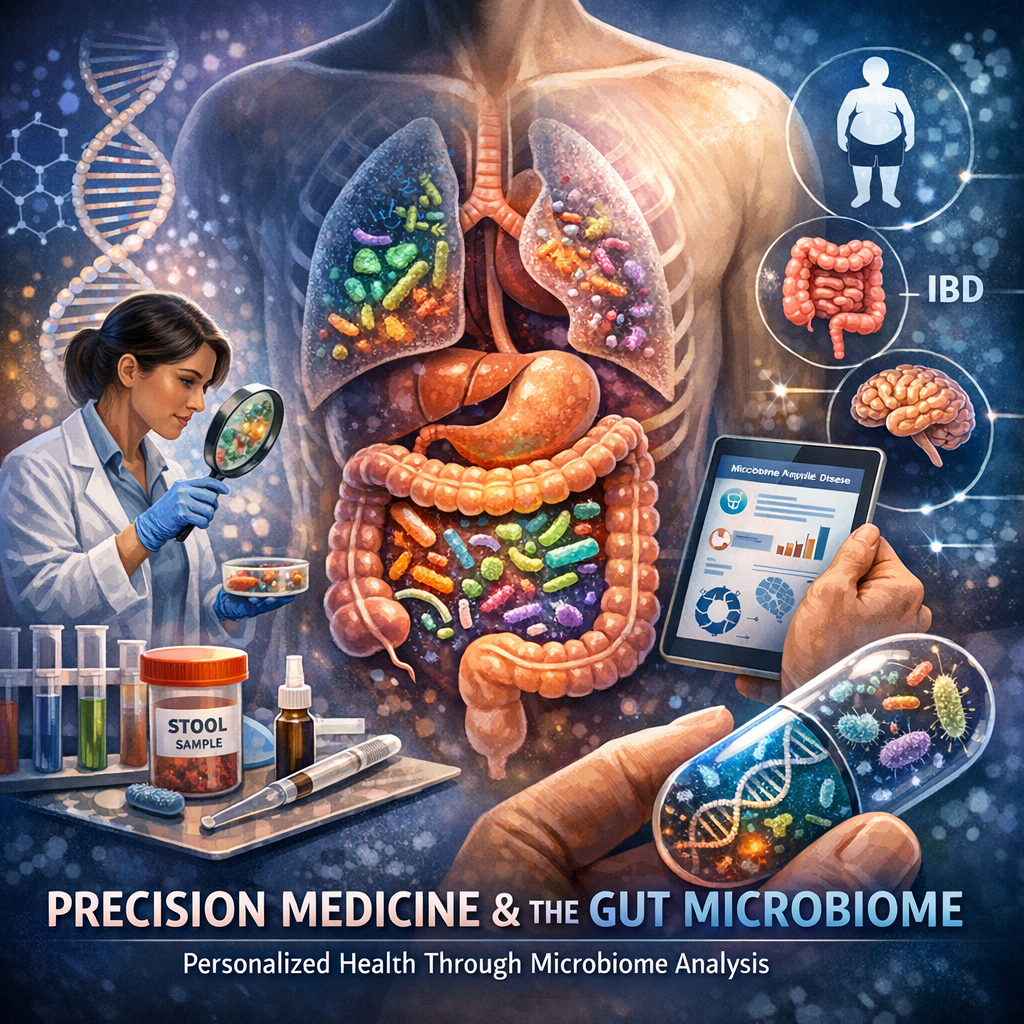
The concept of precision medicine revolves around tailoring medical treatments to individual characteristics. With the gut microbiome, we have a unique “fingerprint” that can be analyzed and modified to optimize health outcomes. This personalized approach is becoming increasingly vital as scientists uncover the connections between gut microbiota composition and various health conditions, including obesity, inflammatory bowel disease (IBD), and even neurological disorders.
Understanding the gut microbiome involves delving into its structure and function. The microbiome is primarily composed of bacteria, though fungi, viruses, and archaea contribute as well. Recent studies suggest that a diverse microbiome is a healthy one, with different microbes playing specialized roles in maintaining bodily functions. Disruption to this balance, known as dysbiosis, has been linked to numerous diseases. This understanding has paved the way for novel therapeutic approaches, from probiotics and prebiotics to fecal microbiota transplants (FMT) aimed at restoring balance.
However, what makes the microbiome particularly exciting are its implications for precision medicine. By integrating microbiome analysis with genetic, lifestyle, and environmental data, healthcare providers can develop personalized treatment plans. For instance, individualized probiotic supplements could be designed to target specific microbial deficiencies or imbalances. Likewise, dietary recommendations may be tailored based on one’s unique microbiome composition, thereby optimizing nutrient absorption and reducing inflammatory triggers.
We are at the cusp of a paradigm shift where treatments are not only evidence-based but also deeply personalized. As research progresses, the gut microbiome stands as a beacon of hope, offering insights that transcend traditional medical boundaries and pave the way for innovations in healthcare.
Features: Recent Studies and Their Implications
Numerous studies have augmented the understanding of the gut microbiome’s potential in personalized medicine. One such study published in “Nature” detailed how variations in the gut microbiome can influence an individual’s response to dietary interventions. The research indicated that individuals with certain microbial compositions could experience more significant benefits from particular diets, showcasing the potential for personalized nutritional guidelines based on microbiome profiles.
Another groundbreaking study published in “Cell Reports” examined the role of the gut microbiome in mediating responses to anti-cancer therapies. The researchers discovered that specific bacterial strains enhanced the effectiveness of checkpoint inhibitors, a class of drugs used in cancer treatment. This finding underscores the microbiome’s potential to enhance therapeutic responses and highlights the possibility of microbiome-targeted therapies in oncology.
Additionally, the “American Journal of Gastroenterology” presented findings on the microbiome’s involvement in mental health. Researchers found that individuals with depression had distinct gut microbial signatures when compared to healthy individuals. These results suggest that modulating the gut microbiome could offer novel treatment pathways for psychiatric disorders, providing a new avenue for precision psychiatry.
Moreover, ongoing clinical trials are exploring how fecal microbiota transplantation (FMT) can be optimized for treating conditions like Clostridium difficile infection and IBD. Tailored FMT, derived from donors with specific microbial profiles, aims to achieve better outcomes by restoring microbial diversity in recipients. This approach exemplifies how precision medicine can be applied to microbial therapies.
While the field is still in its infancy, these studies highlight the transformative potential of the gut microbiome in crafting individualized health interventions. As our understanding deepens, it’s conceivable that we could develop algorithms that incorporate microbial data to predict disease risks or optimize treatment plans more accurately.
Conclusion: Paving the Path to Personalized Health
The exploration of the gut microbiome within personalized precision medicine heralds a new era in healthcare. This frontier promises treatments that are not only tailored to individual biological profiles but also adaptive to changes within the body’s microbial ecosystem. While challenges remain in understanding the full scope of microbial interactions and their implications, the strides made thus far lay a strong foundation for the future. By continuing to invest in microbiome research, we inch closer to realizing the potential of precision medicine, ultimately fostering a healthier, individually optimized world.
References
– [Sartor, R. B., & Wu, G. D. (2017). Roles for the gut microbiome in the pathogenesis of inflammatory bowel disease. Gastroenterology.](https://www.gastrojournal.org/article/S0016-5085(17)30353-5/fulltext)
– [Zitvogel, L., Ayyoub, M., Routy, B., & Kroemer, G. (2016). Microbiome and antitumor Immunity: A review. Pharmaceuticals.](https://www.mdpi.com/1999-4923/8/2/47)
– [Turnbaugh, P. J., et al. (2009). A core gut microbiome in obese and lean twins. Nature.](https://www.nature.com/articles/nature07540)
– [Cryan, J. F., & Dinan, T. G. (2012). Mind-altering microorganisms: the impact of the gut microbiota on brain and behavior. Nature Reviews Neuroscience.](https://www.nature.com/articles/nrn3346)
Concise Summary
The gut microbiome offers exciting possibilities for personalized precision medicine by allowing treatments tailored to individual microbial compositions. Recent research has revealed its significant role in conditions such as obesity, IBD, and neurological disorders. Through microbiome analysis, healthcare providers can craft individualized plans using probiotics, dietary changes, and other therapies. Advances in understanding could enable us to predict disease risks and optimize treatments, marking a promising frontier in healthcare innovation.