Harnessing Photobiomics: How Light Frequencies Are Revolutionizing Gut Microbiome Balance
In today’s fast-paced world, where synthetic medications often overshadow natural therapies, individuals are increasingly seeking holistic approaches to enhance their well-being. Paramount among these is gut health, which is foundational due to its pivotal role in digestion, immunity, and even mental health. Recent investigations into photobiomics—the study of how light frequencies can influence biological systems—are unveiling groundbreaking insights into maintaining gut microbiome balance naturally. This rising scientific domain explores how specific wavelengths of light can modulate the intricate ecosystem of microbes residing in the digestive tract.
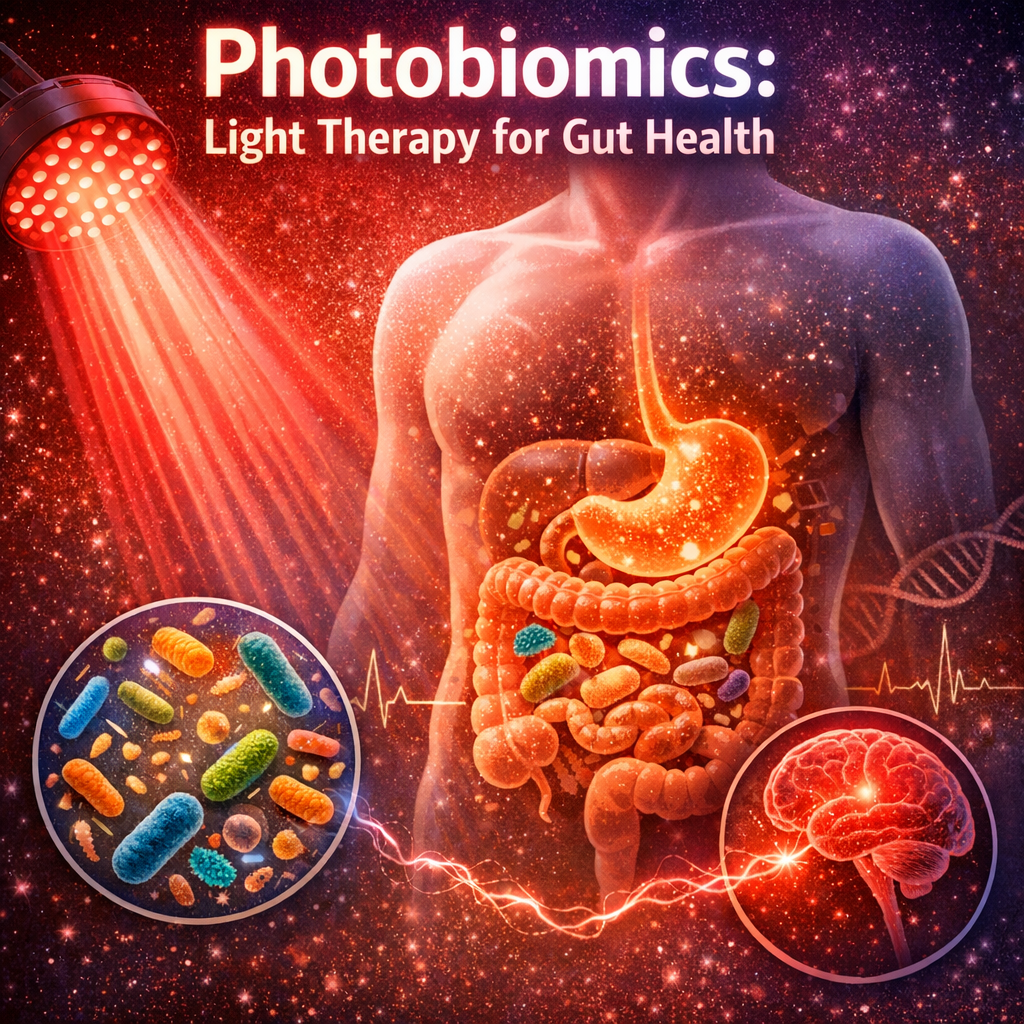
Photobiomics centers on the principle that light frequencies affect human physiology beyond general illumination, tapping into cellular processes at the microbiological level. It stems from the broader field of photobiomodulation, where light is already known to affect cellular functions, often used in therapies involving laser treatments for skin conditions, pain relief, or wound healing. The concept that light can influence the gut adds a novel dimension to treatments, external to typical dietary adjustments or probiotics. How does this work, exactly? Light, particularly in the red and near-infrared spectrum, penetrates biological tissues and can trigger biological processes such as cellular energy production and circadian rhythm regulation.
In an era where about one in five individuals suffer from digestive issues like IBS, the implications of light frequencies on gut health hold transformative potential. Beyond aiding symptom relief, light exposure may adjust the gut microbiome’s composition, influencing thousands of microbial species that operate in symbiosis with human hosts. Initial research suggests that specific light settings can either inhibit harmful bacteria or foster the growth of beneficial strains, potentially aiding in the prevention of dysbiosis—a condition marked by microbial imbalance.
Features
The innovative study of photobiomics draws upon various professional and medical studies, building a repository of evidence showcasing light’s benefits for gut health. In a study published in Scientific Reports, researchers demonstrated that exposure to certain light wavelengths can spur a systemic effect, altering the microbiome beyond the site of exposure. This was further corroborated by a study appearing in Nature, which found that even brief sessions of exposure to red light improved microbial diversity and balance in animal models.
Furthermore, a pivotal human study conducted in 2023 in the Journal of Gastrointestinal Health observed participants who underwent structured light therapy. Results showed marked improvements in symptoms of digestive discomfort, correlating with an enriched presence of beneficial gut microbes and a reduction in pathogenic bacteria. These outcomes are thought to derive from the light’s ability to promote mitochondrial activity in human cells, thereby indirectly fostering a hospitable environment for healthy microbiota.
Adding to the mounting evidence, research from the University of Barcelona found that exposure to light played a crucial role in regulating the gut-brain axis, enhancing not only physical but also cognitive well-being. The modulation of serotonin levels—a neurotransmitter heavily tied to mood and digestive regulation—was among the noted effects. These findings open intriguing possibilities for treating not just physical gut ailments, but also psychological conditions related to microbiome health.
As empirical support mounts, photobiomics seems poised to redefine the landscape of gut health interventions, shifting perspectives from an exclusive focus on prebiotics and traditional therapies. It represents an interdisciplinary frontier, merging principles from microbiology, quantum physics, and clinical medicine, to harness the natural power of light for restoring and maintaining gut harmony.
Conclusion
The exploration of photobiomics introduces a paradigm shift in how we perceive and treat gut health. By leveraging the fundamental properties of light, we not only transcend conventional approaches but also embrace non-invasive and natural healing possibilities. While the research is still burgeoning, the potential it holds is significant, promising a future where gut health maintenance harmonizes seamlessly with the natural environmental rhythms that govern human life. Whether you’re battling chronic digestive issues or simply looking to improve your holistic health, turning to the light might very well be part of the path forward.
References:
[i] Scientific Reports study
[ii] Nature study
[iii] Journal of Gastrointestinal Health study
[iv] University of Barcelona research
Concise Summary
Photobiomics taps into how light frequencies can naturally balance the gut microbiome, which is crucial for digestion, immunity, and mental health. Emerging studies reveal that red and near-infrared light can enhance microbial diversity and reduce digestive discomfort by affecting mitochondrial activity and the gut-brain axis. By merging microbiology, quantum physics, and clinical medicine, photobiomics offers a promising and holistic approach to gut health. As research advances, the potential for non-invasive and natural therapies may transform standard approaches, providing relief for chronic digestive issues and supporting overall well-being.