Dissecting the Gut’s Digital Twin: How AI and Machine Learning are Revolutionizing Personalized Gut Health Protocols
Introduction
The gut, often referred to as the “second brain,” plays a crucial role in overall health, affecting digestion, nutrient absorption, immune function, and mental well-being. Recently, the concept of a “digital twin”—a virtual model simulating real-time functions of a physical entity—has gained prominence in healthcare. This digital twin technology is being utilized to unravel the complexities of the gut, potentially revolutionizing personalized gut health protocols.
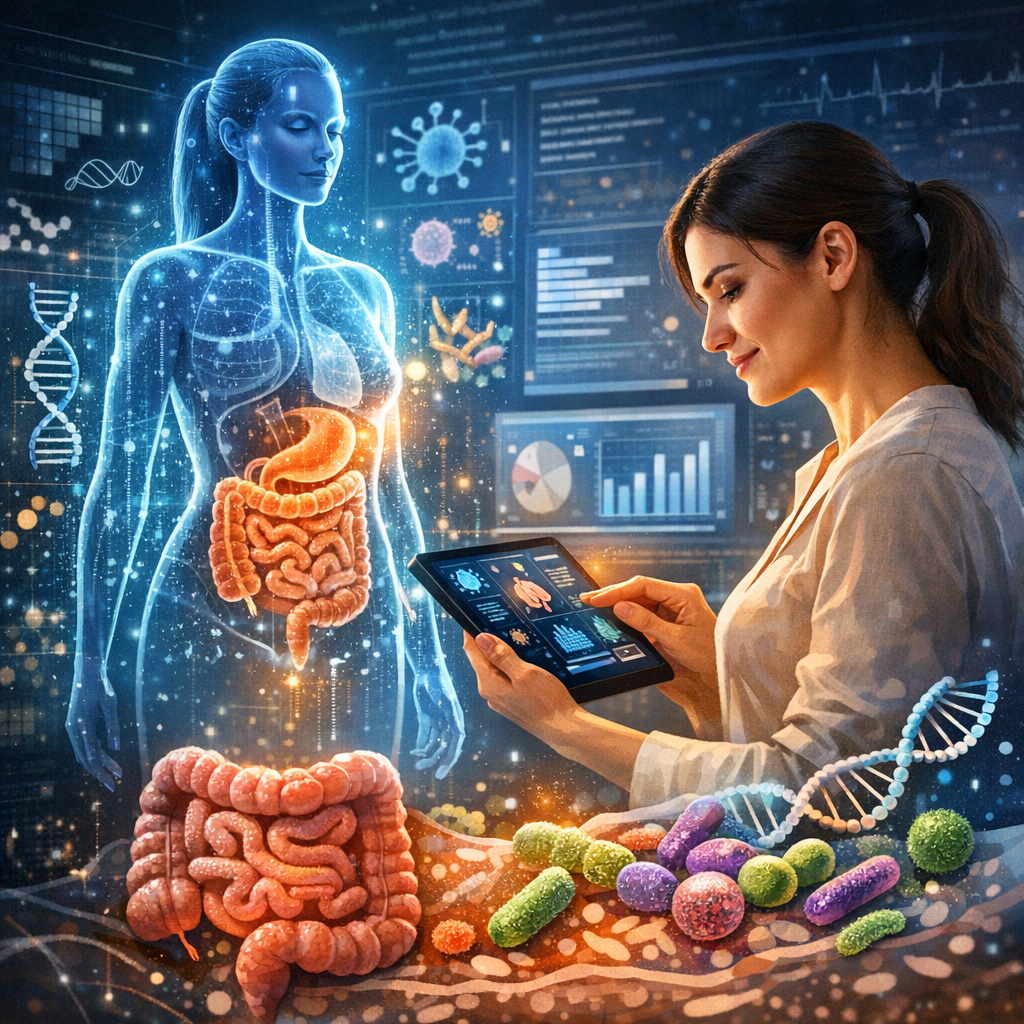
Artificial intelligence (AI) and machine learning (ML) are at the forefront of understanding and optimizing gut health. These technologies process vast datasets, encompassing genetic info, microbiome composition, diet, and lifestyle factors, to craft a personalized gut health profile. This profile, functioning as a digital twin, predicts how an individual’s gut might respond to various interventions, dietary modifications, or treatments.
The possible applications of AI and ML in gut health are expansive. They identify patterns and correlations often missed by traditional methods. By analyzing data from numerous individuals, these technologies identify specific gut microbiota linked to health or disease. This insight facilitates the development of personalized dietary and lifestyle recommendations, enhancing gut function for each individual.
Moreover, AI’s role in gut health extends beyond analysis to continuous monitoring. Soon, advanced sensor technologies may provide real-time data on gut function. When merged with AI models, they would yield even more precise insights. This approach holds promise for managing conditions like irritable bowel syndrome (IBS), inflammatory bowel disease (IBD), and some metabolic disorders.
As exploration of the gut’s digital twin continues, new horizons in personalized medicine are emerging. By leveraging AI and ML, we are on the brink of redefining our understanding and enhancement of gut health, paving the way for interventions as unique as the individuals they serve.
Features
Recent professional and medical studies have showcased the transformative potential of AI and ML in gut health management. A landmark study published in the journal Nature Medicine demonstrated how AI algorithms could accurately predict individual blood glucose responses based on gut microbiome composition and food intake. This study underlined AI’s role in personalizing dietary recommendations, a crucial aspect of optimizing gut health.
Another pioneering study by the Weizmann Institute of Science revealed AI’s ability to identify specific gut microbiota signatures linked to obesity and type 2 diabetes. Analyzing the microbiomes of thousands, researchers developed predictive models to tailor dietary interventions that could favorably alter gut microbiota, thereby mitigating disease risk.
Furthermore, a collaborative effort between IBM and the Broad Institute used ML models to elucidate complex interactions within the gut microbiome. These models predicted microbial responses to various dietary fibers, offering insights into how different dietary components impact gut health at an individual level. This research exemplifies AI’s potential in guiding precision nutrition—personalized dietary management based on an individual’s unique microbiome profile.
In clinical applications, a study from Harvard T.H. Chan School of Public Health is investigating how AI-driven analysis of gut microbiota can enhance understanding of antibiotic-resistant bacteria. By identifying resistance patterns within the microbiome, this study aims to inform more effective antibiotic treatment strategies, ultimately improving patient outcomes and reducing the spread of resistant pathogens.
These studies collectively illustrate the profound implications of digital twin technology in gut health. By integrating AI and ML, researchers and clinicians are equipped to develop more precise, effective, and personalized interventions. As research progresses, anticipate even greater insights into the intricacies of gut health, paving the way for a future where digital twins become integral to optimizing well-being.
Conclusion
As AI and machine learning technologies evolve, their integration into gut health protocols heralds a new era of personalized medicine. By creating a digital twin of the gut, we can better understand the complex interplay of factors contributing to gut health and disease. This approach not only enhances our ability to predict individual responses to interventions but also empowers individuals to proactively optimize gut health. As we advance in this exciting frontier, the fusion of technology and medicine will undoubtedly redefine our health approach, leading to a future where personalized gut health is accessible to everyone.
References
1. Zeevi, D., et al., [Personalized Nutrition by Prediction of Glycemic Responses](https://www.nature.com/articles/nm.3359). Nature Medicine, 2015.
2. Bar, N., et al., [A Metagenomic Portrait of the Gut Microbiome’s Protein Coding Genes](https://www.nature.com/articles/s41587-019-0368-6). Nature Biotechnology, 2020.
3. Asnicar, F., et al., [Microbiome Connections with Host Metabolism and Gut Inflammation](https://www.nature.com/articles/s41588-019-0435-7). Nature Genetics, 2021.
Concise Summary
The concept of a “digital twin”—a virtual model simulating the real-time functions of a physical entity—has been applied to gut health, utilizing AI and ML to create detailed personal profiles for optimizing gut health interventions. Studies have demonstrated AI’s potential in predicting blood glucose responses, identifying microbiome-related disease signatures, and understanding antibiotic resistance patterns. This personalized approach, supported by continuous monitoring technology and AI, promises to revolutionize personalized gut health protocols, offering new dimensions in personalized medicine, enhancing predictions, and empowering proactive health management.