Decoding Gut Health Biomarkers: The Future of Personalized Microbiome Medicine
In the ever-evolving landscape of health and medicine, the gut microbiome has emerged as a pivotal player in influencing not just digestive health but also overall well-being. The gut, often dubbed the ‘second brain,’ harbors a complex community of trillions of microorganisms, including bacteria, viruses, and fungi. This ecosystem plays a crucial role in digestion, immune function, and even mood regulation, owing to its production of neurotransmitters. Understanding and optimizing gut health is gradually becoming a central tenet of personalized medicine. A key facet in this arena is the identification and analysis of gut health biomarkers.
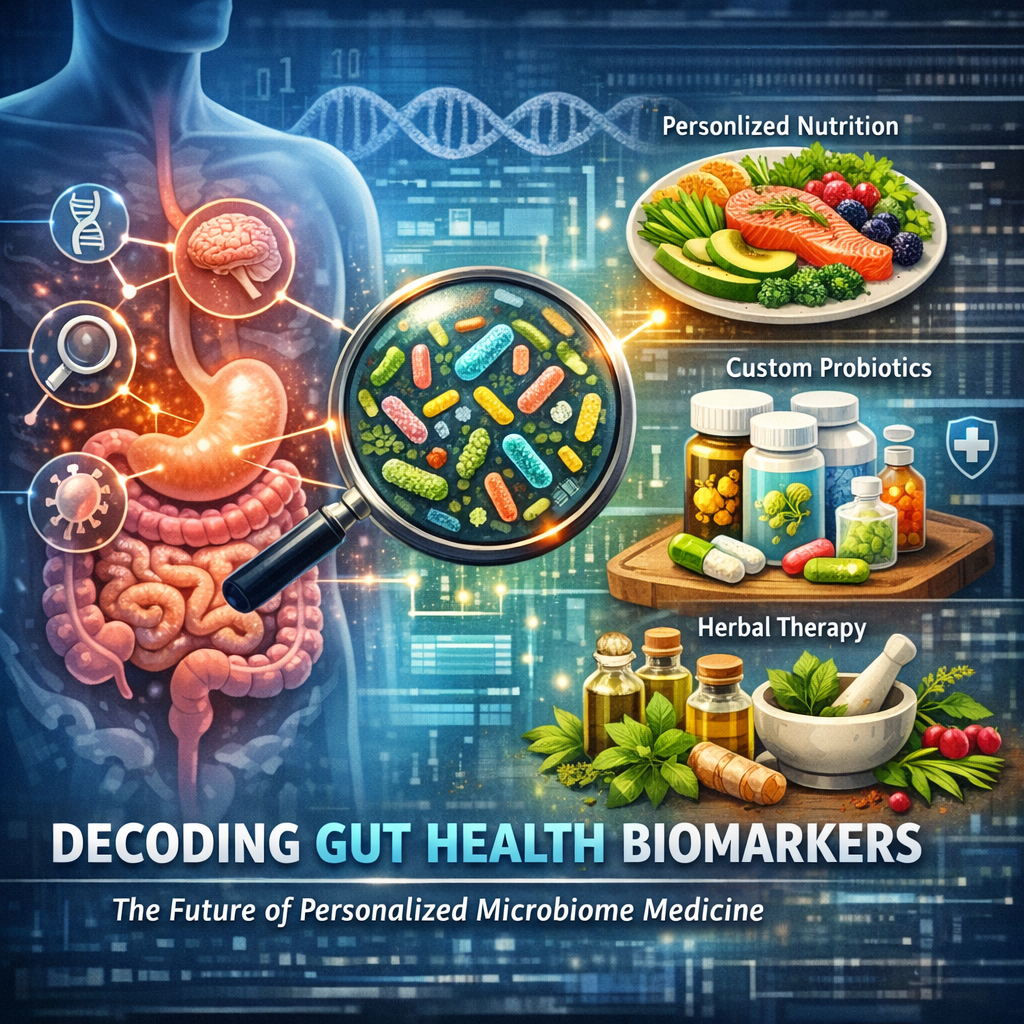
Biomarkers are measurable indicators of biological conditions, and they offer insightful data about an individual’s health. In the context of gut health, these biomarkers can range from specific microbial species presence, metabolites produced by gut microbes, to inflammation indicators like C-reactive protein. Researchers and clinicians are now harnessing these biomarkers to tailor personalized treatments aimed at improving gut health. These individualized approaches can include dietary adjustments, targeted probiotics, or specific herbal treatments crafted to restore and maintain a healthy microbiome balance.
The potential of personalized microbiome medicine is immense. It opens doors to preventive strategies and interventions finely tuned to an individual’s unique microbial profile. The ability to discern the nuances of one’s microbiome provides a roadmap to combating not just gastrointestinal issues but also systemic conditions like obesity, diabetes, and autoimmune disorders, which have been linked to gut health. As our understanding of how the microbiome influences health deepens, the emphasis on customizing treatments to individual’s microbiome profiles signals a paradigm shift in medicine. This burgeoning field stands at the intersection of genomics, nutrition, and medicine, paving the way for treatments that are as unique as our microbial fingerprint.
Features of Gut Health Biomarkers: Recent Professional and Medical Studies
Recent strides in gut health research have underscored the immense potential of gut biomarkers in crafting personalized medical interventions. A [study published in “Cell”](https://www.cell.com/fulltext/S0092-8674(15)01481-6) highlighted how individualized gut microbiota composition significantly influences dietary responses, emphasizing the need for personalized nutrition plans based on gut profiles. This research demonstrated how blood glucose levels post-meal could vary dramatically between individuals, triggered by unique gut flora. Such findings corroborate the significant role of gut microbes in metabolic health and the efficacy of personalized dietary interventions.
Another intriguing study in [Nature Biotechnology](https://www.nature.com/articles/nbt.4164) focused on developing predictive models that harness microbiome data to forecast individual responses to interventions. By analyzing the specific microbial taxa and their gene functions, researchers could predict how a person might respond to dietary changes or probiotics, offering insights into individualized treatment regimens. This study further highlighted the interplay between our genes, gut microbiota, and diet, underscoring the necessity of accounting for this triad in personalized medicine.
Moreover, specific biomarkers like fecal short-chain fatty acids (SCFAs) have come under the spotlight for their role in maintaining gut health. SCFAs, produced when gut bacteria ferment fiber, are pivotal in modulating inflammation, boosting metabolism, and fortifying gut barrier integrity. A study in [Gastroenterology](https://www.gastrojournal.org/article/S0016-5085(17)35450-4/fulltext) revealed that varying levels of these fatty acids in patients’ stools could predict inflammatory bowel disease (IBD) relapse with significant accuracy, further bolstering the potential for using biomarkers in managing chronic gut conditions.
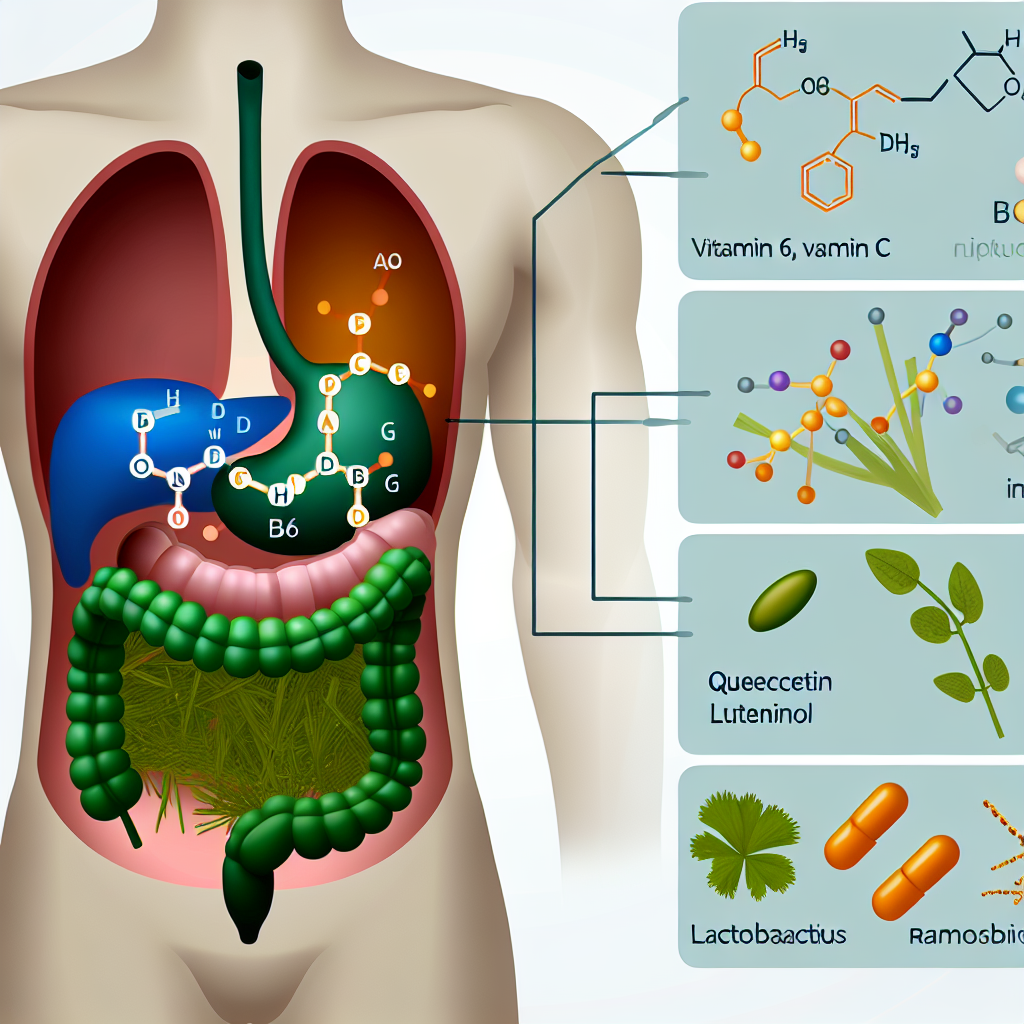
In the realm of herbal treatments, research has been delving into how certain herbs can modulate the microbiome. For instance, a study highlighted in [Frontiers in Microbiology](https://www.frontiersin.org/articles/10.3389/fmicb.2016.00358/full) explored how polyphenol-rich herbs like green tea and curcumin support beneficial bacterial growth, enhancing overall gut health. These natural compounds are poised to be integral in microbiome-targeted therapies, thanks to their ability to modulate microbial ecology positively.
Conclusion: Paving the Path to Personalized Microbiome Medicine
The exploration of gut health biomarkers represents a transformative chapter in medical science, ushering in an era of deeply personalized healthcare. As research continues to unveil the intricate links between our microbiome and overall health, the scope for developing bespoke interventions expands exponentially. By precisely decoding individual microbiome signatures, practitioners can offer interventions that are personalized down to the microbial level, promising improved efficacy and outcomes. In a future where medicine is not just about treating symptoms but understanding the individual holistically, gut health biomarkers are poised to be at the forefront of this revolution, crafting wellness paths as unique as each person’s microbiome.
Concise Summary: Gut health biomarkers are revolutionizing personalized medicine by offering insights into individual microbial profiles and health. Key studies demonstrate the influence of gut microbiota on dietary responses and metabolic health, highlighting the need for personalized nutrition plans. Biomarkers like short-chain fatty acids are pivotal in predicting diseases, offering new avenues for chronic condition management. Research continues to explore herbs that modulate the microbiome, paving the way for tailored interventions. This progressive area of medical science signals a shift towards more holistic, individualized healthcare approaches.