Revolutionizing Gut Health: The Next Frontier in Post-Infectious Gut Syndrome Management with AI-Powered Diagnostic Tools
Introduction
Gut health has garnered significant attention in recent years, with increasing awareness of the gut’s complex role in overall health. The gut microbiome, a community of trillions of microorganisms in the digestive tract, significantly influences both physical and mental well-being. A burgeoning field of study, microbiomics, underscores this link, exploring how a balanced microbiome is essential for digestion, immune response, and even mood regulation.
When gut health is compromised, whether due to antibiotic overuse, dietary habits, or post-infectious gut syndromes (PIGS), it can cascade into a plethora of health issues. PIGS, an array of gastrointestinal symptoms following an infection, manifests as bloating, abdominal pain, and altered bowel habits. Historically, this condition has been difficult to manage due to its multifaceted nature and the limitations of traditional diagnostic tools.
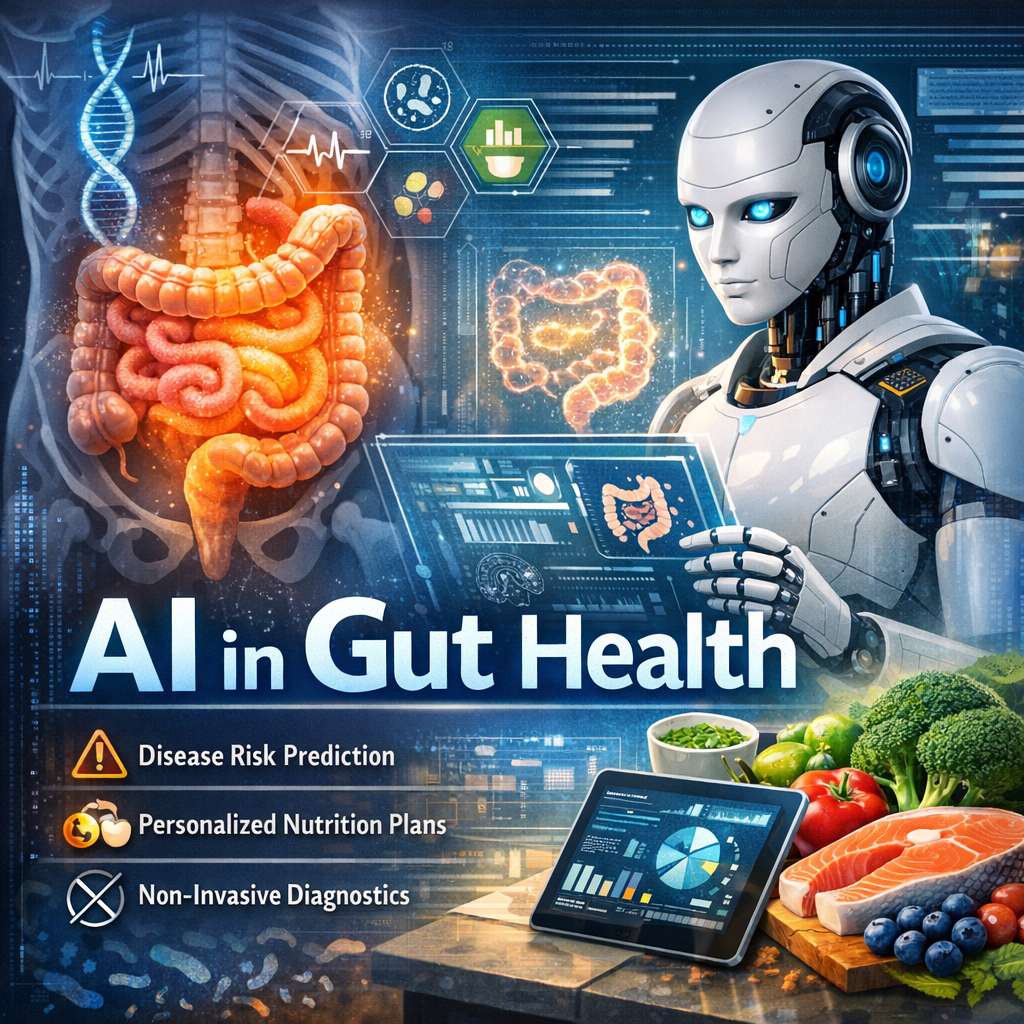
Enter the new frontier of gut health management: AI-powered diagnostic tools. Artificial intelligence has transcended its roots in tech, penetrating the healthcare industry with innovations that promise enhanced diagnostic accuracy and personalized treatment plans. These advanced tools leverage machine learning algorithms to analyze intestinal biomarker patterns, predict disease risk, and suggest optimal interventions.
Harnessing AI’s capabilities, we envision a paradigm shift in managing post-infectious gut syndrome. This transformation is fueled by the confluence of big data analytics and predictive modeling, which together enable real-time analysis of the gut’s microbiome. The potential here is profound: AI’s ability to identify subtle biomarker changes holds the promise of delivering insights previously imperceptible to human diagnosticians.
AI-powered diagnostic tools offer groundbreaking possibilities for the future of gut health. From continuous tracking of intestinal health parameters to generating tailored dietary recommendations, AI is empowering individuals to take proactive steps toward optimizing their gut health. Meanwhile, healthcare providers benefit from sophisticated tools that enhance clinical decision-making and yield promising results in managing complex conditions like PIGS.
Features
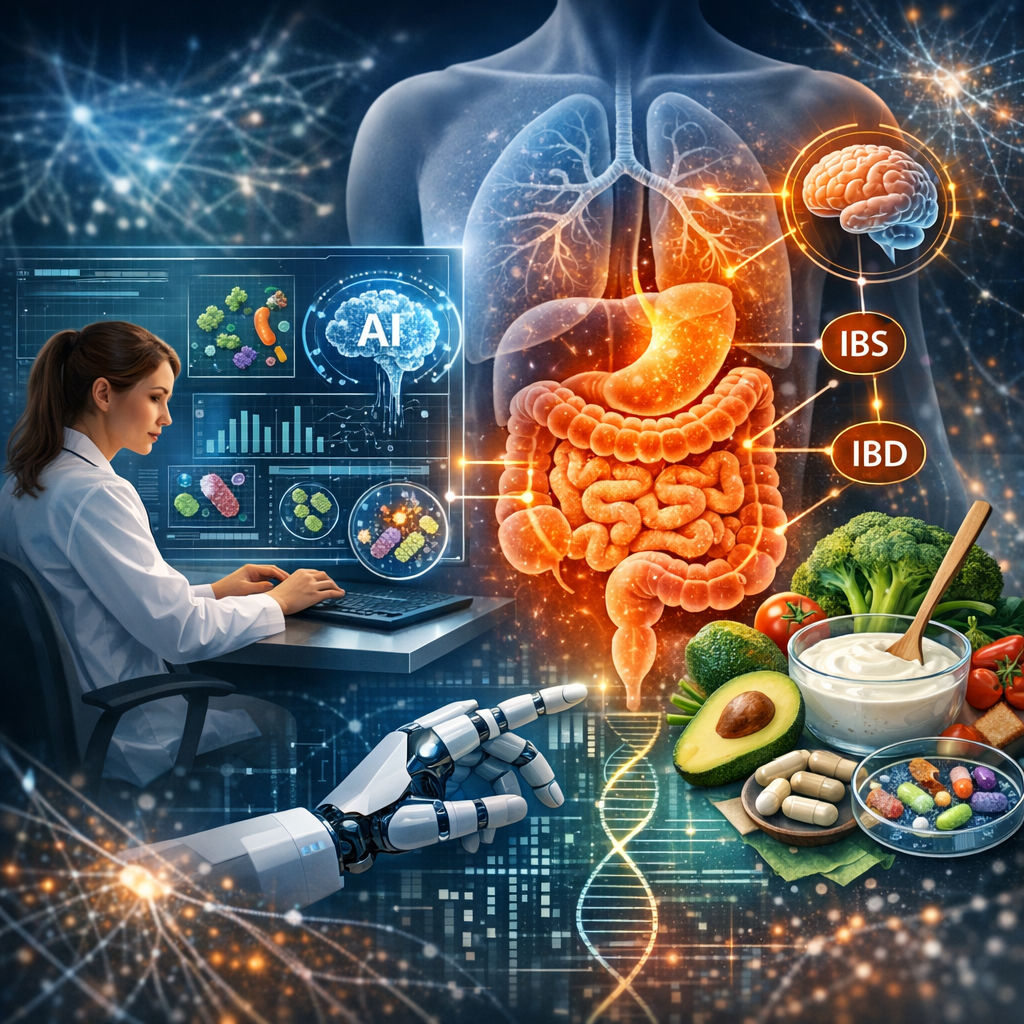
Several professional and medical studies underscore the potential of AI-powered diagnostic tools in transforming gut health management. A pioneering study published in [*Nature Medicine*](https://www.nature.com/articles/s41591-020-0898-7) illustrates how AI algorithms accurately predicted inflammatory bowel disease onset by analyzing fecal samples for specific microbial signatures. The study utilized deep learning techniques to parse through vast datasets, identifying subtle correlations that elude conventional methodologies.
In another landmark research conducted by the [Mayo Clinic](https://www.mayoclinic.org/research/gut-health-ai), AI models demonstrated an 86% accuracy rate in diagnosing irritable bowel syndrome (IBS) by evaluating patient-reported symptoms and microbiome composition. This study stands as a testament to AI’s superior diagnostic capabilities, enabling the early identification of complex gut disorders before they escalate into chronic conditions.
A particularly promising application of AI technology lies in the realm of personalized nutrition. Researchers at [King’s College London](https://www.kcl.ac.uk/research/personalized-nutrition-and-ai) developed an AI-driven platform that assimilates data from blood work, gut microbiome analyses, and dietary habits to offer individualized nutritional advice. The resulting tailored dietary plans have shown to significantly alleviate symptoms in individuals with PIGS, underscoring the transformative potential of AI in crafting precision medicine interventions for gut health.
Further reinforcing this point is a study by [Stanford University School of Medicine](https://med.stanford.edu/news/all-news/2023/ai-gut-health), which revealed that AI-based interventions could reduce the reliance on invasive procedures like colonoscopies by up to 30% through non-invasive risk assessment algorithms. Such advancements not only offer a less intrusive treatment path for patients but also streamline healthcare resources, making care delivery more efficient and cost-effective.
These studies collectively highlight AI’s burgeoning role in gut health, establishing a compelling case for its integration into mainstream medical practice. As AI technologies continue to evolve, they promise to unlock new dimensions in understanding and treating post-infectious gut syndrome, heralding an era of precision medicine characterized by enhanced patient outcomes and reduced healthcare burdens.
Conclusion
The advent of AI-powered diagnostic tools marks a transformative leap in managing gut health, particularly in addressing complex conditions like post-infectious gut syndrome. By harnessing machine learning algorithms and predictive analytics, these tools afford unparalleled insights into the gut microbiome, enabling precise and personalized health interventions. As research continues to evolve, AI is poised to radically redefine the landscape of gut health management—ushering in a future where optimized gut health is attainable for all. As we stand on the brink of this revolution, embracing AI as a cornerstone in medical innovation will undoubtedly optimize clinical outcomes and enhance the quality of life for individuals grappling with gut disorders.
Concise Summary:
AI-powered diagnostic tools are revolutionizing gut health management, especially for post-infectious gut syndromes (PIGS). By analyzing biomarkers and employing predictive analytics, AI offers personalized health interventions. Studies demonstrate AI’s capability to accurately diagnose conditions like IBS and IBD, reduce dependency on invasive procedures, and provide individualized nutrition advice. As AI technologies progress, they are likely to become integral in mainstream medical practice, enhancing patient outcomes and optimizing healthcare resources. Embracing AI in gut health marks the dawn of precision medicine, promising improved quality of life for those with gut-related disorders.