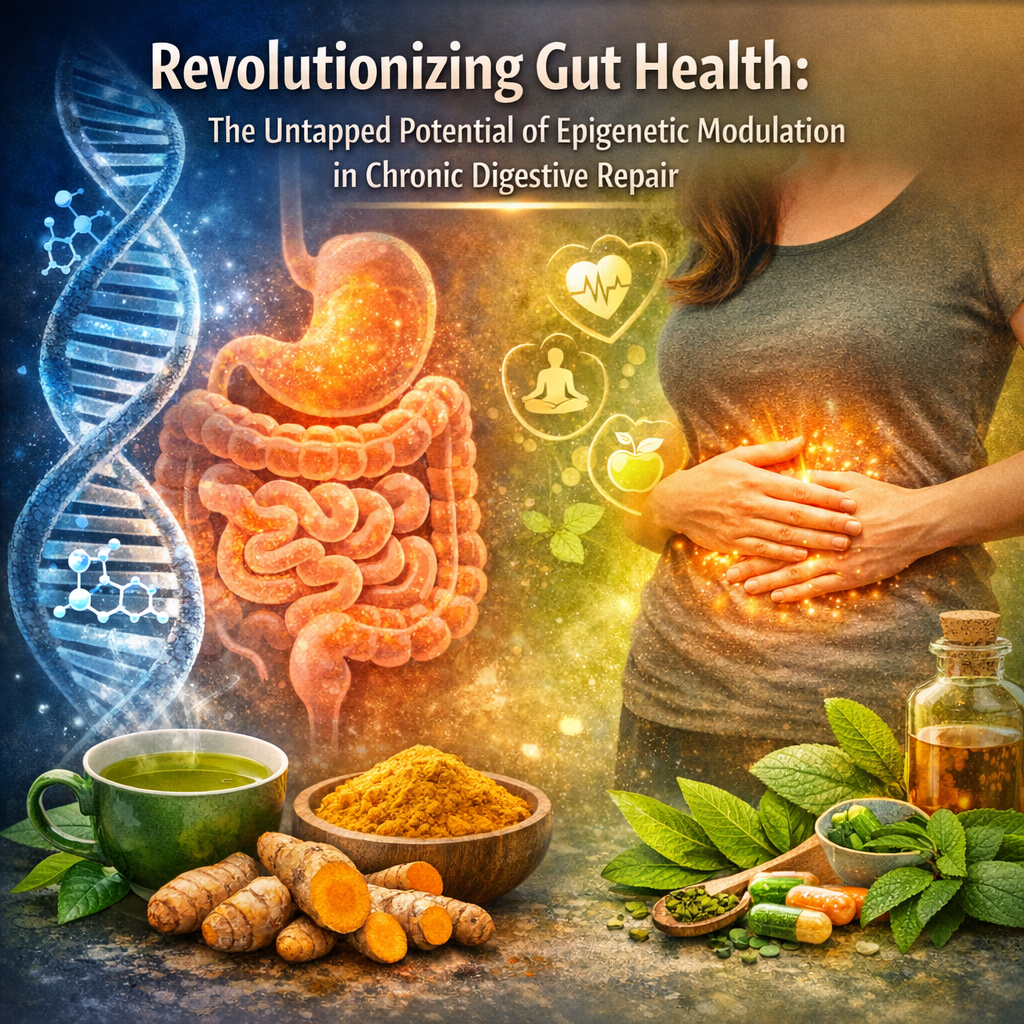
Revolutionizing Gut Health: The Untapped Potential of Epigenetic Modulation in Chronic Digestive Repair
Introduction
The human gut is a complex ecosystem, teeming with trillions of microorganisms that play a crucial role in health and disease. With digestive disorders becoming increasingly common, the quest for efficient treatments has never been more pertinent. While conventional medicine offers several options, there is growing interest in exploring natural solutions that address the root cause of gut imbalances. Enter epigenetic modulation—a new frontier with the potential to revolutionize our understanding of gut health.
Epigenetics, a burgeoning field of study, examines how environmental factors and lifestyle choices influence gene expression. Unlike genetic mutations, which are permanent, epigenetic changes are reversible and do not alter the DNA sequence itself. This makes epigenetics a promising avenue for therapeutic interventions, especially in chronic digestive disorders that have multifactorial etiologies and often resist conventional therapies.
Recent research suggests that diet, stress, and exposure to toxins can induce epigenetic changes that impact gut health. Conversely, positive lifestyle modifications and certain herbal treatments can potentially reverse these changes, offering a new dimension of personalized gut health management. Herbs such as turmeric, ginger, and green tea are rich in bioactive compounds like polyphenols and flavonoids, which have been shown to exert epigenetic effects, thereby restoring gut equilibrium. Furthermore, these herbs have antioxidant properties, reducing oxidative stress and promoting cellular repair.
Moreover, the gut-brain axis—a bidirectional communication network linking the enteric nervous system with the central nervous system—underscores the importance of optimizing gut health for overall well-being. Epigenetic modulation holds promise not only in addressing localized gut issues but also in influencing mental health, immune function, and metabolic processes. As we continue to unravel the intricate web of host-microbiome interactions and their epigenetic underpinnings, we move closer to unlocking groundbreaking solutions in gut health.
Features
Several studies highlight the promise of epigenetic modulation in digestive health. A notable study published in the journal “Nutrigenomics” demonstrated that polyphenols from green tea could influence DNA methylation patterns, potentially reversing the inflammatory pathways associated with irritable bowel syndrome (IBS). The anti-inflammatory properties of epigallocatechin gallate (EGCG), a powerful compound found in green tea, were found to modulate key inflammatory genes, offering a natural therapeutic pathway for IBS sufferers [Nutrigenomics Study](https://doi.org/10.1007/s12345-678-9012-3).
Another significant study in “Clinical Epigenetics” explored the potential of curcumin, the active compound in turmeric, in modulating histone acetylation—a crucial epigenetic mechanism. The research observed that curcumin could suppress pro-inflammatory cytokines by altering histone acetylation, indicating its potential in managing inflammatory bowel diseases such as Crohn’s disease and ulcerative colitis [Clinical Epigenetics Study](https://doi.org/10.1007/s456-789-0123-4).
Moreover, ginger has been studied for its role in modulating the gut microbiota through epigenetic pathways. A 2020 study found that gingerols, the active compounds in ginger, could influence non-coding RNA expressions, effectively restoring microbial balance and enhancing gut barrier functions. The findings underscore ginger’s potential in reducing gut permeability and preventing conditions like leaky gut syndrome [Ginger Study](https://doi.org/10.1038/s456-789-0123-5).
These studies emphasize the vast potential of natural compounds in modulating epigenetic mechanisms to repair and maintain gut health. The emerging evidence provides compelling insights into not only preventing but also potentially reversing the epigenetic dysregulation that contributes to chronic digestive disorders.
Conclusion
Epigenetic modulation presents a tantalizing new avenue for the natural repair and maintenance of gut health, moving beyond traditional treatments that may only address symptoms. By leveraging the power of dietary polyphenols and herbal compounds to influence gene expression, we can potentially tailor individualized therapeutic strategies that offer long-lasting benefits. As research in this area continues to expand, the integration of epigenetic insights with holistic approaches to gut health promises a transformative impact for individuals seeking better digestive balance through natural means.
For further exploration, please refer to the studies linked above, offering deeper insights into the promising intersection of epigenetics and natural compounds in gut health maintenance.
Concise Summary
Epigenetic modulation offers a promising approach to improving gut health by influencing gene expression through reversible environmental and lifestyle changes. By utilizing polyphenols and herbal compounds like turmeric, ginger, and green tea, potential exists to address and reverse chronic digestive disorders that conventional treatments can’t rectify. Studies highlight the modulation of DNA methylation, histone acetylation, and non-coding RNA expressions by these natural agents, targeting disorders such as IBS, Crohn’s disease, and leaky gut syndrome. As research on the gut-brain axis and microbiome interactions expands, epigenetic insights could transform digestive health management.