The MTHFR-Gut Connection: Supporting Methylation Pathways for Optimal Gut Lining Repair and Detoxification
Introduction
More than ever before, individuals are turning to natural methods to support gut health—not just for better digestion, but to promote total-body wellness. Among the lesser-known, yet incredibly impactful, factors in gut health is methylation: a biochemical process that affects detoxification, tissue repair, neurotransmitter production, gene expression, and immune regulation.
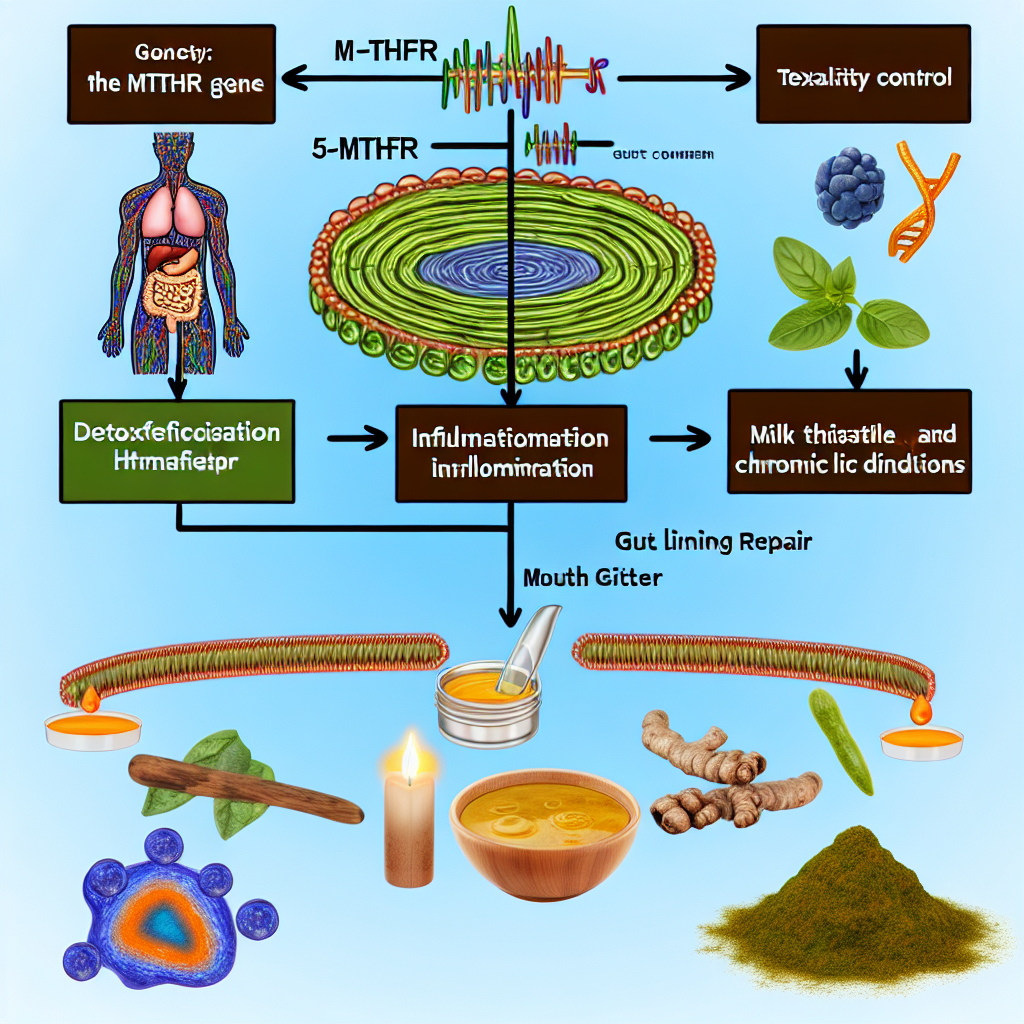
At the heart of this process lies the MTHFR gene (methylenetetrahydrofolate reductase), which is essential for converting dietary folate into its active form—5-MTHF (5-methyltetrahydrofolate). This activated form supports methylation, enabling the body to perform critical tasks like DNA repair, detoxification, and maintenance of the gut epithelium.
When mutations occur in this gene, the body may struggle to adequately produce 5-MTHF, disrupting the methylation cycle. This can lead to challenges including poor detoxification, inflammation, nutrient deficiencies, slowed tissue healing, and especially compromised gut lining repair.
When the gut lining is damaged or “leaky,” harmful substances, pathogens, and undigested food particles can seep into the bloodstream, triggering immune reactions and inflammation. This condition, known as leaky gut syndrome or increased intestinal permeability, is linked to conditions like autoimmune diseases, allergies, chronic fatigue, and more. Methylation plays a vital role in regulating immune responses, synthesizing glutathione (a master antioxidant), and regenerating intestinal epithelial cells.
Fortunately, supporting methylation through targeted nutrition, herbal medicine, and methylated nutrients can enhance the body’s ability to repair the gut and efficiently detoxify harmful substances.
Scientific Insights into MTHFR Mutations and Gut Health
Genetic variants in the MTHFR gene are surprisingly common. Up to 40% of people carry one or two copies of the most researched variants: C677T and A1298C. These polymorphisms can weaken the enzyme’s function, reducing the conversion of folic acid or folate into 5-MTHF, crucial for optimal methylation processes.
A 2017 study published in the World Journal of Gastroenterology examined the effects of impaired methylation on gastrointestinal health. Results highlighted methylation’s role in maintaining the intestinal barrier and modulating mucosal immunity. Without effective methylation, individuals are more susceptible to disruptions in gut lining integrity, leading to chronic inflammation and microbial imbalances.
Another essential finding is the association of MTHFR mutations with homocysteine buildup—an amino acid that becomes toxic at elevated levels. A 2019 review in Nutrients revealed that high homocysteine may create oxidative stress and impair both detoxification and gut healing. Dysregulated methylation can also impact inflammatory cytokines such as TNF-α and IL-6, further aggravating intestinal damage.
To address these issues, multiple studies have investigated methyl donor nutrients—including betaine, choline, methylfolate (5-MTHF), and methylcobalamin (B12). A 2021 systematic review in Frontiers in Nutrition concluded that individuals with MTHFR polymorphisms significantly benefit from 5-MTHF supplementation, as it improves methylation health, supports detoxification, and enhances gut tissue resilience.
Herbal Allies and Functional Support
Several herbs are emerging as allies in methylation and gut support. Milk thistle (Silybum marianum) is a traditional liver-supporting herb known to enhance glutathione production and promote detoxification. According to the National Institutes of Health, milk thistle demonstrates antioxidant properties that protect liver and intestinal cells from oxidative damage.
Similarly, turmeric (Curcuma longa) contains curcumin, a bioactive compound with robust anti-inflammatory actions. Turmeric may support intestinal wall integrity by modulating methylation-related enzymes and inflammatory signaling pathways. The International Journal of Molecular Sciences in 2018 reported curcumin’s potential to normalize methylation activity and reduce inflammatory cytokines in gut disorders.
In addition, natural food sources of bioavailable folates such as spinach, parsley, and nettle act as gentle supporters of methylation and microbe-friendly prebiotics that nourish the gut microbiome.
Together, these natural tools work to enhance methylation function, detox capacity, immune regulation, and mucosal healing, forming an effective foundation for recovering gut integrity.
Conclusion
The intricate connection between MTHFR mutations, methylation pathways, and gut health illustrates the body’s deep interdependence between genetics and digestive wellness. Methylation is critical not just for detoxification, but for epithelial cell repair, inflammation control, and immune modulation—all of which are essential for maintaining a robust gut barrier.
For those carrying MTHFR polymorphisms or struggling with unresolved gastrointestinal symptoms, evaluating and supporting methylation pathways may provide profound benefits. Addressing these pathways with methylated nutrients, folate-rich herbs, and targeted detoxification support can facilitate deeper healing and enhance overall well-being.
The fusion of emerging science and natural remedies offers a promising avenue for fostering digestive resilience and ultimately healing the gut from within.
Concise Summary
Methylation, a vital biochemical process influenced by the MTHFR gene, is essential for detoxification, tissue repair, and gut health. Mutations in the MTHFR gene can impair folate conversion and compromise gut lining integrity, leading to inflammation and leaky gut. Supporting methylation with nutrients like 5-MTHF, methylcobalamin, and herbs like milk thistle and turmeric can enhance detoxification and aid gut repair. Studies confirm that targeting methylation may significantly benefit those with MTHFR mutations or chronic gut issues. Through a blend of advanced science and herbal support, it’s possible to restore digestive and systemic wellness effectively.
References
2. Nutrients (2019). “Homocysteine, Methylation and the Gut: Connections to Health.”
4. National Institutes of Health – Milk Thistle (Silybum marianum)

Dominic E. is a passionate filmmaker navigating the exciting intersection of art and science. By day, he delves into the complexities of the human body as a full-time medical writer, meticulously translating intricate medical concepts into accessible and engaging narratives. By night, he explores the boundless realm of cinematic storytelling, crafting narratives that evoke emotion and challenge perspectives.
Film Student and Full-time Medical Writer for ContentVendor.com