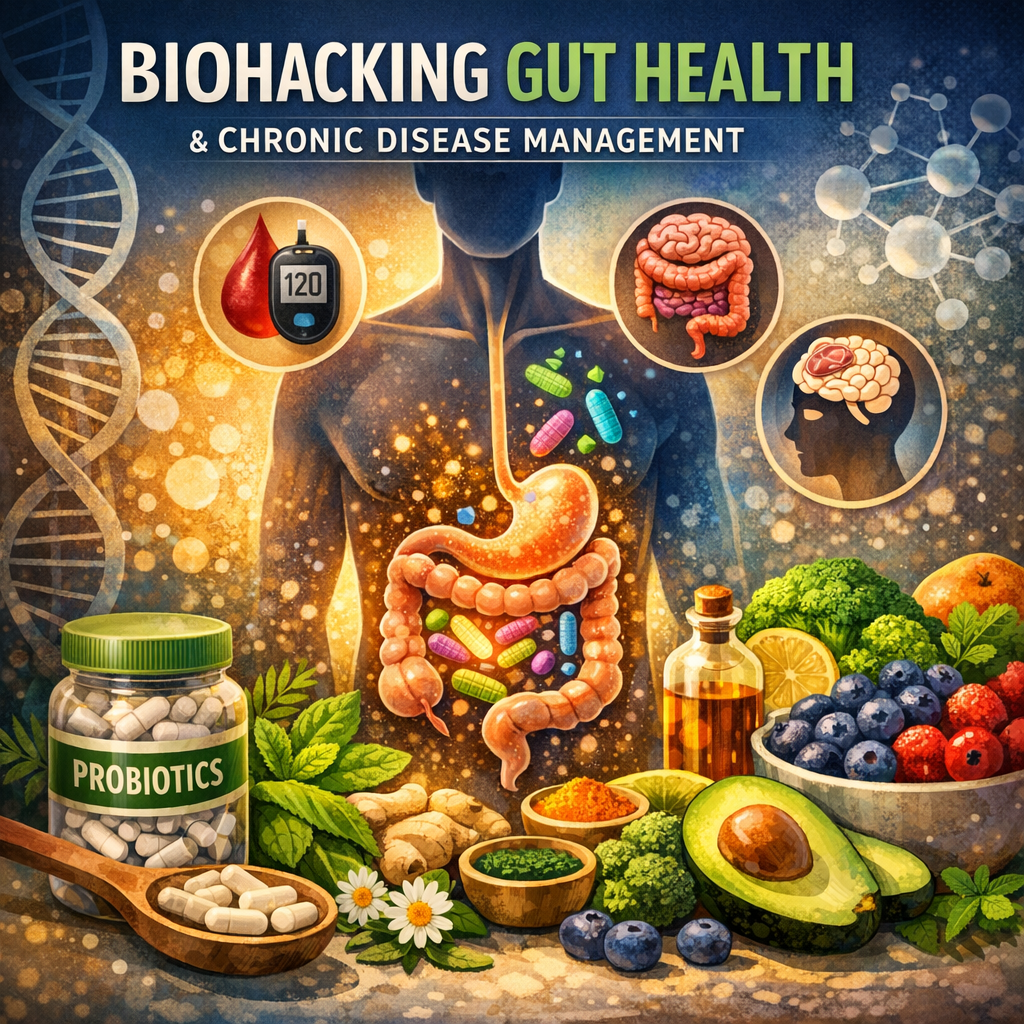
### Biohacking Gut Health: The Next Frontier in Chronic Disease Management
In recent years, the spotlight has shifted towards the gut as a powerhouse of our well-being, significantly influencing everything from digestion and immunity to mental health. This dynamic and intricate system, known as the gut microbiome, consists of trillions of microorganisms, including bacteria, viruses, and fungi, residing primarily in our intestines. The complex relationships between these microorganisms and their host — us — have become a focal point for scientists and health enthusiasts alike. With chronic diseases such as obesity, diabetes, and even certain mental health disorders becoming more prevalent, the question has arisen: how can we biohack our gut microbiome to prevent or manage these diseases?
Biohacking, the practice of using science and self-experimentation to optimize one’s health and performance, is revolutionizing our approach to gut health. Unlike traditional medical treatments, which often involve pharmaceuticals and invasive procedures, biohacking emphasizes personalized, natural strategies to enhance the gut microbiome’s function. Techniques range from dietary changes and intermittent fasting to the use of prebiotics, probiotics, and herbal supplements known for their gut-friendly properties. These methods are appealing because they align with a growing demand for preventive health measures that empower individuals to take control of their well-being.
Understanding the gut-brain axis, the bidirectional communication network between the gut and the brain, is pivotal in biohacking for chronic disease management. This connection means that gut health can influence mood, cognition, and general health, suggesting that optimizing gut function might also impact mental disorders like depression and anxiety. Further expanding our knowledge of this connection could lead to breakthroughs in how we address common mental health issues through gut health optimization. Furthermore, poor gut health has been linked to systemic inflammation, a root cause of many chronic diseases. By modulating the gut microbiome, biohackers aim to reduce inflammatory markers, thus potentially alleviating conditions such as irritable bowel syndrome (IBS), inflammatory bowel disease (IBD), and metabolic disorders.
Fascinatingly, emerging research suggests that specific herbal treatments and natural cures can significantly impact gut health. Herbs such as ginger, turmeric, and peppermint have shown promise in studies for their anti-inflammatory and digestive benefits. Likewise, dietary interventions, including fiber-rich foods and fermented products, foster a thriving microbiome environment. As we continue to uncover the gut’s role in chronic disease, the potential for biohacking through natural methods offers an enticing, innovative avenue for improving long-term health outcomes.
### Features of Biohacking in Gut Health
The scientific community is increasingly acknowledging the role of the gut microbiome in chronic disease prevention and management. A pivotal study published in [Nature Microbiology](https://www.nature.com/articles/s41564-019-0424-0) revealed that gut bacteria diversity is associated with metabolic health. The study found that individuals with higher microbial diversity had better glucose regulation and lipid profiles, which are crucial factors in preventing metabolic disorders such as Type 2 diabetes.
In addition, a review article in the [Journal of Clinical Gastroenterology](https://journals.lww.com/jcge/Abstract/0000/Probiotics_for_the_Treatment_of_Irritable_Bowel.9.aspx) emphasizes the potential of probiotics as a non-pharmaceutical intervention in managing IBS and IBD. Probiotics are live microorganisms that, when administered in adequate amounts, confer health benefits on the host. They work by restoring gut flora balance, reducing inflammation, and enhancing gut barrier function. Noteworthy strains that have shown efficacy in clinical trials include Lactobacillus rhamnosus GG and Bifidobacterium longum.
Herbal remedies are also gaining validation from the scientific community for their therapeutic effects on the gut. Curcumin, the active compound in turmeric, has been extensively studied for its anti-inflammatory properties. A meta-analysis in the [Journal of Medicinal Food](https://www.liebertpub.com/doi/10.1089/jmf.2011.1890) found that curcumin could significantly improve symptoms in patients with ulcerative colitis, a form of IBD. Similarly, peppermint oil, rich in menthol, has been recognized for its potential to alleviate IBS symptoms due to its muscle-relaxing and analgesic effects.
Furthermore, biohacking with dietary interventions shows promise. Increasing the intake of dietary fibers, particularly prebiotics like inulin and fructooligosaccharides, has been shown to promote the growth of beneficial bacteria. A study in [The American Journal of Clinical Nutrition](https://academic.oup.com/ajcn/article/109/6/1688/5482522) highlighted that diets rich in these fibers led to an increase in Bifidobacteria, enhancing gut health and potentially reducing systemic inflammation.
These scientific findings underscore the potential of natural biohacking strategies in promoting gut health and managing chronic diseases. As research progresses, the integration of these methods into personalized health regimens could revolutionize the prevention and management of chronic conditions.
### Conclusion
Biohacking gut health represents an exciting frontier in chronic disease management that bridges ancient herbal wisdom with modern scientific research. By focusing on natural interventions such as probiotics, herbal supplements, and dietary adjustments, individuals can exert significant control over their health outcomes. As we continue unraveling the vast complexities of the gut microbiome, these biohacking approaches not only promise to mitigate the incidence and severity of chronic diseases but also empower individuals with the tools for better health. Through the careful application of scientific insights, biohacking is paving the way for transformative, individualized healthcare solutions.
### References
1. [Nature Microbiology: Gut bacteria diversity and metabolic health](https://www.nature.com/articles/s41564-019-0424-0)
2. [Journal of Clinical Gastroenterology: Probiotics in the management of IBS and IBD](https://journals.lww.com/jcge/Abstract/0000/Probiotics_for_the_Treatment_of_Irritable_Bowel.9.aspx)
3. [Journal of Medicinal Food: Curcumin for ulcerative colitis](https://www.liebertpub.com/doi/10.1089/jmf.2011.1890)
4. [The American Journal of Clinical Nutrition: Prebiotic fibers and gut health](https://academic.oup.com/ajcn/article/109/6/1688/5482522)
### Concise Summary
Biohacking gut health through natural methods offers a promising avenue for chronic disease management, emphasizing the use of probiotics, herbal supplements, and dietary adjustments. This approach centers on optimizing the gut microbiome, which is crucial in preventing and managing diseases like obesity, diabetes, and mental health disorders. By enhancing microbial diversity and reducing inflammation, individuals can improve health outcomes significantly. The merging of traditional herbal wisdom with cutting-edge scientific research makes biohacking a potentially transformative strategy in personalized healthcare, empowering individuals to take proactive steps towards better overall health.

Dominic E. is a passionate filmmaker navigating the exciting intersection of art and science. By day, he delves into the complexities of the human body as a full-time medical writer, meticulously translating intricate medical concepts into accessible and engaging narratives. By night, he explores the boundless realm of cinematic storytelling, crafting narratives that evoke emotion and challenge perspectives.
Film Student and Full-time Medical Writer for ContentVendor.com