Breaking Down the Role of Gut Microbiota in Autoimmune Disease Development: A Systems-Based Approach
The human gut is home to a vast and complex ecosystem of microorganisms collectively known as the gut microbiota. This intricate community of bacteria, viruses, fungi, and other microbes plays a crucial role in maintaining the body’s overall health, particularly in supporting digestive processes, synthesizing essential nutrients, and protecting against pathogens. Over the years, there has been a growing recognition of the microbiota’s impact on other facets of health, especially regarding the immune system. This understanding has led to burgeoning interest in the role of gut microbiota in autoimmune disease development.
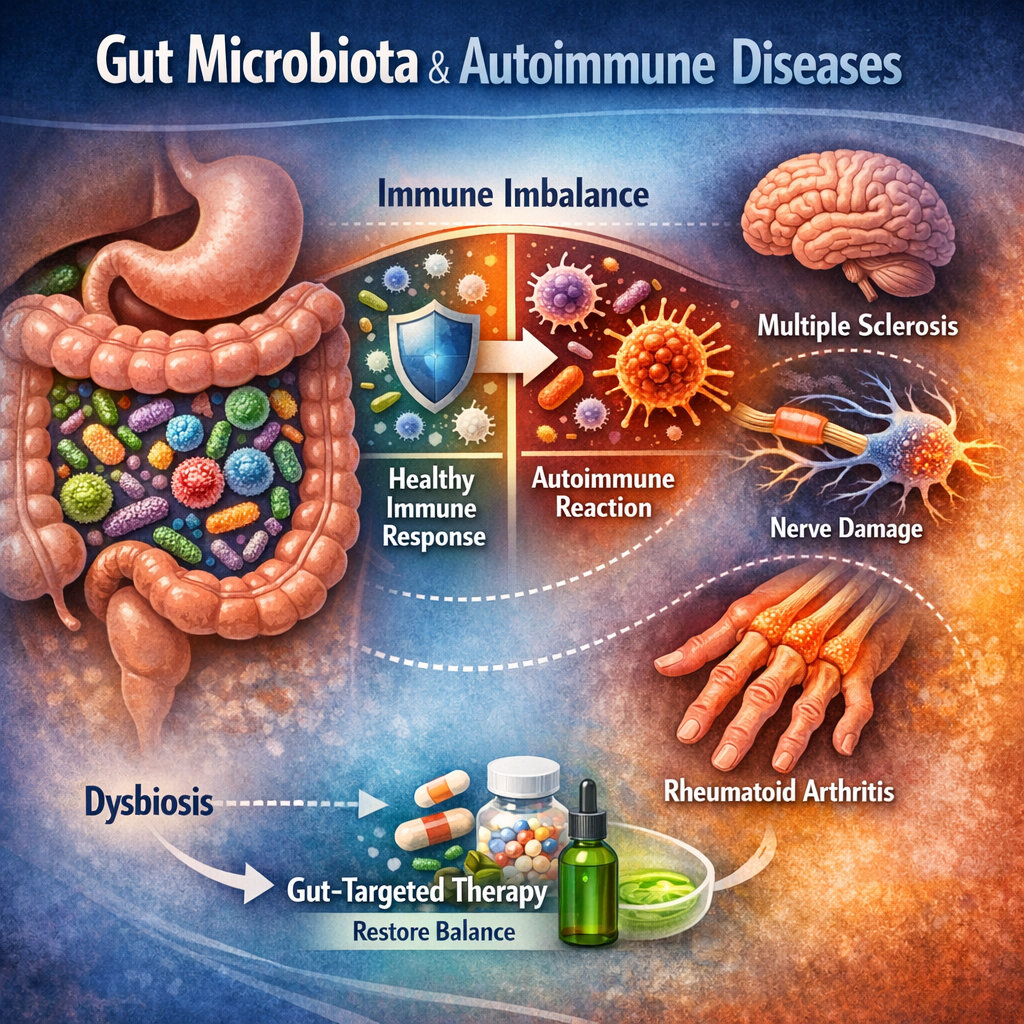
Autoimmune diseases arise when the immune system mistakenly attacks the body’s own cells, tissues, or organs, leading to chronic inflammation and damage. Conditions like rheumatoid arthritis, multiple sclerosis, and inflammatory bowel disease have puzzling etiologies, but recent research points to an intricate dance between genetic predispositions and environmental factors, including the state of the gut microbiota. The human microbiome, particularly in the gut, is a dynamic entity that influences immune responses through a variety of mechanisms. Imbalances or dysbiosis within the gut microbiota have been associated with aberrant immune functions, which can alter host susceptibility to autoimmune conditions.
A systems-based approach in understanding the gut microbiota’s influence involves looking at the microbiome as an integral part of the body’s larger biological network. This perspective considers not just individual microbial species, but the collective genetic potential of the microbiota and its interactive pathways with the host’s immune system, likening them to a system of interdependent parts rather than isolated entities. Importantly, gut bacteria aid in the education and regulation of the immune system, teaching it to distinguish between friend and foe. They achieve this through the production of metabolites like short-chain fatty acids, which have anti-inflammatory effects, and by facilitating the development of regulatory T cells that act as peacekeepers in the immune system.
Features of Gut Microbiota and Autoimmune Disease Connection
The exploration of the gut microbiota’s role in autoimmune diseases has intensified in recent years, propelled by cutting-edge research and technological advances. One pivotal study published in [Nature Communications](https://www.nature.com/articles/s41467-018-07492-0) examined the microbiota profiles of patients with multiple sclerosis (MS) and revealed significant differences in their gut microbiota composition compared to healthy individuals. The study highlighted how specific bacterial families were depleted in MS patients, suggesting a potential link between gut dysbiosis and disease severity.
Similarly, groundbreaking research in rheumatoid arthritis has brought to light specific microbial signatures associated with disease onset. A study published in the [Journal of Clinical Investigation](https://www.jci.org/articles/view/121798) found that newly diagnosed, untreated rheumatoid arthritis patients had a distinct microbiota composition that favored the growth of pro-inflammatory bacteria. This microbial imbalance often coincided with elevated markers of systemic inflammation.
Moreover, the concept of the “leaky gut” has gained attention in the context of autoimmune diseases. According to research published in [Autoimmunity Reviews](https://www.sciencedirect.com/science/article/abs/pii/S1568997219301638), increased intestinal permeability (often referred to as leaky gut) allows microbial products and other antigens to pass into the bloodstream, potentially triggering autoimmune reactions in genetically susceptible individuals. These findings emphasize the possibility that restoring gut integrity and balance might be a viable therapeutic approach for managing autoimmunity.
Recent clinical trials have also begun to test the efficacy of probiotics, prebiotics, and dietary interventions aimed at restoring a healthy gut microbiota. For instance, a study in [Frontiers in Immunology](https://www.frontiersin.org/articles/10.3389/fimmu.2019.02949/full) demonstrated that specific probiotic strains could alleviate symptoms in patients with ulcerative colitis, a common type of inflammatory bowel disease, by modulating gut microbiota composition and enhancing anti-inflammatory cytokine production.
Conclusion
In conclusion, the burgeoning field of microbiota research is reshaping our understanding of autoimmune diseases. By applying a systems-based approach to study the gut microbiota, researchers are uncovering potential pathways that bridge gut health and immune regulation. While the exact mechanisms at play remain complex and multifaceted, the potential for therapeutic interventions aimed at modulating the gut microbiota holds promise. As this area of research continues to evolve, it offers a novel perspective on preventing and managing autoimmune diseases naturally, advocating for strategies that promote a balanced gut environment.
Concise Summary: Recent studies highlight the significant role of the gut microbiota in autoimmune disease development, focusing on conditions such as multiple sclerosis and rheumatoid arthritis. Imbalances in the gut microbiota, often characterized by dysbiosis, can influence immune responses and exacerbate disease symptoms. Technological advances and research point towards potential therapeutic interventions, including probiotics and dietary modifications, to restore gut health and mitigate autoimmune conditions by promoting anti-inflammatory pathways. As this research field grows, it presents promising opportunities to naturally manage autoimmune diseases by maintaining a balanced gut ecosystem.
References:
1. [Nature Communications](https://www.nature.com/articles/s41467-018-07492-0). “Gut microbiota in multiple sclerosis: Critically analyzing its emerging influence.”
2. [Journal of Clinical Investigation](https://www.jci.org/articles/view/121798). “Microbiome and rheumatoid arthritis: A relationship emerging with optimal evolution.”
3. [Autoimmunity Reviews](https://www.sciencedirect.com/science/article/abs/pii/S1568997219301638). “The leaky gut and autoimmune diseases: Unpacking the linkage.”
4. [Frontiers in Immunology](https://www.frontiersin.org/articles/10.3389/fimmu.2019.02949/full). “Role of probiotics in modulating the gut microbiota in ulcerative colitis.”