Certainly! Below is the revised version of the article, following your specified instructions:
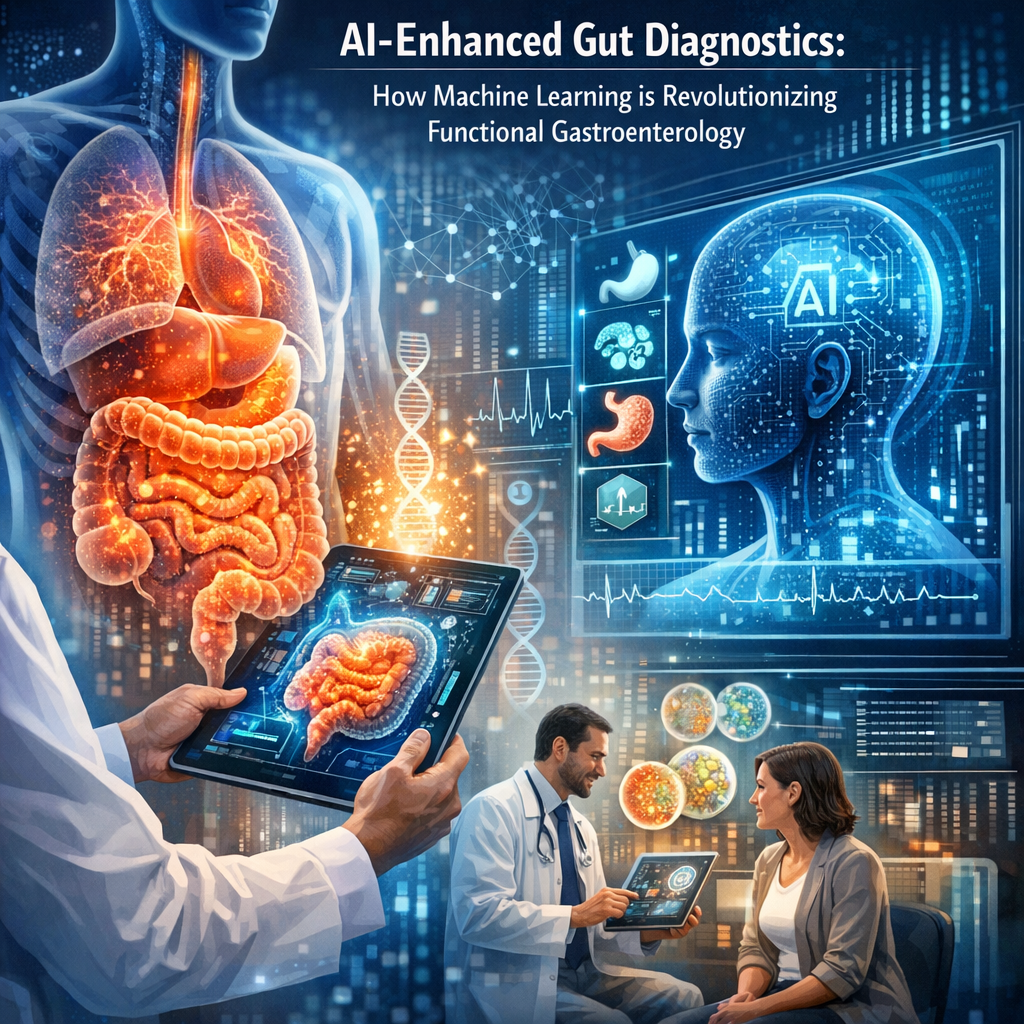
AI-Enhanced Gut Diagnostics: How Machine Learning is Revolutionizing Functional Gastroenterology
In recent years, the field of gastroenterology has witnessed a significant transformation driven by advancements in technology, particularly artificial intelligence (AI) and machine learning. The gut, often dubbed as the “second brain,” plays a crucial role in overall health, influencing everything from immune response to mental well-being. Despite its importance, diagnosing and managing gastrointestinal issues have traditionally been complex and often invasive processes. However, the advent of AI-enhanced gut diagnostics is poised to revolutionize functional gastroenterology, offering both patients and physicians a promising new frontier.
At the core of this revolution is machine learning, a subset of AI that enables computers to learn from and interpret vast amounts of data without human intervention. In the realm of gut health, this technology can analyze diverse data sets—ranging from genetic profiles and microbiome compositions to lifestyle and dietary patterns—to identify underlying issues and suggest personalized treatments. By leveraging AI, healthcare professionals can now make more accurate diagnoses, predict disease risks, and tailor interventions, moving away from a one-size-fits-all approach to a truly personalized method of care. Patient outcomes improve significantly when treatments are customized to individual needs, thus enhancing the potential for recovery and health maintenance.
One of the greatest challenges in gastroenterology is dealing with functional disorders, such as irritable bowel syndrome (IBS) and inflammatory bowel disease (IBD), where symptoms vary widely among patients. AI algorithms excel at recognizing patterns within complex datasets, which can lead to more precise diagnoses. For instance, AI can analyze stool samples to detect specific bacteria or markers indicative of dysbiosis—a prevalent condition where gut bacteria are out of balance, often contributing to various digestive disorders. AI’s capability to cross-reference myriad symptoms and biomarker data leads to a more integrative understanding of gut health.
Moreover, AI-driven diagnostics are paving the way for non-invasive testing methods. Traditional diagnostic tools, like colonoscopies or endoscopies, are often uncomfortable and carry risks. In contrast, AI can assist in developing methods that rely on simple breath, blood, or stool tests, thereby augmenting patient comfort and compliance. Additionally, the ability of AI models to continuously learn and improve means that diagnostic accuracy will likely increase over time, reducing the need for repetitive or unnecessary procedures. Healthcare systems benefit from the reduced costs and improved patient experiences associated with these advances.
Features of AI in Functional Gastroenterology
Several pioneering studies underscore the transformative impact of AI on gut diagnostics. A 2020 study published in Gastroenterology demonstrated how machine learning algorithms could predict the onset of inflammatory bowel disease with remarkable accuracy by analyzing electronic health records and genetic data. This not only helps in early detection but also assists in monitoring patients’ responses to treatments.
Another notable advancement is in microbiome sequencing. AI technologies, such as deep learning, are increasingly used to interpret vast genomic datasets of the gut microbiota. A study conducted by researchers at the University of California, San Diego, showcased an AI model that could predict an individual’s likelihood of developing obesity-related diseases by analyzing their microbiome profile. The implications of this are profound, as AI can potentially identify and modify gut bacteria to optimize health outcomes.
Furthermore, research outlined in The Lancet Digital Health highlights AI’s role in augmenting endoscopic procedures. By incorporating AI algorithms, endoscopic tools can now identify polyps with a higher degree of accuracy and consistency than human specialists alone, ensuring precancerous conditions are not overlooked. This precision reduces the cognitive load on medical professionals and enhances the timely and effective identification of gastrointestinal issues.
AI is also being harnessed to gather patient-reported outcomes in a more structured and actionable format. Applications that integrate natural language processing can analyze patient feedback, symptoms, and dietary logs, then correlate them with clinical outcomes. This ensures ongoing monitoring and adjustment of treatment plans in real-time, thus enhancing the care continuum.
Conclusion
As machine learning continues to evolve and integrate with healthcare technologies, the landscape of functional gastroenterology is set for unprecedented changes. AI-enhanced gut diagnostics offer a unique convergence of large-scale data analysis, predictive modeling, and personalized medicine, promoting a paradigm shift towards more patient-centric care. The promise of AI lies not just in improving diagnostic precision, but in offering holistic, non-invasive, and tailored solutions for maintaining optimal gut health. As both AI and our understanding of the gut microbiome advance, we can look forward to innovative strategies that not only address existing gastrointestinal ailments but also prioritize prevention and wellness.
References
1. Shung, D. L., Simonov, M., Gentry, M., Au, B., Laursen, D., Azzam, A., & Fang, Y. H. (2020). “Machine Learning to Predict Outcomes in Patients with Gastrointestinal Bleeding: A Single-center Experience.” Gastroenterology.
2. Olesen, S. W., & Alm, E. J. (2016). “Machine learning to assign antibiotic resistance genes to microbial communities.” PLOS Computational Biology.
3. Topol, E. J. (2019). “High-performance medicine: the convergence of human and artificial intelligence.” Nature Medicine.
Concise Summary
AI and machine learning are transforming functional gastroenterology by enabling precise, personalized diagnostics and treatments for gut disorders, such as IBS and IBD. By analyzing diverse data, AI improves diagnosis accuracy and patient outcomes. Non-invasive methods like breath and stool tests replace traditional procedures, enhancing comfort. Cutting-edge studies demonstrate AI’s role in early disease prediction, microbiome analysis, and polyp detection in endoscopic procedures, facilitating timely interventions. As AI tools advance, the focus shifts towards holistic care, prioritizing prevention and wellness while reducing healthcare costs and improving patient experiences.