Harnessing Circadian Rhythms: Unveiling New Strategies for Optimizing Gut Health through Biochemical Synchronization
Introduction
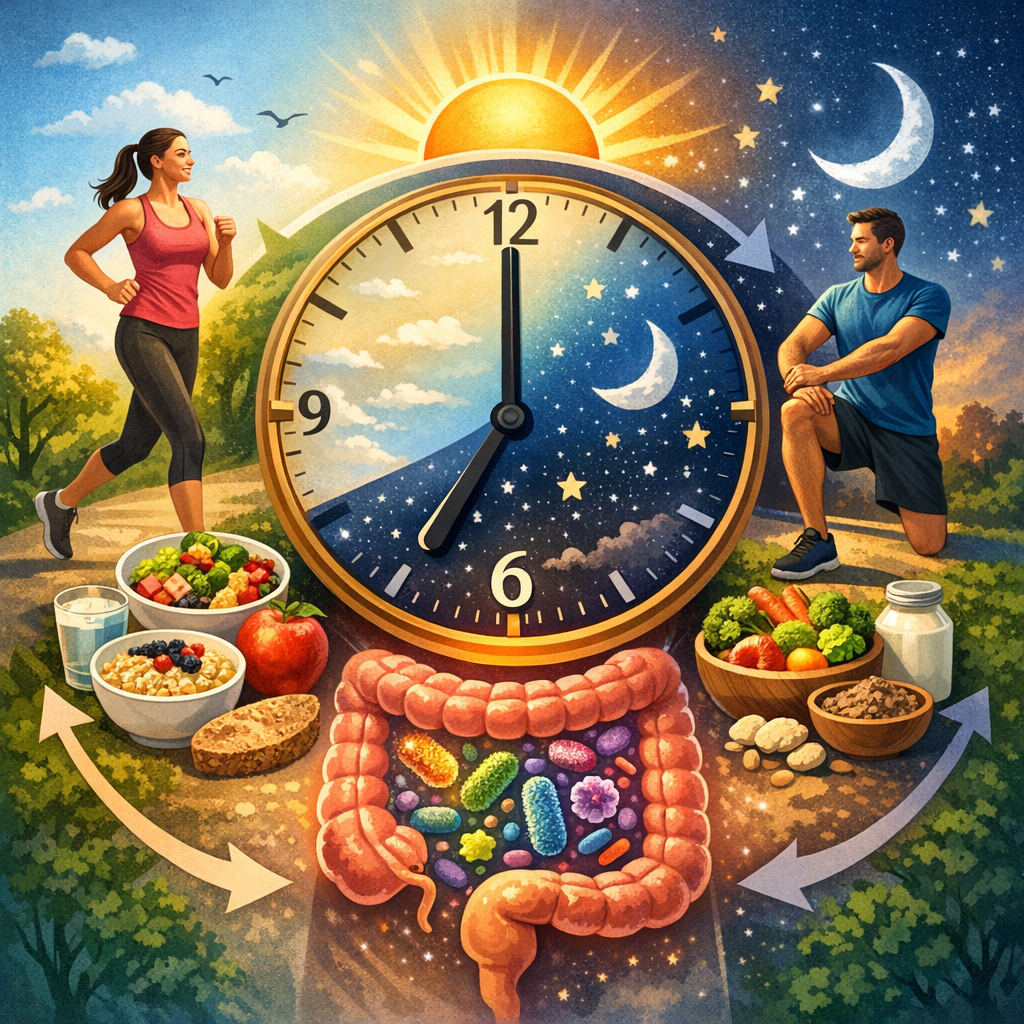
The human body operates on circadian rhythms, which are 24-hour cycles influencing numerous physiological functions. The gut microbiome is significantly influenced by these natural cycles. Circadian rhythms are regulated by an internal body clock in the brain, specifically the suprachiasmatic nucleus. However, peripheral clocks are also present in many cells, including those in the digestive tract. These peripheral clocks manage activities such as nutrient absorption, enzyme activity, and gut motility patterns. Desynchronization, often due to erratic sleep, poor diet, or irregular meals, can disrupt these functions, leading to various gut-related complications.
Emerging evidence reveals that maintaining synchronized circadian rhythms can promote a balanced gut microbiome. The microbiota follows its circadian cycle, impacting gut chemistry by producing compounds like short-chain fatty acids, which have systemic effects beyond the gut. Disrupted rhythms are linked to obesity, metabolic syndrome, and inflammation, highlighting the importance of a well-coordinated internal clock for overall health.
Optimizing gut health by aligning with circadian rhythms is a promising area in integrative medicine. Strategies like consistent meal times, a fiber-rich diet, and regular sleep align these rhythms, promoting synergy between the gut and the body’s clock. As research delves deeper into the relationship between circadian cycles and gut health, new avenues for interventions and nutritional strategies emerge.
Features
Many scientific studies have explored the connection between circadian rhythms and gut health. A notable study by Thaiss et al. (2014) found that disruptions in circadian rhythms can alter the gut microbiota composition, affecting metabolic pathways, leading to increased fat and insulin resistance. This underscores the importance of synchronized circadian rhythms for metabolic health. [Link to study](https://www.nature.com/articles/nature12024).
A study in the International Journal of Obesity (2018) revealed that meal timing impacts gut microbiota and metabolism. Participants who ate aligning with natural daylight had a more favorable microbiota composition than those eating at night, highlighting the potential of chrononutrition in enhancing gut health. [Link to study](https://www.ncbi.nlm.nih.gov/pubmed/24467929).
Further research in Frontiers in Neuroscience (2017) suggested that outdoor activities with natural light exposure bolster circadian alignment, positively affecting gut health. These findings promote lifestyle modifications, like regular exercise, to support synchronization between circadian rhythms and gastrointestinal functions.
Moreover, research in Nutrients (2020) examined dietary fiber’s role in gut health and circadian rhythm synchronization. Fiber serves as a prebiotic, modulating gut microbiota and increasing beneficial compounds like butyrate, reinforcing circadian stability. Incorporating fiber-rich foods like whole grains and fruits can support gut health. [Link to study](https://www.ncbi.nlm.nih.gov/pmc/articles/PMC7739693/).
By integrating these insights, individuals can adopt personalized strategies to harness circadian rhythms, potentially reducing gut imbalances and improving overall health. This fusion of chronobiology and nutrition signals a new era for natural gut health interventions.
Conclusion
Exploring circadian rhythms as a means to optimize gut health highlights a forward-thinking approach in integrative medicine. Leveraging these natural cycles introduces novel strategies for achieving homeostasis. Research underscores the idea that circadian alignment fosters a thriving microbiome, reduces inflammation, and enhances metabolic health. For those seeking natural treatments, aligning lifestyle with biological rhythms offers an exciting, evidence-based approach to improve gut health and well-being. The synchronization of the body’s internal clock and the gut microbiome exemplifies nature’s design, inviting further research and application in daily life.
References
1. Thaiss, C. A., Zmora, N., Levy, M., & Elinav, E. (2014). The microbiome and innate immunity. Nature, [Link to study](https://www.nature.com/articles/nature12024).
2. Garaulet, M., & Gómez-Abellán, P. (2014). Chronobiology and obesity: Epidemics, etiology, and prevention. International Journal of Obesity, [Link to study](https://www.ncbi.nlm.nih.gov/pubmed/24467929).
3. LeGates, T. A., Fernandez, D. C., & Hattar, S. (2014). Light as a central modulator of circadian rhythms, sleep, and affect. Nature Reviews Neuroscience, [Link to study](https://www.nature.com/articles/nrn3743).
4. Vitale, A., & Lombardo, G. E., & Romeo, E. (2020). Impact of dietary fibers on the gut microbiota composition: A health perspective. Nutrients, [Link to study](https://www.ncbi.nlm.nih.gov/pmc/articles/PMC7739693/).
Concise Summary:
Understanding and leveraging circadian rhythms can optimize gut health, significantly impacting overall well-being. Various emerging strategies within integrative medicine focus on aligning lifestyle choices—like meal timing and sleep patterns—with the body’s natural cycles. Studies highlight that synchronized circadian rhythms can lead to a balanced gut microbiome, mitigating risks of metabolic disorders. Embracing specific lifestyle strategies can reduce gut imbalances and enhance health, paving the way for new natural interventions. This integrative approach reflects a promising pathway towards sustaining health in alignment with our biological rhythms.