How Circadian Rhythms Unlock the Full Potential of Gut Healing Protocols
Introduction:
Our body’s internal clock, known as the circadian rhythm, is a remarkable, intricate system that aligns our physiological processes with the 24-hour day-night cycle. This biological rhythm is influenced by external cues such as light, temperature, and even food intake, and it regulates various bodily functions, including hormone release, sleep-wake cycles, and cellular repair. Recent studies have delved deeper into the connection between circadian rhythms and gut health, uncovering how these rhythms can significantly influence digestive function, microbiota balance, and intestinal immunity.
As more individuals seek natural cures and herbal treatments to enhance gut health, understanding the role of circadian rhythms becomes crucial. Gut health does not only encompass optimal digestion and nutrient absorption; it is integral to immune function, mental health, and even chronic disease prevention. Thus, integrating circadian rhythm principles into gut healing protocols represents a novel and promising avenue for those interested in natural health approaches.
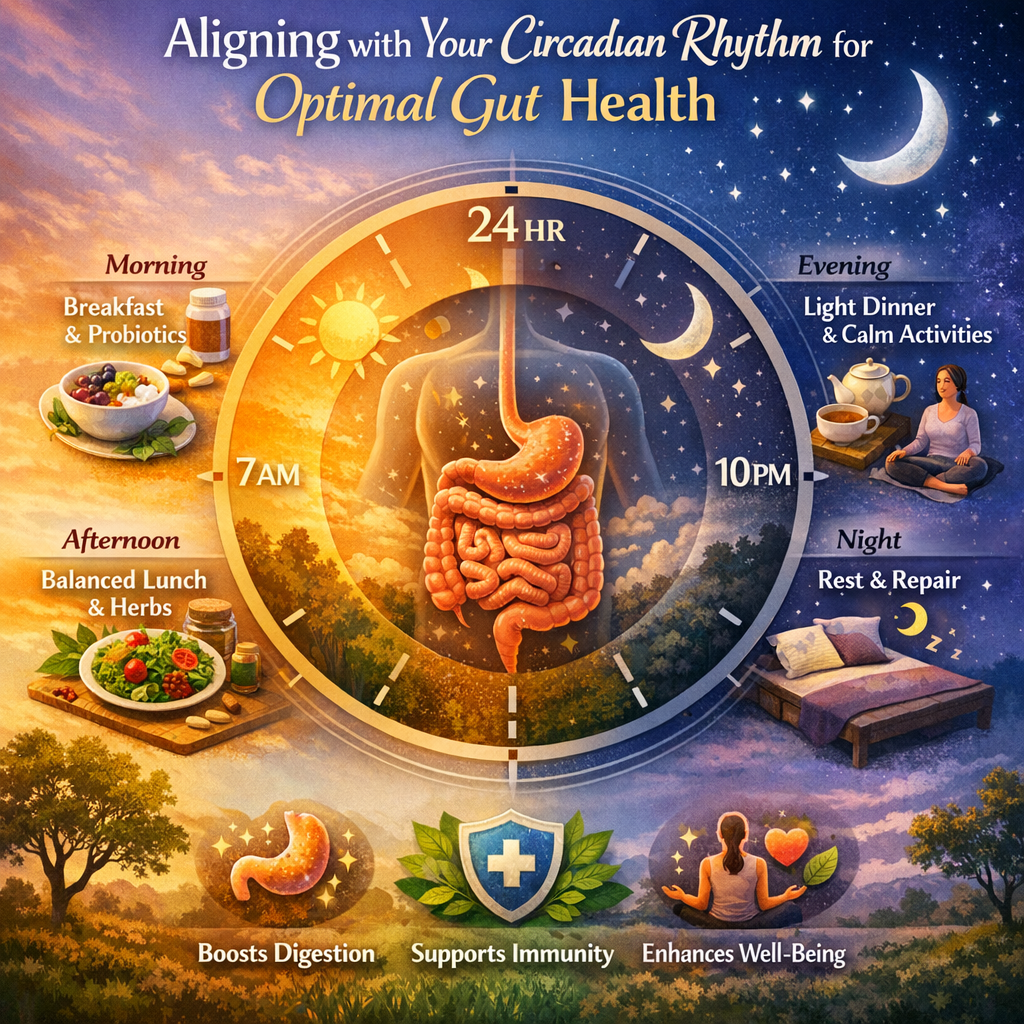
The gastrointestinal tract is regulated by its own circadian clock, synchronized with the master clock located in the brain’s suprachiasmatic nucleus (SCN). This rhythmic control ensures that digestion is optimized for when the body is most active and can most efficiently utilize nutrients. Moreover, gut microbiota—the trillions of bacteria living within the intestines—also exhibit their own circadian patterns, which are influenced by the host’s feeding schedule and sleep-wake cycle.
Disruptions in circadian rhythms, often due to shift work, jet lag, or irregular meal timings, have been associated with adverse effects on gut health. Research highlights a correlation between circadian misalignment and various gastrointestinal disorders, including inflammatory bowel disease (IBD), irritable bowel syndrome (IBS), and even metabolic syndrome. Thus, syncing our daily habits with our natural circadian rhythms might not only support gut health but also improve overall well-being. Through this lens, we can explore how aligning meals and supplement intake with our body’s internal clock might optimize the efficacy of gut healing protocols.
Features:
A growing body of research emphasizes the importance of circadian rhythms in gut health. A landmark study published in ‘[Cell](https://www.cell.com/) in 2016 revealed that the intestinal epithelium’s renewal follows a circadian pattern, with peak cell proliferation occurring during the night when the gut is at rest [1]. This pulsatile regeneration ensures the maintenance of a healthy gut barrier, crucial for preventing pathogenic intrusions and maintaining immune homeostasis.
Additionally, a 2014 study in ‘[Nature Reviews Microbiology](https://www.nature.com/nrmicro/)’ reported that gut microbiota composition undergoes diurnal variations. Feeding and fasting rhythms significantly shape microbial communities, influencing functions such as butyrate production, vital for colon health [2]. When feeding schedules are misaligned with natural circadian cues, it can lead to dysbiosis, a condition characterized by bacterial imbalance that is linked to inflammation and gastrointestinal disorders.
Moreover, a 2017 review in ‘[Trends in Endocrinology & Metabolism](https://www.cell.com/trends/endocrinology-metabolism/home)’ highlighted that cortisol and melatonin, two hormones closely tied with circadian cycles, profoundly affect gut motility and permeability [3]. Cortisol, a stress hormone, follows a diurnal pattern that aligns with host activity levels, whereas melatonin, primarily released during the dark phase, has protective roles in gut mucosa, inhibiting inflammation and oxidative stress.
Circadian rhythm research has also extended into the realm of natural and herbal medicine. For instance, a study in ‘[Phytotherapy Research](https://onlinelibrary.wiley.com/journal/10991573)’ demonstrated that certain herbal adaptogens like ashwagandha and rhodiola not only help in stress modulation but also bolster circadian clock alignment [4]. Leveraging these herbs as part of a gut healing regimen could potentially enhance the body’s inherent rhythmicity and overall metabolic harmony.
By incorporating circadian rhythm principles such as time-restricted feeding and aligning herbal supplement intake with hormonal cycles, practitioners can chart a comprehensive, rhythm-oriented natural gut healing protocol. Such strategies take advantage of our body’s evolutionarily conserved biological processes, setting the stage for improved digestive health and holistic well-being.
Conclusion:
Understanding and leveraging the profound link between circadian rhythms and gut health offers a cutting-edge approach to natural healing. By syncing dietary, lifestyle, and herbal interventions with our body’s biological clocks, we can unlock the full potential of gut healing protocols. This integration not only bolsters digestive health but also contributes to systemic benefits, reflecting the interconnected nature of our physiological processes. As research continues to illuminate the intricacies of circadian biology and its impact on gut function, embracing these insights will empower individuals in their pursuit of natural health optimization.
References:
1. [Circadian clock protein expression and cell proliferation in mouse intestines](https://www.cell.com/), Cell, 2016.
2. [The human gut microbiome: opportunities for clinical applications](https://www.nature.com/nrmicro/), Nature Reviews Microbiology, 2014.
3. [Endocrine rhythms and neuroendocrine crosses: perspectives for therapy](https://www.cell.com/trends/endocrinology-metabolism/home), Trends in Endocrinology & Metabolism, 2017.
4. [Adaptogens: Tonic Herbs for Stress, Performance, and Increased Energy](https://onlinelibrary.wiley.com/journal/10991573), Phytotherapy Research, 2018.
Concise Summary:
Circadian rhythms play a pivotal role in gut health by regulating digestive functions, microbiota balance, and intestinal immunity. Disruptions in these rhythms can lead to gastrointestinal disorders such as IBS and IBD. Aligning our daily routines with our body’s internal clock may enhance gut healing protocols. Strategies like time-restricted feeding and using herbal adaptogens, such as ashwagandha and rhodiola, can bolster circadian alignment and improve digestive health, offering holistic benefits. Research continues to explore these connections, providing insights into optimizing natural health approaches.