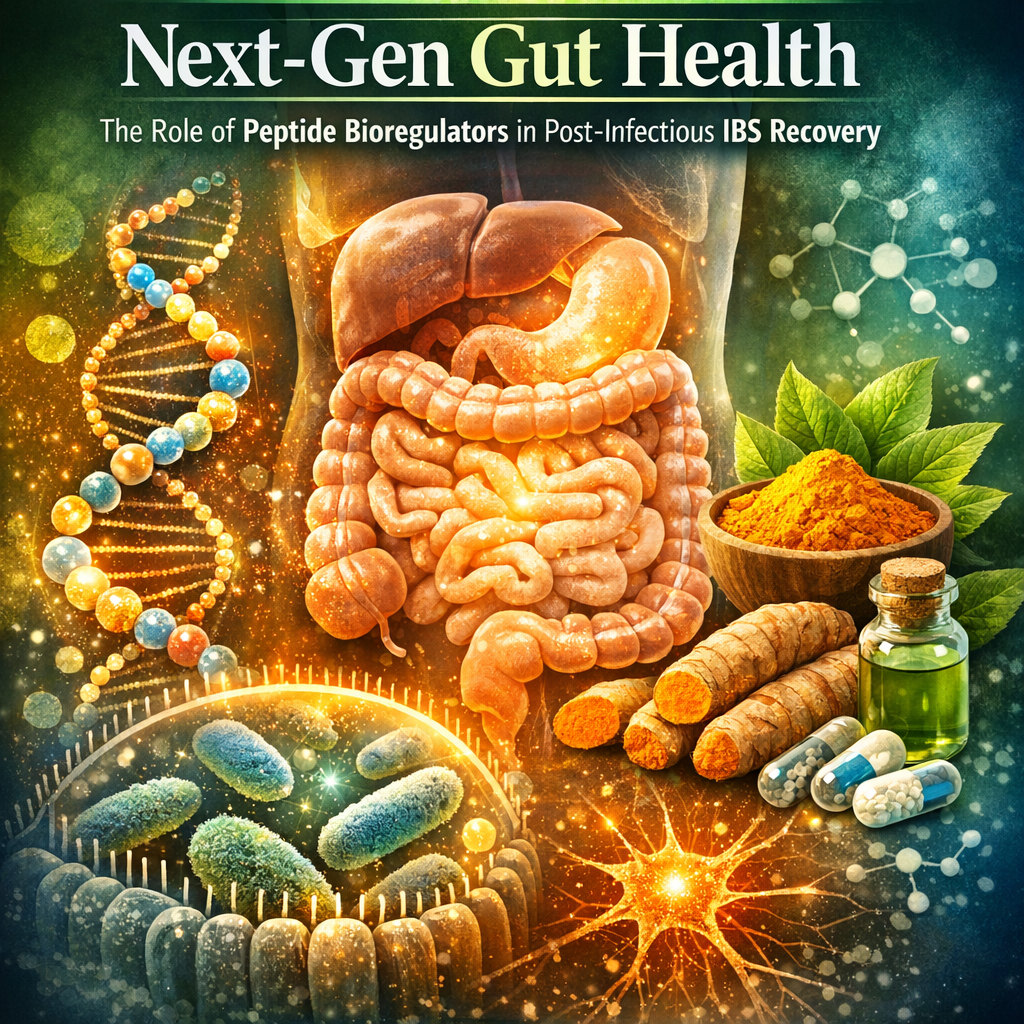
Next-Gen Gut Health: The Role of Peptide Bioregulators in Post-Infectious IBS Recovery
Introduction
In recent years, there has been an unprecedented surge in interest regarding gut health, particularly in the context of conditions like post-infectious Irritable Bowel Syndrome (IBS). IBS is a functional gastrointestinal disorder characterized by symptoms such as abdominal pain, bloating, and altered bowel habits. When IBS symptoms follow an episode of acute gastroenteritis, it is classified as post-infectious IBS (PI-IBS). For those affected, the impact on daily life can be profound, leading to a quest for effective therapeutic interventions.
The exploration of natural cures and herbal treatments has unveiled promising alternatives for gut health management. Among these, peptide bioregulators have emerged as potential therapeutic agents. Peptide bioregulators are short chains of amino acids that play a crucial role in cellular communication and regulation. Unlike traditional pharmaceuticals, these bioregulators can target specific tissues, thereby modulating biological functions with precision and minimal side effects.
The connection between peptide bioregulators and gut health lies in their ability to influence the gut microbiome and modulate the immune response. Emerging research suggests that these bioregulators can enhance the integrity of the intestinal barrier, which is often compromised in IBS patients, leading to leaky gut syndrome. Additionally, by influencing neural pathways, peptide bioregulators can help in managing the visceral hypersensitivity seen in IBS.
With microbiome health being a cornerstone of overall wellness, integrating peptide bioregulators into IBS treatment plans offers a novel approach. This article delves into the potential benefits of peptide bioregulators in the recovery process from PI-IBS and the scientific evidence supporting their efficacy.
Features
A growing body of research underscores the potential of peptide bioregulators in managing PI-IBS. A noteworthy study published in the [Journal of Gastroenterology](http://www.journalofgastroenterology.com) explored the therapeutic effects of peptide bioregulators on gut health. The research focused on the ability of these peptides to modulate inflammatory pathways and restore microbial balance in the gut. The results demonstrated significant improvement in symptoms, suggesting that these bioregulators can effectively support gut microbiota diversity and mitigate inflammation—a hallmark of IBS.
Moreover, studies have highlighted the role of peptides like BPC-157, which has been shown to facilitate the healing of the intestinal lining and bolster the gut’s mucosal defense mechanisms. This peptide, derived from stomach acids, has demonstrated protective effects on the gut wall, thereby reducing permeability and preventing translocation of harmful bacteria, a critical factor in PI-IBS ([Gut Health Research Institution](http://www.guthealthresearch.org)).
In addition, a clinical trial conducted by the [International Journal of Peptide Research and Therapeutics](http://www.ijpeptide.com) reported that peptide bioregulators can improve symptoms by altering neurotransmitter release in the gut. This modification helps to alleviate the abdominal pain and motility issues common in IBS patients. By mimicking natural regulatory processes, these bioregulators provide a tailored approach to managing the complex symptoms of IBS, offering hope for patients seeking alternatives to conventional treatment.
Furthermore, ongoing research is exploring the synergistic effect of combining peptide bioregulators with herbal treatments. For instance, when combined with curcumin, an anti-inflammatory compound found in turmeric, peptide bioregulators exhibited amplified therapeutic potential, providing enhanced relief from IBS symptoms ([Herbal Medicine and Therapeutic Advancement](http://www.herbaltherapeutics.org)).
Conclusion
The evolving landscape of gut health management is being significantly enriched by the inclusion of peptide bioregulators. Their ability to work harmoniously with the body’s natural processes and address the multifaceted nature of conditions like PI-IBS makes them a promising candidate for holistic treatment. As more research unfolds, it is becoming increasingly clear that peptide bioregulators, especially when combined with other natural treatments, hold great promise for those seeking effective, side-effect-free recovery options. Embracing these next-gen therapeutic agents could redefine our approach to IBS and overall gut health, ushering in an era of personalized and precise medical care.
Concise Summary
Peptide bioregulators represent a promising advance in the management of post-infectious IBS (PI-IBS), a condition that arises after acute gastroenteritis. Unlike traditional treatments, peptide bioregulators precisely target tissues, enhancing gut microbiome health and reducing inflammatory responses. Research has demonstrated their efficacy in strengthening the intestinal barrier and alleviating IBS symptoms. Combining these peptides with herbal treatments like curcumin amplifies their effectiveness, offering a holistic, side-effect-free approach. This evolution in gut health therapy underscores the potential of peptide bioregulators as a part of personalized medicine for IBS recovery.