The Role of Postbiotics in Advanced Gut Repair: The Next Frontier in Functional Gastroenterology
Introduction
In the ever-evolving domain of functional gastroenterology, the emphasis has increasingly shifted towards the role of microbial ecosystems in promoting optimal gut health. Over the years, probiotics and prebiotics have been heralded as key components in maintaining gut balance. However, a new player is emerging in the game—postbiotics. This fascinating frontier in gut health stems from ongoing research into the microbiome and offers new hope for individuals seeking advanced methods for gut repair.
Postbiotics refer to the metabolic byproducts or compounds generated by probiotic bacteria during fermentation in the gut. Unlike probiotics, which are live bacteria, or prebiotics, which are dietary fibers that nourish these bacteria, postbiotics are non-living. These substances include short-chain fatty acids (SCFAs), peptidoglycan-derived peptides, sugars, and other proteins and metabolites that offer therapeutic benefits.
The appeal of postbiotics lies in their stability and safety. Unlike probiotics, which can be sensitive to environmental conditions like temperature and pH, postbiotics are more resilient, making them easier to store and incorporate into various foods and supplements. This stability also reduces the risk of adverse reactions, as postbiotics do not require the presence of live bacteria for their beneficial effects.
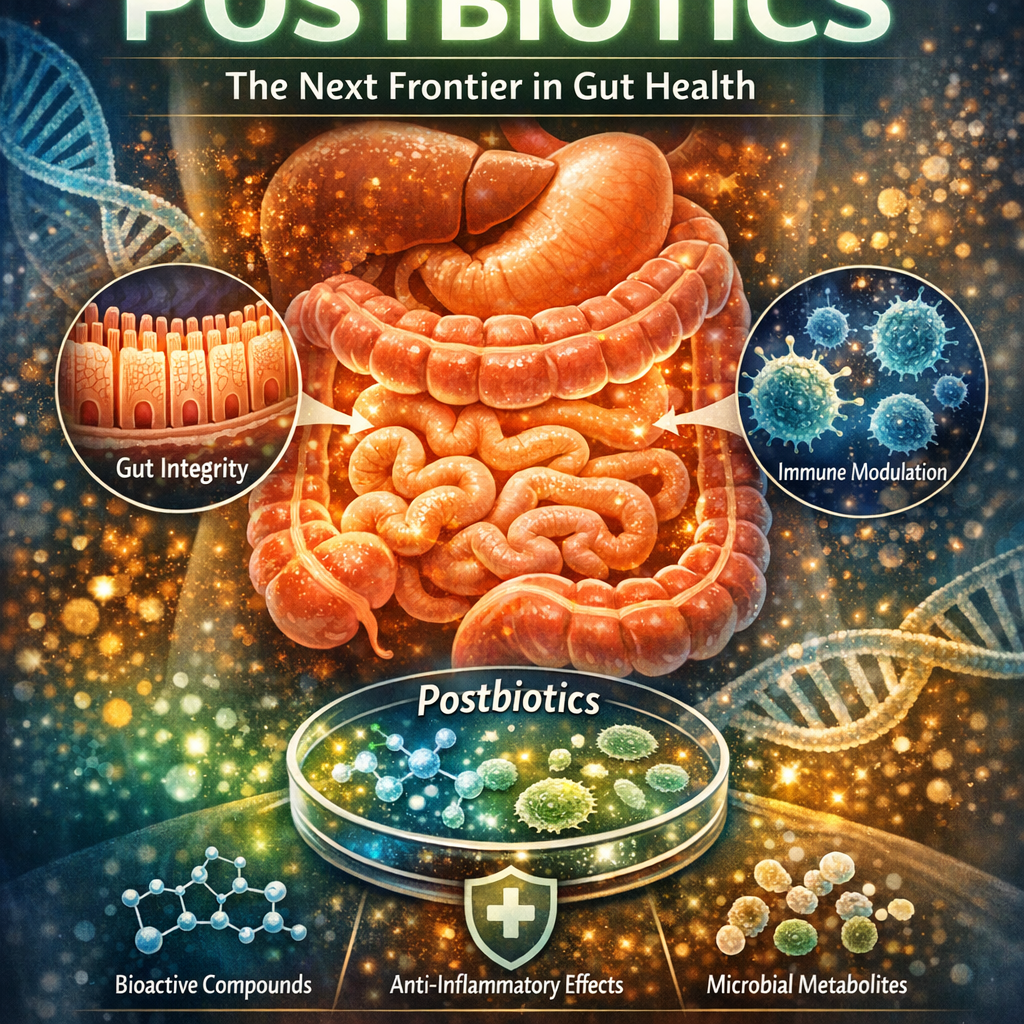
As the understanding of the gut microbiome deepens, postbiotics are gaining attention for their potential roles in promoting gut barrier function, modulating immune responses, and even exerting anti-inflammatory effects. Their ability to influence gut health at a molecular level makes them a promising candidate for advanced therapeutic strategies.
In this article, we will explore the latest research and professional studies highlighting the role of postbiotics in gut repair, offering insights into how these compounds are redefining functional gastroenterology.
Features
The spotlight on postbiotics has increased as recent studies unveil their promising role in gut health enhancement. A study published in Frontiers in Microbiology elucidated how postbiotics, particularly short-chain fatty acids (SCFAs) like butyrate, acetate, and propionate, play crucial roles in maintaining gut integrity. SCFAs provide energy for colonocytes, strengthen gut barrier function, and reduce inflammation by modulating gene expression and suppressing pathways that cause inflammation. [Frontiers in Microbiology Study](https://www.frontiersin.org/articles/10.3389/fmicb.2019.01464/full)
Furthermore, a clinical trial featured in the Current Pharmaceutical Design journal explored the impact of postbiotic supplementation in patients with irritable bowel syndrome (IBS). The findings revealed significant improvements in patients’ symptoms, attributing these benefits to the anti-inflammatory and immune-regulatory properties of postbiotics. This study underscores the potential of postbiotics as a therapeutic strategy tailored to individualized patient needs. [Current Pharmaceutical Design Study](https://pubmed.ncbi.nlm.nih.gov/26852108/)
Additionally, postbiotics are recognized for their safety profile. A review in Nutrients highlights that postbiotics do not pose the risks associated with the consumption of live bacteria, such as the potential for pathogenicity and transfer of antibiotic resistance. This makes them a viable alternative for vulnerable populations like infants, the elderly, and individuals with compromised immune systems. [Nutrients Review](https://www.mdpi.com/2072-6643/11/11/2679)
Research is also investigating the interplay between postbiotics and the gut-brain axis. Emerging evidence suggests that postbiotics can influence neurotransmitter production and impact mood and behavior, offering a holistic approach to managing gut-related disorders that extend beyond local symptoms.
Conclusion
Postbiotics are rapidly emerging as a crucial element in the landscape of gut health, offering new dimensions in advanced gut repair strategies. As scientific understanding deepens, their role in promoting gut integrity, modulating immune responses, and influencing systemic health emerges as both promising and profound. Individuals striving for optimal gut health can look toward postbiotics as a safe and effective option for enhancing their well-being. While further research will continue to unveil their full potential, current evidence already positions postbiotics as a valuable ally in the quest for gut health optimization and a critical player in the next frontier of functional gastroenterology.
Concise Summary
Postbiotics, as non-living metabolic byproducts generated by probiotics, offer a promising frontier in functional gastroenterology. Unlike probiotics, they are stable and safe, unaffected by environmental conditions. Postbiotics, including short-chain fatty acids, are shown to improve gut health by promoting barrier function, modulating immune responses, and reducing inflammation. They also offer therapeutic benefits for conditions like irritable bowel syndrome (IBS) and present a low-risk option for vulnerable populations. As research progresses, postbiotics are emerging as essential tools in advanced gut repair strategies, marking a significant advancement in the pursuit of optimal gut health.
References:
– [Frontiers in Microbiology Study](https://www.frontiersin.org/articles/10.3389/fmicb.2019.01464/full)
– [Current Pharmaceutical Design Study](https://pubmed.ncbi.nlm.nih.gov/26852108/)
– [Nutrients Review](https://www.mdpi.com/2072-6643/11/11/2679)