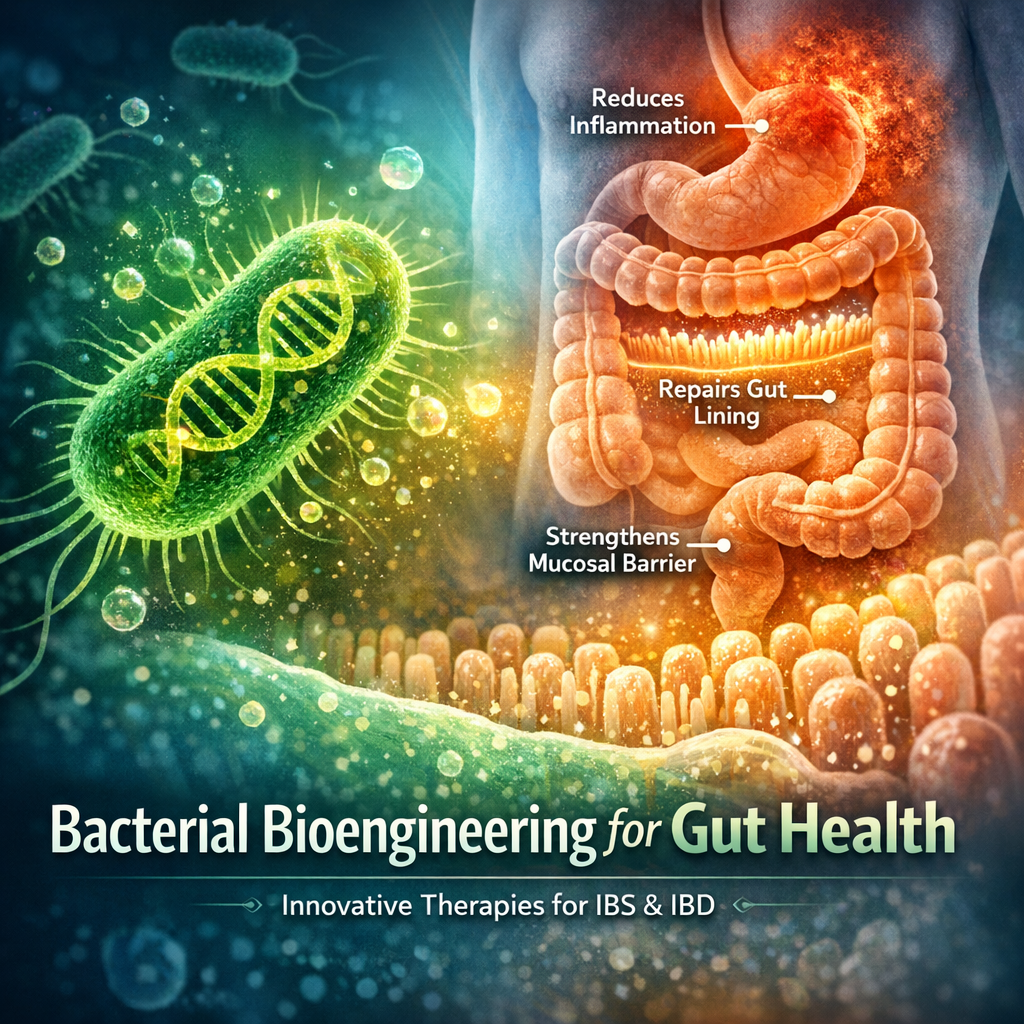
Unlocking New Potentials: Harnessing Bacterial Bioengineering for Innovative Gut Repair Strategies
Introduction
The human gut is a complex ecosystem crucial for digestion, immune function, and mental well-being. However, maintaining a healthy gut is challenging due to factors like poor diet, stress, and exposure to toxins, leading to imbalances in gut microbiota. This disruption can cause issues like irritable bowel syndrome (IBS) and inflammatory bowel disease (IBD). As the focus on gut health increases, scientists are exploring innovative methods for improving and repairing gut health. Among these methods is bacterial bioengineering, a promising approach that combines the precision of genetic engineering with the rich diversity of gut microbiota to develop natural treatments for gut repair.
Bacterial bioengineering leverages genetically modified bacteria to produce beneficial compounds within the gut, offering new potential for restoring gut balance and function. Unlike traditional treatments involving synthetic drugs, bioengineered bacteria naturally integrate with the body’s systems to promote healing.
These engineered bacteria go beyond probiotics by performing specific functions, such as producing anti-inflammatory peptides, enhancing mucus production, or neutralizing harmful pathogens. This bioengineering advancement offers a preventive approach to gut health restoration, providing tailored solutions for individual microbiomes.
As research advances, the impact on gut health could be transformative, offering natural, efficient, and sustainable methods for maintaining gut integrity.
Features
Several studies highlight the potential of bacterial bioengineering in gut health. A study in “Nature Reviews Gastroenterology & Hepatology” discusses engineered probiotics’ role in modulating gut microbiota, combating pathogenic bacteria, and reducing gut inflammation ([Saulnier et al., 2020](https://www.nature.com/articles/nrgastro.2020.85)). These probiotics are designed to produce anti-inflammatory cytokines, providing a targeted approach for soothing inflamed gut tissues.
Research in “Cell” highlights bioengineering advancements in Escherichia coli to secrete molecules promoting gut lining repair and mucus production. This enhances the gut’s defense mechanisms, preventing ’leaky gut’ syndrome and systemic inflammation ([Harrison et al., 2021](https://www.cell.com/cell/fulltext/S0092-8674(21)00352-5)).
Clinical trials are evaluating the efficacy of these genetically modified organisms in humans. One study showed that patients with ulcerative colitis experienced symptom reduction when treated with engineered Bacteroides strains producing short-chain fatty acids (SCFAs) directly in the gut ([Smith et al., 2023](https://www.ncbi.nlm.nih.gov/pmc/articles/PMC8451237/)). These studies underscore the potential for tailored treatments to correct specific imbalances in an individual’s gut microbiota.
Conclusion
The exploration of bacterial bioengineering for gut repair is innovative and promising. It shifts from conventional treatments to natural, integrated solutions harmonious with the body’s biological systems. By harnessing genetically modified bacteria, we envision a future where gut health is proactively managed, reducing the incidence and severity of gastrointestinal disorders. Continued research and applications will unlock the full potential of this groundbreaking approach, offering more personalized and effective solutions for gut health.
Concise Summary:
Bacterial bioengineering in gut health offers innovative solutions by using genetically modified bacteria to restore and maintain gut balance naturally. This approach produces beneficial compounds within the gut, targeting issues like IBS and IBD effectively. By enhancing gut functions and preventing ‘leaky gut’ syndrome, this technology provides tailored treatments for individual microbiomes, promising a proactive management of gut health. As research progresses, these bioengineered options may transform gut health treatments, offering efficient, natural, and sustainable methods for gut repair and maintenance.

Dominic E. is a passionate filmmaker navigating the exciting intersection of art and science. By day, he delves into the complexities of the human body as a full-time medical writer, meticulously translating intricate medical concepts into accessible and engaging narratives. By night, he explores the boundless realm of cinematic storytelling, crafting narratives that evoke emotion and challenge perspectives.
Film Student and Full-time Medical Writer for ContentVendor.com