Unleashing the Power of Gut Virome: Hidden Viruses in Your Microbiome and Their Role in Health
Introduction
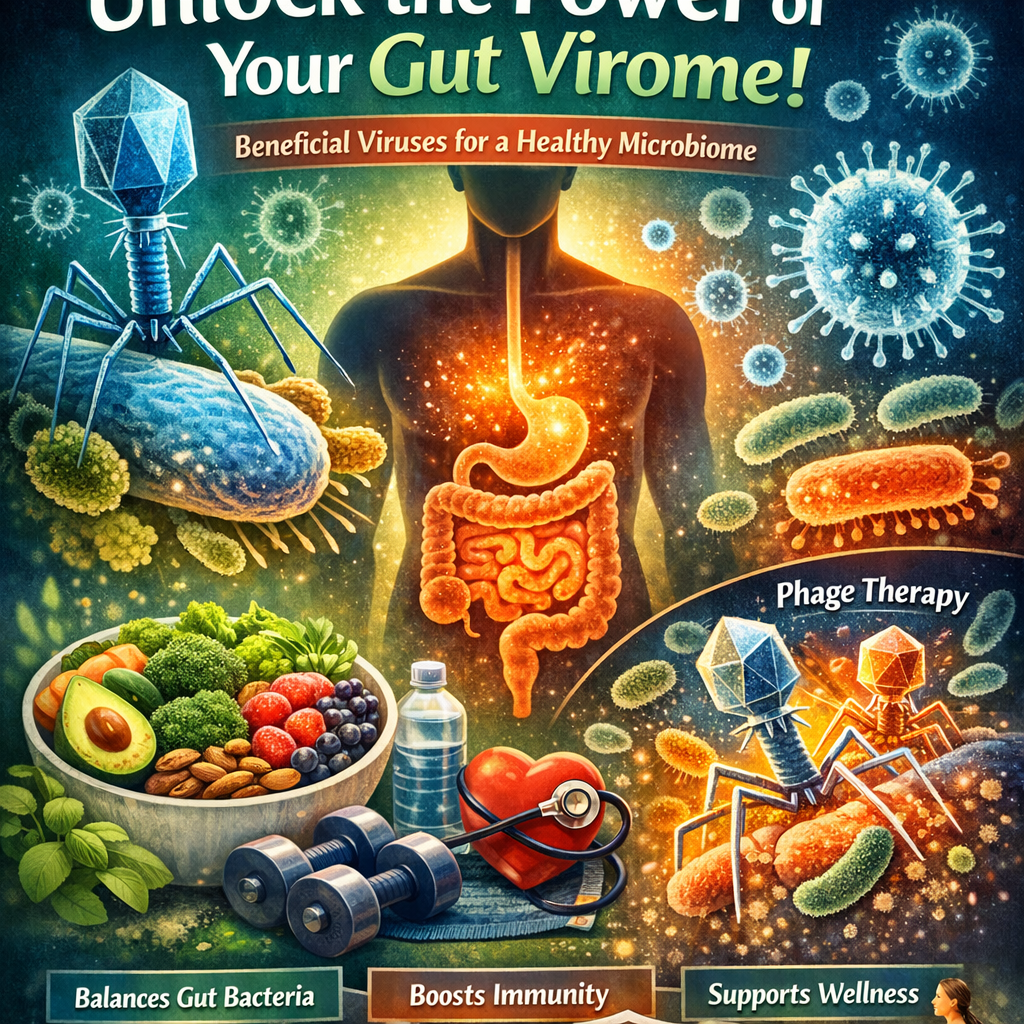
In recent years, our understanding of the gut microbiome has expanded dramatically, leading to new insights in medical research and holistic health. While the relationship between gut health and the bacteria in our digestive system is well-documented, the lesser-known gut virome—a collection of viruses, including bacteriophages, residing in our intestines—also plays a critical role. These viruses specifically target bacteria, significantly affecting the population and influence of bacteria on gut health. Unlike pathogenic viruses, many bacteriophages live harmlessly and potentially enhance the stability and function of the microbiome. They can influence bacterial communities through a process known as lysogeny, where viral genes integrate into bacterial genomes, possibly benefiting the host.
Emerging research shows that the virome’s dynamics are influenced by factors such as diet, lifestyle, and the host’s health status. A balanced gut virome can help maintain gut integrity by regulating bacterial populations and ensuring a diverse microbial community, which is crucial for immune function and nutrient absorption. Disturbances in this balance, caused by antibiotics or poor diet, can lead to dysbiosis, associated with various gastrointestinal disorders and systemic diseases.
In this article, we’ll explore the latest findings on the gut virome and the contributions of these minute entities to gut health. We also provide strategies to cultivate a favorable environment for them. Whether you’re dealing with gut issues or proactively enhancing digestive wellness, understanding the gut virome opens new avenues for natural interventions.
Features
Recent studies have begun to illuminate the complex interplay between the gut virome and overall health. Research in [Nature Microbiology](https://www.nature.com/articles/nmicrobiol) indicates that the virome is crucial for maintaining the balance of microbial populations in the gut. By targeting specific bacteria, bacteriophages can prevent the overgrowth of harmful species while promoting beneficial microbes, maintaining a stable microbial ecosystem.
A pivotal study in [Cell Host & Microbe](https://www.cell.com/cell-host-microbe/home) has shown that dietary changes can significantly influence the virome. Individuals on high-fiber diets experienced notable shifts in their virome composition, affecting bacterial diversity and stability. This underscores the significance of diet in modulating the virome, suggesting nutritional interventions as a non-invasive method to improve virome health.
An intriguing aspect of the virome’s role is its connection to the immune system. Research in [Frontiers in Immunology](https://www.frontiersin.org/journals/immunology) suggests that bacteriophages can influence immune responses by interacting with host bacterial cells. These interactions may enhance mucosal immunity, protecting the gut lining from pathogens and reducing inflammation, which is key to managing conditions like irritable bowel syndrome (IBS) and inflammatory bowel disease (IBD).
Moreover, the therapeutic potential of phage therapy is gaining attention as an alternative to antibiotics. This therapy uses specific bacteriophages to target and neutralize harmful bacteria, offering a targeted method that avoids broad-spectrum antibiotics, which can disrupt the microbiome. Ongoing studies aim to assess the long-term impacts and effectiveness of such treatments, and preliminary results are promising.
These discoveries highlight the need for a nuanced understanding of the gut virome in relation to gut health. As research evolves, it promises innovative strategies that leverage the natural power of bacteriophages to improve gut health and mitigate disease risk.
Conclusion
Understanding and harnessing the power of the gut virome represents a cutting-edge frontier in gut health that combines microbiology’s complexities with practical wellness implications. By embracing natural approaches like optimizing diet and exploring emerging therapies such as phage therapy, individuals can cultivate a healthy virome supporting digestive and overall health. As science continues to uncover the dynamic role of the virome, applying this knowledge toward enhancing personal health through informed choices becomes more attainable. Whether through diet, lifestyle adjustments, or scientific interventions, nurturing your gut virome could unlock new levels of health and well-being.
References
1. [Nature Microbiology](https://www.nature.com/articles/nmicrobiol)
2. [Cell Host & Microbe](https://www.cell.com/cell-host-microbe/home)
3. [Frontiers in Immunology](https://www.frontiersin.org/journals/immunology)
Concise Summary
The gut virome, comprising viruses, including bacteriophages, is a vital component of the gut ecosystem, influencing gut health alongside bacteria. Recent studies show its role in modulating microbial populations, immune response and maintaining gut stability. The virome’s dynamics are shaped by diet, lifestyle, and health, and disturbances can lead to dysbiosis and related diseases. Emerging therapies like phage therapy offer targeted alternatives to antibiotics. Understanding the virome offers potential for enhancing digestive wellness and managing conditions like IBS and IBD through natural interventions and informed lifestyle choices.

Dominic E. is a passionate filmmaker navigating the exciting intersection of art and science. By day, he delves into the complexities of the human body as a full-time medical writer, meticulously translating intricate medical concepts into accessible and engaging narratives. By night, he explores the boundless realm of cinematic storytelling, crafting narratives that evoke emotion and challenge perspectives.
Film Student and Full-time Medical Writer for ContentVendor.com