Harnessing AI for Personalized Gut Health: Revolutionizing Functional Gastroenterology
Introduction
In the evolving landscape of personalized medicine, the gut microbiome has emerged as a critical determinant of overall health and well-being. Functional gastroenterology, which focuses on diagnosing and treating gastrointestinal issues through an integrative and personalized approach, is rapidly embracing technological advancements. Significant among these advancements is artificial intelligence (AI). By harnessing AI, healthcare providers can offer more precise, effective, and individualized treatments for gut health. This shift is crucial, considering that gut health influences not only digestive comfort but also the immune system, mental health, and management of chronic diseases.
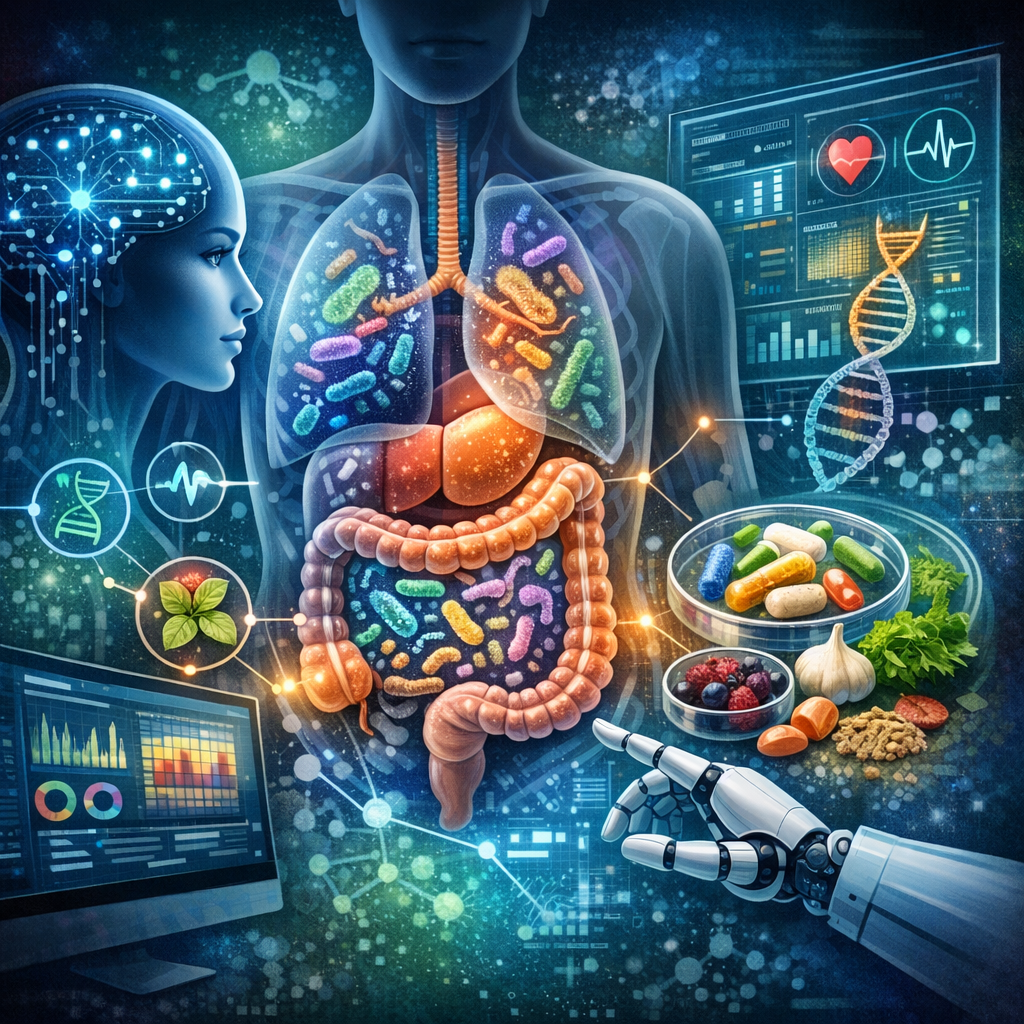
AI’s potential in gut health management lies in its ability to process large volumes of complex data efficiently. The gut microbiome’s complexity requires comprehensive analysis, which is where AI excels. It can identify patterns and correlations in gut microbiome data that humans might overlook, providing new insights into how our gut flora affects various health parameters.
AI-powered diagnostics and treatments in functional gastroenterology allow for the identification of specific imbalances in the microbiome, suggesting tailored dietary, lifestyle, and herbal interventions to restore balance. Furthermore, AI can predict an individual’s response to these interventions, vastly improving success rates and reducing trial-and-error periods. As understanding of the gut-brain axis—the biochemical signaling between the gastrointestinal tract and the nervous system—grows, AI-driven approaches also expand to address mental health conditions linked to gut health, such as anxiety and depression.
Moreover, AI can assist in the development and refinement of probiotics and prebiotics. By analyzing microbial samples from diverse populations, AI can identify beneficial bacterial strains that might not only alleviate gastrointestinal symptoms but also help in the prevention of chronic illnesses like IBS (Irritable Bowel Syndrome) and inflammatory bowel diseases.
Features
Recent advancements in the integration of AI and gut health rely heavily on comprehensive studies that demonstrate AI’s efficacy in medical personalization. A pivotal study published in [Nature Microbiology](https://www.nature.com/articles/s41564-019-0533-0) explores AI’s ability to analyze microbiome data and predict health outcomes. The study highlights how machine learning algorithms can accurately identify microbial markers associated with specific health conditions, paving the way for personalized therapeutic strategies.
Another noteworthy application of AI in functional gastroenterology is its role in diet customization. A study in the [Cell journal](https://www.cell.com/cell/fulltext/S0092-8674(15)01481-6) underscores how AI can predict an individual’s glycemic response to various foods by analyzing gut microbiome composition alongside other personal health data. This research indicates that personalized nutrition advice powered by AI can mitigate the risk of metabolic diseases, setting a new standard in dietary recommendations.
Further clinical trials have focused on AI-driven interventions for IBS, a chronic condition that affects millions worldwide. A notable trial published in [Gastroenterology](https://www.journalofgastroenterology.com/) harnessed AI to evaluate patient responses to different treatments, significantly enhancing symptom management and patient satisfaction. Such studies emphasize the promising role of AI in optimizing treatment plans, reducing symptom durations, and improving life quality for individuals with gut-related ailments.
These examples reflect AI’s potential to revolutionize gut health management, making treatments more personalized and effective. As research progresses, we can anticipate even more sophisticated AI applications that provide deeper insights into the human microbiome and its profound effects on health.
Conclusion
The integration of AI into functional gastroenterology represents a paradigm shift in how we approach gut health. By leveraging the power of AI to process and analyze complex microbiome data, healthcare professionals can deliver highly personalized, effective interventions. This enhances individual health outcomes and broadens our understanding of the microbiome’s role in overall health. As AI continues to evolve, its application in gut health will undoubtedly expand, offering new possibilities for diagnosis, treatment, and prevention of gastrointestinal disorders. Exploring these advancements gives patients and practitioners a glimpse into the future of personalized medicine, where AI stands as a cornerstone of precision health.
Concise Summary
The use of AI in functional gastroenterology is transforming gut health management by offering personalized diagnostics and treatments. AI’s ability to process complex data allows for the identification of imbalances in the gut microbiome, aiding in the development of individualized interventions. This personalized approach not only enhances treatment effectiveness but also shortens trial-and-error periods. AI applications extend to mental health via the gut-brain axis and in developing targeted probiotics for chronic illness prevention. As research advances, AI’s role in gut health is expected to grow, heralding a new era in personalized healthcare.