Uncovering the Parasite Paradox: How Controlled Helminthic Therapy Could Revolutionize Gut Health Treatment
Introduction
In recent years, the pursuit of optimal gut health has gained significant momentum, with many individuals turning to natural remedies and lifestyle changes. Amidst the myriad of supplements and probiotics, an unusual yet intriguing approach is making waves: controlled helminthic therapy. It challenges traditional perceptions by introducing a method that involves the deliberate introduction of parasites into the human body to treat or improve health conditions. While it may sound counterintuitive to associate parasites with healing, this concept is deeply rooted in the “hygiene hypothesis.” This hypothesis suggests that the absence of certain microorganisms and parasites due to modern sanitation and hygiene could be linked to the rise in autoimmune diseases and allergies.
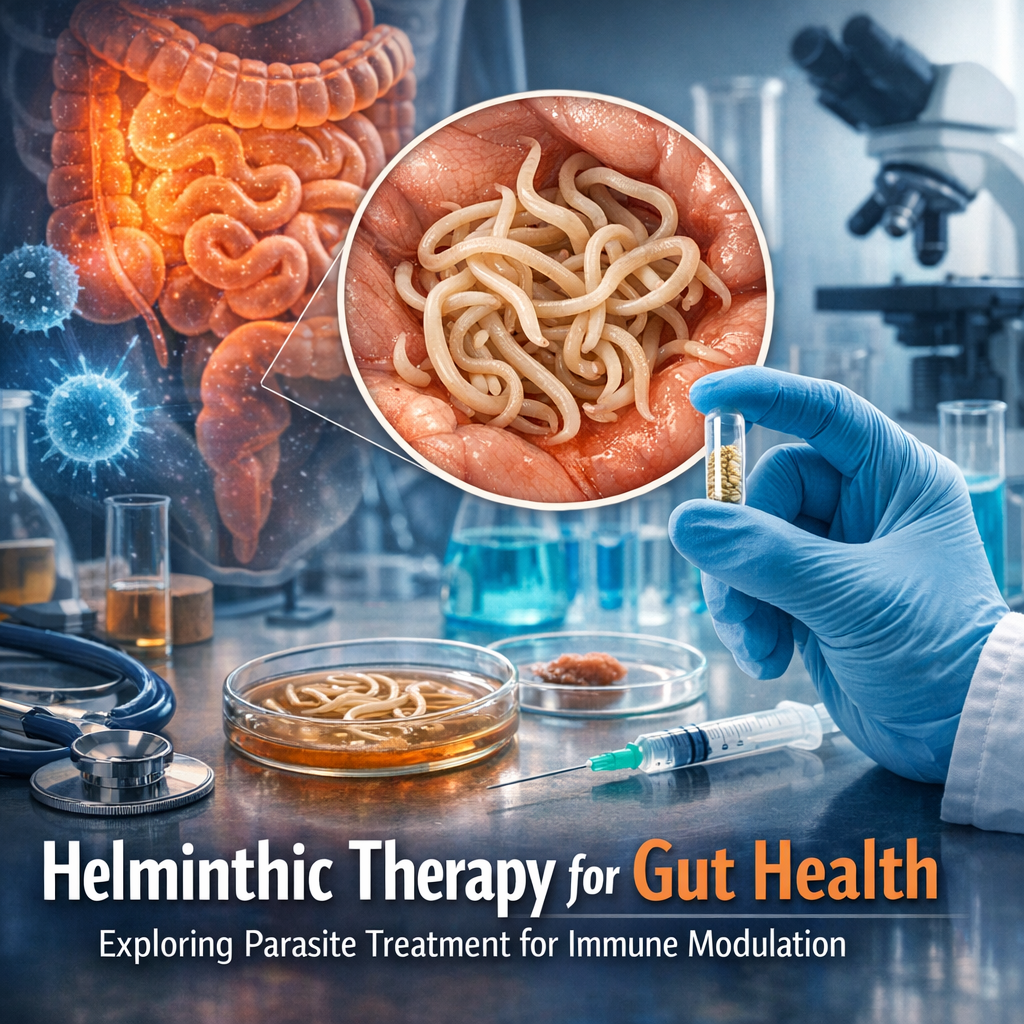
Helminthic therapy specifically involves the intentional introduction of helminths, which are parasitic worms such as hookworms and whipworms, into the gastrointestinal system. The rationale is built on the premise that these organisms have co-evolved with humans for millions of years, exerting calibrated immunomodulatory effects that could restore balance to dysfunctional immune systems. This ancient symbiosis might help in modulating immune responses and alleviating conditions like inflammatory bowel disease (IBD), celiac disease, and even irritable bowel syndrome (IBS).
The modern fascination with helminthic therapy reflects a growing interest in embracing ancient wisdom in the quest for healing. People are becoming increasingly aware of the damage inflicted by overactive immune responses and chronic inflammation, leading them to explore alternative medicine. Furthermore, the anecdotal evidence and emerging scientific research supporting the therapeutic benefits of parasites have piqued the curiosity of both laypersons and medical professionals alike.
Features
Scientific research in helminthic therapy is still developing, but several studies have begun to illuminate its potential for gut health. A notable study published in the journal [*Gastroenterology*](https://www.gastrojournal.org/article/S0016-5085(05)01762-X/fulltext) in 2005 investigated the effects of the pig whipworm, Trichuris suis, on patients with ulcerative colitis. The study found that patients who ingested *T. suis* ova experienced significant improvements in their symptoms. This finding prompted further exploration into the role of helminths in modulating inflammatory pathways.
In a 2010 study in the journal [*Clinical & Experimental Immunology*](https://onlinelibrary.wiley.com/doi/full/10.1111/j.1365-2249.2009.04027.x), researchers explored the immunoregulatory role of helminths. The study documented that helminth infections could induce regulatory T cells, which aid in maintaining immune system balance. By modulating cytokine production, helminths prevent excessive immune responses, which are often the culprit in autoimmune disorders. This interaction hints at the capability of helminths to reprogram the immune system, leading to improved gut health.
Another study, conducted in 2016 and published in the [*Journal of Allergy and Clinical Immunology*](https://www.jacionline.org/article/S0091-6749(15)01573-4/fulltext), highlighted the impact of helminths on allergy sufferers. Participants infected with hookworms showed a reduced allergic response to dust mites after the therapy, suggesting a potential pathway for treating allergic reactions and even asthma. The results paint a picture of controlled helminthic therapy as a promising strategy for immune modulation.
Despite the promising research, it is important to note the procedures’ novel nature and the need for caution. Regulatory concerns and the potential for side effects, coupled with ethical considerations, necessitate well-designed clinical trials. Current studies advocate for a refined approach, employing controlled and monitored protocols to ensure patient safety and optimal outcomes.
Conclusion
Controlled helminthic therapy stands on the brink of revolutionizing gut health treatment by leveraging the complex symbiotic relationship between parasites and the human immune system. While it may appear unconventional, emerging research suggests that tapping into this ancient interaction could offer new pathways for managing autoimmune diseases and restoring gut balance. However, as with any groundbreaking therapy, it is crucial to approach it with caution and a critical eye, ensuring thorough research and clinical validation. Ultimately, helminthic therapy’s potential could herald a new era in gut health, offering hope for millions seeking natural and effective treatment options.
References
1. Gastroenterology: Helminth Therapy in Ulcerative Colitis – [Link](https://www.gastrojournal.org/article/S0016-5085(05)01762-X/fulltext)
2. Clinical & Experimental Immunology: Immunoregulatory Role of Helminths – [Link](https://onlinelibrary.wiley.com/doi/full/10.1111/j.1365-2249.2009.04027.x)
3. Journal of Allergy and Clinical Immunology: Helminths and Allergy – [Link](https://www.jacionline.org/article/S0091-6749(15)01573-4/fulltext)
Concise Summary: Controlled helminthic therapy involves introducing parasitic worms into the body to treat health conditions, particularly for gut health. Rooted in the “hygiene hypothesis,” it suggests that modern hygiene practices may contribute to rising autoimmune diseases. Research indicates potential benefits for conditions like ulcerative colitis, allergies, and asthma. Though promising, the therapy requires cautious and regulated application to ensure safety and effectiveness. Helminthic therapy holds potential for revolutionizing health treatments, offering new avenues for managing immune-related disorders.