Unlocking the Gut-Neurotransmitter Connection: The Future of Personalized Mental Health Care Through Gastroenterology
Introduction
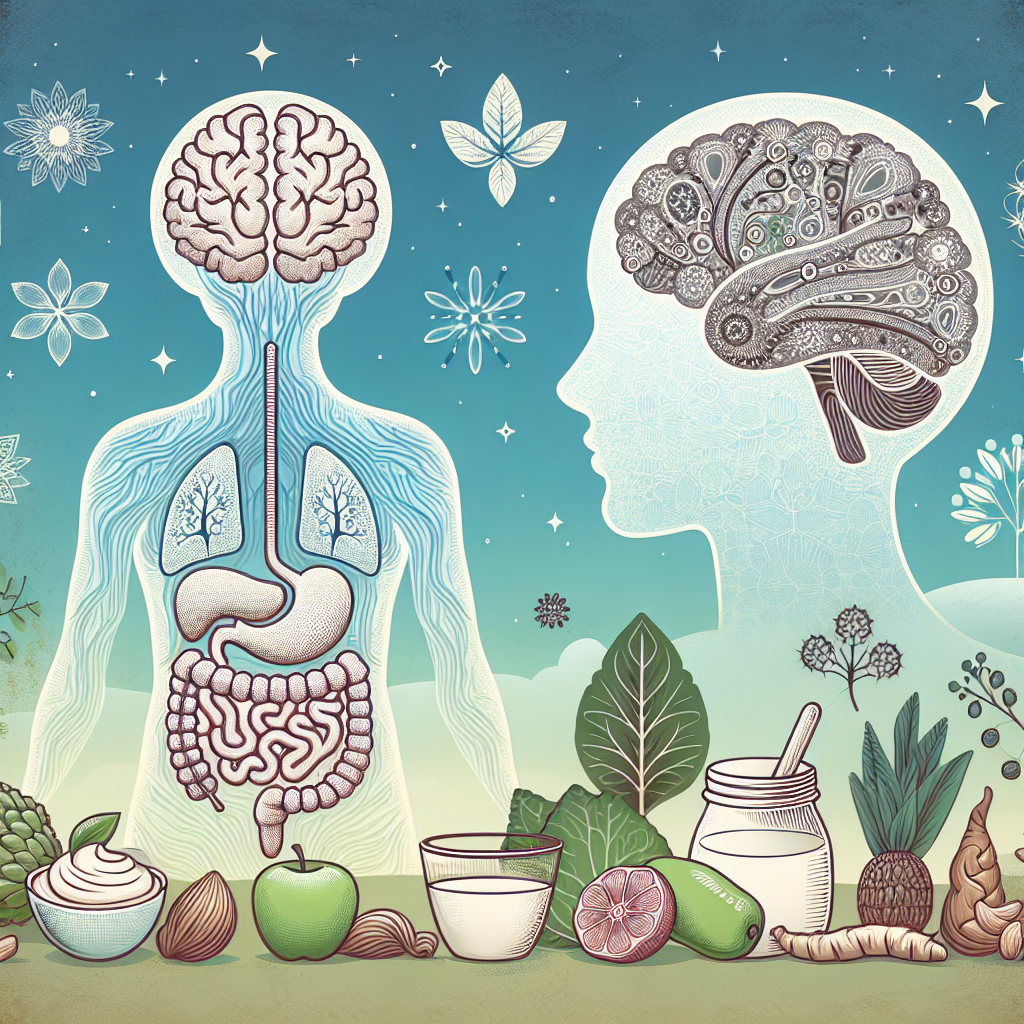
The human gut, often referred to as the “second brain,” has increasingly become a focal point in scientific research due to its profound connection with the brain. Emerging studies reveal that our gut microbiome—a complex ecosystem of microorganisms residing in the digestive tract—plays a pivotal role in regulating neurotransmitters, which are crucial for mental health. This has sparked interest in the gut-neurotransmitter connection as a groundbreaking frontier for personalized mental health care.
Traditionally, mental health care has focused on treating symptoms with pharmaceutical interventions targeting neurotransmitters like serotonin, dopamine, and gamma-aminobutyric acid (GABA). However, this approach often neglects underlying biological processes. The gut-brain axis, a bidirectional communication system between the gut and the brain, is gaining recognition for its potential to offer a more holistic understanding and treatment of mental health disorders.
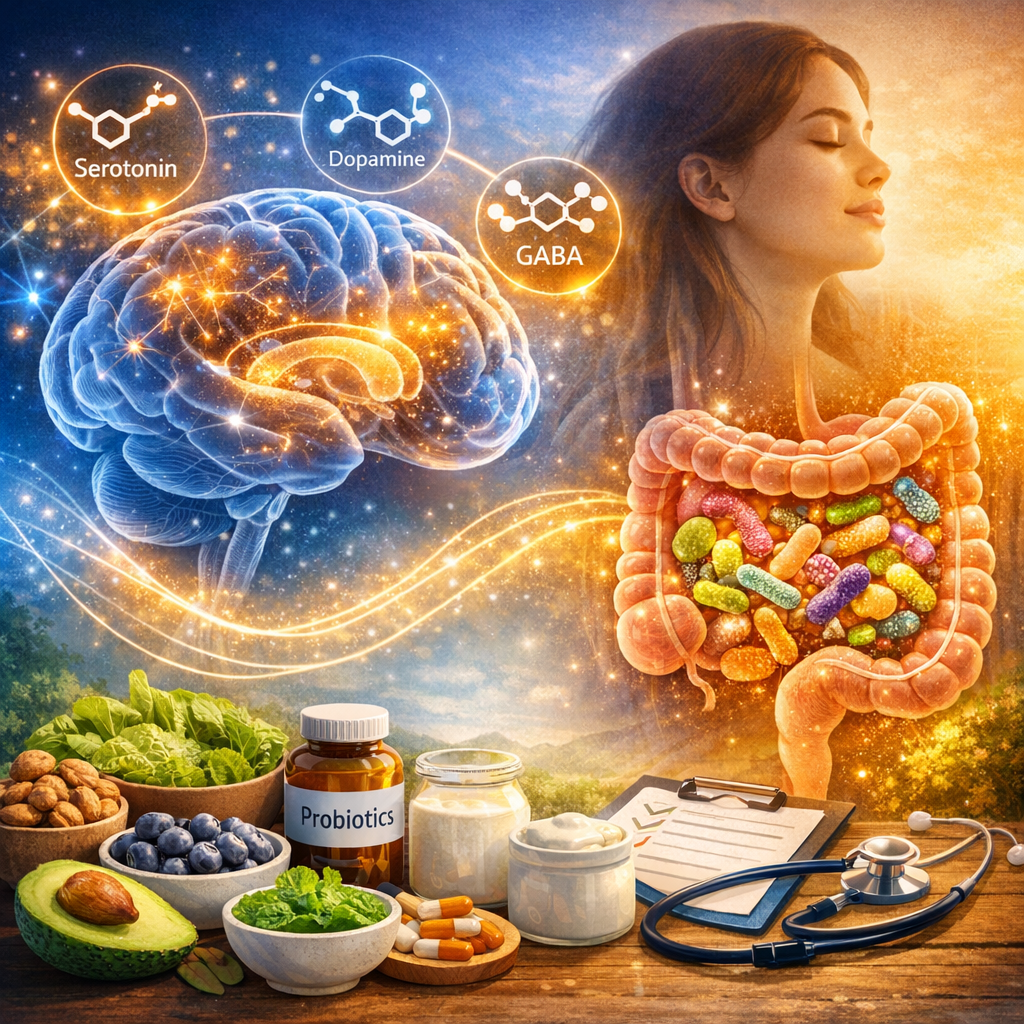
Several neurotransmitters are synthesized or significantly influenced by gut bacteria. For instance, about 90% of the body’s serotonin is produced in the gut. Gut bacteria like Lactobacillus and Bifidobacterium have been shown to enhance the production of GABA, while others are involved in the synthesis and modulation of dopamine. The intricate balance and diversity of these microorganisms are believed to influence neurotransmitter levels, thereby affecting mood, cognition, and overall mental wellbeing.
Exploring the relationship between gut health and mental health opens up the possibility of using personalized nutrition and probiotic treatments as complementary or alternative approaches to traditional mental health therapies. Dietary modifications, herbal supplements, and lifestyle changes aimed at nurturing a healthy gut microbiome have been shown to have positive effects on mental health outcomes, offering a promising avenue for those seeking natural cures and treatments.
As we continue to unravel the complexities of the gut-brain connection, the focus on personalized gut health could shift the paradigm of mental health care. By understanding the unique microbial composition of individuals, health care providers could tailor interventions that support both mental and digestive wellness, leading to more effective and holistic mental health care solutions.
Features
Several professional and medical studies underscore the significance of the gut-neurotransmitter connection and its implications for mental health care. A study published in Nature Microbiology in 2019 highlighted how gut microbiota influences the production of neurotransmitters and their precursors. Researchers found that certain microbial compositions are consistently associated with higher levels of specific neurotransmitters, suggesting a microbiome-linked pathway to mental health.
Another study in the Proceedings of the National Academy of Sciences demonstrated the impact of probiotics on mood and anxiety. Participants who consumed probiotics containing Lactobacillus helveticus and Bifidobacterium longum reported reduced symptoms of depression and anxiety. These findings support the notion that modulating the gut microbiome can have downstream effects on neurotransmitter production and mental health.
Furthermore, research published in Frontiers in Psychology explored the role of dietary interventions in supporting gut health and, by extension, mental health. High-fiber diets rich in fruits, vegetables, and whole grains promote the growth of beneficial gut bacteria that produce short-chain fatty acids, compounds that have been shown to influence brain function and behavior positively.
Personalized mental health care through gastroenterology is also being supported by advancements in technology, such as microbiome sequencing. This allows for detailed analysis of an individual’s gut microbial profile, providing insights into potential imbalances that could be addressed with customized dietary and probiotic strategies.
As the understanding of the gut-brain axis deepens, the potential for integrating gastroenterology with mental health services becomes more tangible. Health practitioners are increasingly considering gut health as a significant factor in psychiatric assessments, enabling a more comprehensive approach to diagnosis and treatment of mental health disorders.
Conclusion
The exploration of the gut-neurotransmitter connection represents a transformative shift towards personalized mental health care. By leveraging our understanding of the gut-brain axis, we can pursue integrative approaches that align dietary, probiotic, and lifestyle interventions with conventional therapies, offering a more nuanced and effective treatment landscape. As research continues to validate the profound impact of gut health on mental wellbeing, the potential for gastroenterology to revolutionize mental health care remains promising. Embracing the interconnected nature of our body’s systems paves the way for therapies that not only treat symptoms but also promote holistic healing.
References
1. [Cryan, J. F., O’Riordan, K. J., Cowan, C. S. M., Sandhu, K. V., Bastiaanssen, T. F. S., Boehme, M., … & Dinan, T. G. (2019). The microbiota-gut-brain axis. *Nature Reviews Gastroenterology & Hepatology*, 16(12), 701-715.](https://www.nature.com/articles/s41575-019-0157-3)
2. [Kelly, J. R., Borre, Y., O’ Brien, C., Patterson, E., El Aidy, S., Deane, J., … & Cryan, J. F. (2016). Transferring the blues: Depression-associated gut microbiota induces neurobehavioural changes in the rat. *Journal of Psychiatric Research*, 82, 109-118.](https://www.sciencedirect.com/science/article/abs/pii/S0022395616000039)
3. [Steenbergen, L., Sellaro, R., van Hemert, S., Bosch, J. A., & Colzato, L. S. (2015). A randomized controlled trial to test the effect of multispecies probiotics on cognitive reactivity to sad mood. *Brain, Behavior, and Immunity*, 48, 258-264.](https://www.sciencedirect.com/science/article/pii/S0889159115001644)
Summary
The connection between the gut microbiome and neurotransmitter production is revolutionizing personalized mental health care. Studies highlight the gut-brain axis’s influence on neurotransmitters like serotonin and dopamine, suggesting novel dietary and probiotic interventions. Integrating this knowledge, personalized treatments through gastroenterology offer holistic approaches to mental health, aligning with traditional therapies. As technology like microbiome sequencing advances, understanding individual gut profiles allows tailored interventions, improving mental wellbeing. This paradigm shift emphasizes the importance of gut health in psychiatric assessments, heralding a new era in treating mental health disorders.