Unlocking the Gut’s Hidden Clock: How Circadian Rhythms Shape Digestive Health and Disease Recovery
Introduction
In recent years, science has unfolded surprising connections between our body’s internal clock—the circadian rhythm—and various aspects of health. Traditionally associated with sleep regulation, circadian rhythms are now being recognized as pivotal players in digestive health and disease recovery. Imagine your gut as an intricate orchestra, finely tuned by body rhythms that dictate not only when you should eat but how effectively your body absorbs and processes nutrients and how it protects itself against pathogens. This understanding is transforming how we approach gut health and offering novel insights into managing and potentially curing digestive diseases.
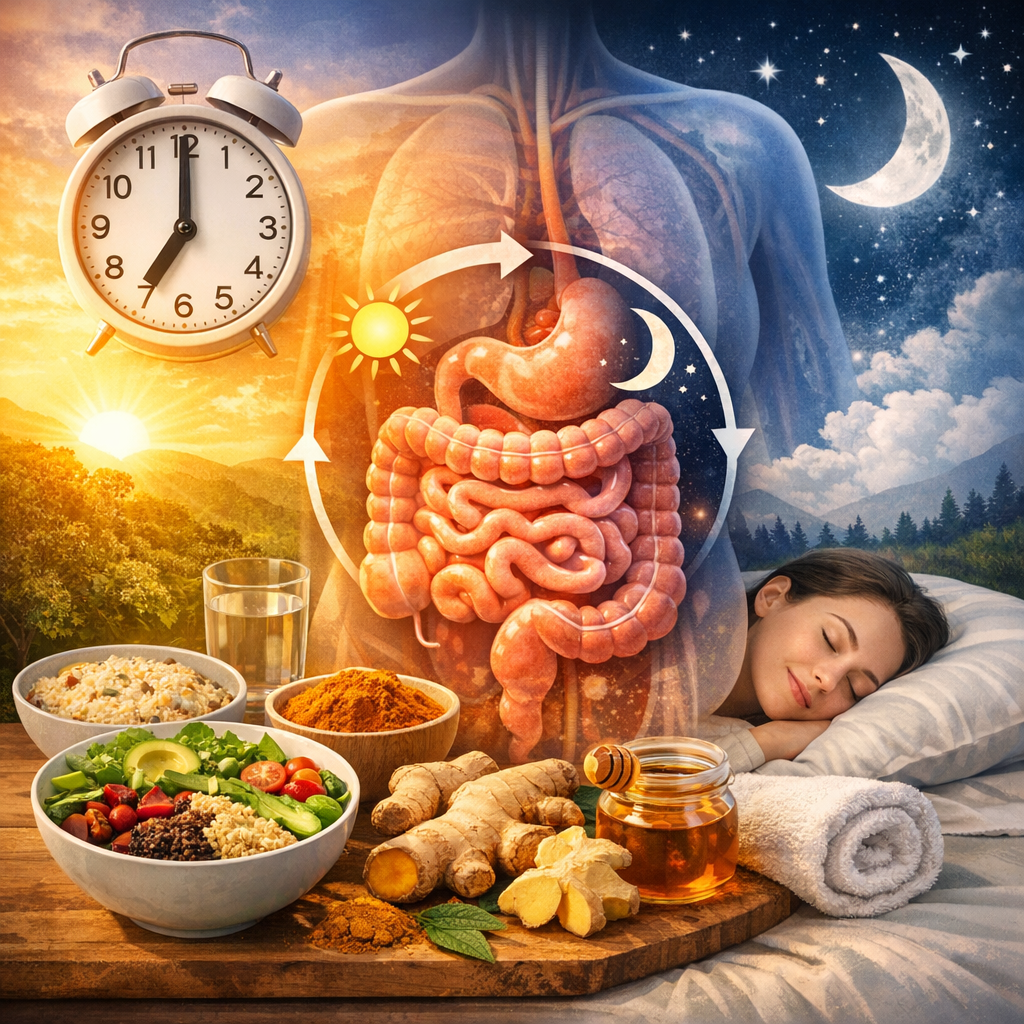
The human circadian rhythm is a roughly 24-hour cycle governed by the natural light-dark cycle of the Earth’s rotation. These internal clocks are present in almost every cell, orchestrating numerous biological processes, including hormone secretion, metabolism, and immune functions. While the central clock in the brain syncs with external cues like light, peripheral clocks scattered across various organs, including the gut, sync to dietary and other behavioral stimuli. This synchronization suggests that our gastrointestinal tract has its own rhythm, influencing digestion, nutrient absorption, and microbial interactions.
The gut’s circadian rhythm is particularly significant because it can dictate when our digestive system is most active, when it is primed to absorb nutrients, and when it is prepared to ward off infections. Disruptions in these cycles, whether due to irregular eating patterns, erratic sleep schedules, or even jet lag, have been linked to various digestive issues—from common problems like bloating and indigestion to more severe conditions like inflammatory bowel disease (IBD) and irritable bowel syndrome (IBS). For instance, studies have shown that night shift workers, who often experience circadian rhythm disturbances, are more susceptible to digestive disorders.
Understanding and harnessing the gut’s circadian clock can lead to innovative treatments and natural interventions for digestive health. Adjustments in meal timing, strategic fasting, and herbal supplementation emerge as potential strategies to align circadian rhythms and optimize gut health. As we continue to explore this fascinating field, the potential for improving digestive wellness through circadian-centric approaches offers promising avenues for those seeking natural and holistic cures.
Features
Recent studies have shed light on how circadian rhythms are integral to maintaining optimal gut health. Research from the University of California, Irvine, emphasizes how peripheral circadian clocks within the gastrointestinal tract regulate key functions such as motility—the rhythmic contractions of the gut that help process food—and the proliferation and health of the gut microbiota. These findings suggest that aligning lifestyle choices with these natural rhythms can enhance digestion and minimize the risk of gastrointestinal diseases.
In another groundbreaking study published in the journal [Science](https://science.sciencemag.org/content/early/2019/11/06/science.aay4401), researchers identified that disruptions in the gut’s circadian rhythm could lead to a breakdown in the epithelial barrier—the gut’s natural defense system that prevents harmful pathogens from entering the bloodstream. This disruption paves the way for a host of digestive disorders, notably inflammation-based diseases like Crohn’s disease and ulcerative colitis. By adhering to consistent daily routines, including regular meal times and adequate sleep, individuals can help maintain the integrity of their gut lining.
Additionally, there’s growing evidence to support the role of specific herbs and natural compounds in modulating circadian rhythms to promote gut health. Herbal remedies such as ginger and peppermint have been traditionally used to soothe gastrointestinal distress. These herbs may also interact with the body’s circadian system to time the release of digestive hormones and enzymes optimally. Turmeric, known for its anti-inflammatory properties, is another herb that might support the synchronization of circadian rhythms with gut health. A study in the journal [Frontiers in Pharmacology](https://www.frontiersin.org/articles/10.3389/fphar.2018.01213/full) highlighted curcumin, the active compound in turmeric, for its potential to mitigate the effects of disrupted rhythms by balancing inflammatory processes in the gut.
Moreover, these findings underscore the importance of behavioral interventions as well. Simple lifestyle adjustments, such as exposure to natural light, reduced screen time before bed, and consistent sleep schedules, are easy yet effective ways to reinforce the entwined relationship between our circadian biology and digestive health.
Conclusion
As our understanding of circadian rhythms deepens, so too does our appreciation for their intricate connection to gut health. By acknowledging and aligning our daily habits with these natural rhythms, we can foster a robust digestive system and reduce vulnerability to diseases. The insights from circadian biology pave the way for new natural treatments and holistic strategies, offering hope to individuals seeking to improve their digestive health without relying solely on pharmaceuticals. As we continue to unlock the gut’s hidden clock, we empower ourselves with the knowledge to harmonize with our body’s natural cycles, leading to better health outcomes and overall well-being.
References
1. [University of California, Irvine Study on Circadian Clocks in the Gut](https://news.uci.edu/2020/09/23/circadian-rhythms-linked-to-gut-health)
2. [Regulation of Circadian Rhythms and Gut Microbiota](https://journals.sagepub.com/doi/abs/10.1177/1073858414559472)
3. [Science Magazine Study on Circadian Disruptions in Gut Health](https://science.sciencemag.org/content/early/2019/11/06/science.aay4401)
4. [Turmeric’s Impact on Circadian Rhythm and Gut Inflammation](https://www.frontiersin.org/articles/10.3389/fphar.2018.01213/full)
Concise Summary
Understanding the link between circadian rhythms and gut health can revolutionize how we manage digestive health. Recent studies highlight that these internal clocks regulate key digestive processes and their disruption can lead to severe conditions like IBD and IBS. Aligning meal timing and using herbs like ginger and turmeric can optimize gut health. Behavioral changes, such as exposure to daylight and consistent routines, further fortify this relationship. These insights offer promising natural treatment avenues, empowering individuals to harmonize with their bodies for improved digestive wellness without relying solely on pharmaceuticals.