Revolutionizing Gut Health: How AI Is Transforming Gastroenterology and Predictive Diagnostics
Introduction:
The human gut is an intricate ecosystem, bustling with trillions of microorganisms that play a crucial role in overall health. From digestion and nutrient absorption to mental health and immune function, the gut’s health is paramount. However, the complexity and variability of gut microbiota present significant challenges in diagnosis and treatment. In recent years, advancements in Artificial Intelligence (AI) have started to reshape the landscape of gastroenterology and predictive diagnostics, offering revolutionary possibilities for improving gut health.
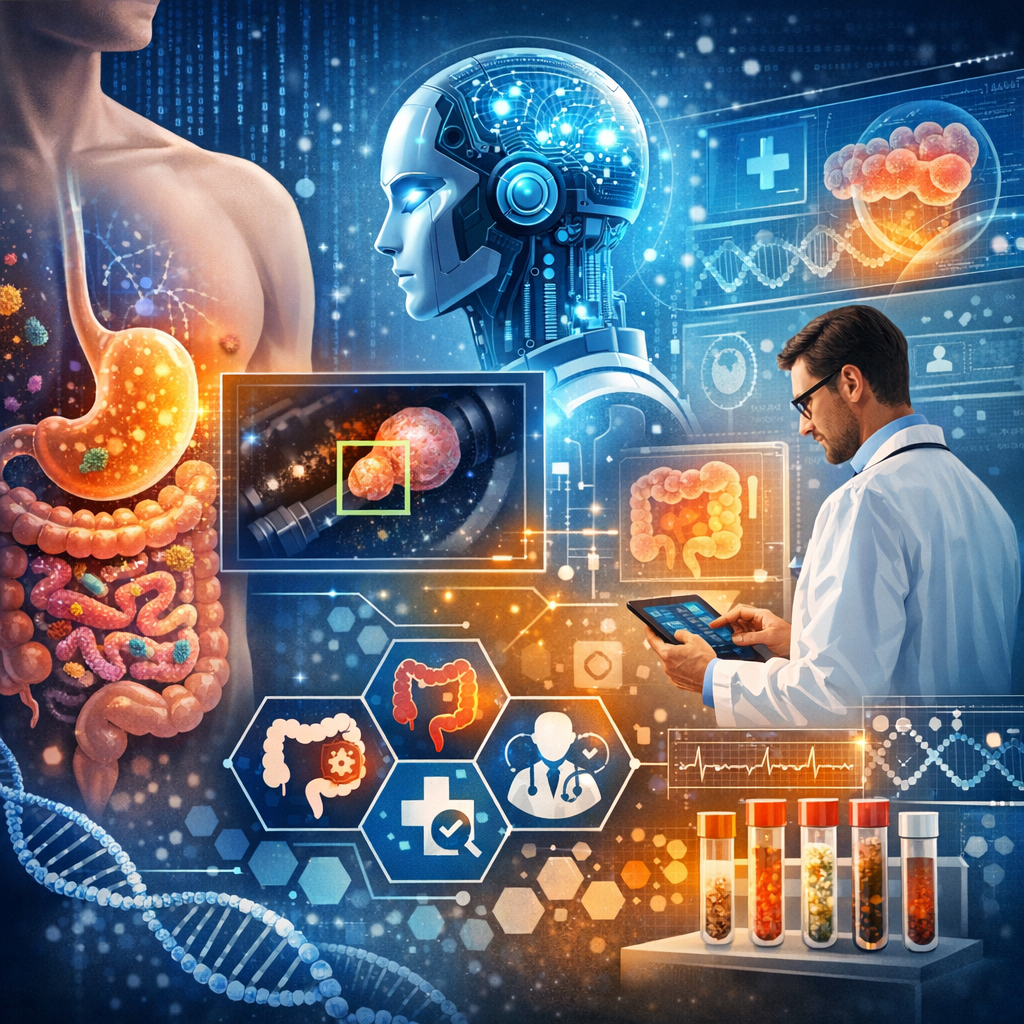
AI’s potential in transforming gut health starts at data collection. With advancements in machine learning, AI can analyze vast datasets from genomic sequences, microbiome studies, and patient histories to identify patterns and correlations that might be missed by the human eye. This capability is particularly beneficial in understanding the diverse bacterial populations and their influence on health conditions like Irritable Bowel Syndrome (IBS), Inflammatory Bowel Disease (IBD), and colorectal cancer. By harnessing AI, researchers can pinpoint specific bacterial strains associated with these conditions, leading to more targeted therapies.
Moreover, AI-driven tools are enhancing the precision of endoscopic procedures. Traditional endoscopy requires highly skilled professionals to interpret visuals, making it vulnerable to human error. AI algorithms integrated with computer vision can improve accuracy in identifying anomalies during these examinations, ensuring early intervention and proactive management of gut-related diseases.
Predictive diagnostics powered by AI are also paving the way for personalized medicine. For example, AI can process lifestyle data, genetic information, and existing medical records to predict individual susceptibility to gut-related ailments, enabling preemptive measures and tailored dietary or probiotic interventions. This personalized approach not only improves patient outcomes but also reduces healthcare costs by preventing diseases before they develop.
As we delve deeper into the potential benefits and ongoing studies in the realm of AI and gastroenterology, we uncover a promising future where gut health is optimized, and diseases are caught at the earliest stages. The blend of technology and medicine is not just theoretical; it’s actively changing the practice of gastroenterology today.
Features:
Several noteworthy studies highlight AI’s transformative impact on gastroenterology. A pivotal study published in Nature Medicine demonstrated the ability of an AI model to analyze gut microbiome compositions and predict the onset of gastrointestinal diseases with impressive accuracy. By sifting through complex microbiome data, the AI identified microbial patterns linked to diseases like colorectal cancer, significantly improving early diagnostic potential.
In another study documented in The Lancet Gastroenterology & Hepatology, AI-assisted colonoscopy was evaluated for its efficacy in polyp detection. The AI system showed a remarkable improvement in identifying polyps, often precursors to colorectal cancer, thereby enhancing the accuracy and early detection capabilities of colonoscopy procedures. This innovative use of AI in endoscopic technology has the potential to save lives by identifying cancers at a stage when they are most treatable.
The Journal of Medical Internet Research featured a study that explored the use of AI in creating predictive models for IBS. By integrating various datasets including patient symptoms, environmental factors, and lifestyle choices, the AI model was able to predict IBS flare-ups with considerable accuracy. This predictive capability empowers patients to make informed lifestyle adjustments, potentially alleviating symptoms and improving quality of life.
These advancements are a testament to the impactful role AI is playing in revolutionizing the approach to gut health. The refinement of AI algorithms continues to enhance their diagnostic precision, offering a glimpse into a future where diseases are managed more efficiently, with a focus on prevention and individualized care.
Conclusion:
In conclusion, the integration of AI in gastroenterology and predictive diagnostics is ushering in a new era for gut health. By unlocking the potential of vast and complex datasets, improving the accuracy of diagnostic procedures, and enabling personalized medicine, AI stands at the forefront of medical innovation. While challenges such as data privacy and ethical considerations remain, the transformative benefits of AI in optimizing gut health are undeniable. As technology progresses, we anticipate further groundbreaking developments that will continue to improve the quality of life for individuals worldwide, making robust gut health achievable for all.
References:
1. Nature Medicine Study: [Nature Article](https://www.nature.com/articles/nm.4512)
2. Lancet Study: [Lancet Article](https://www.thelancet.com/journals/langas/article/PIIS2468-1253(20)30056-1/fulltext)
3. JMIR Study: [JMIR Article](https://www.jmir.org/2020/7/e17192/)
Concise Summary:
The article discusses how AI is modernizing gut health by enhancing diagnostic capabilities and personalizing treatments. AI systems can analyze extensive datasets to discover patterns often overlooked, facilitating targeted treatments for disorders like IBS, IBD, and colorectal cancer. The use of AI in endoscopic procedures improves accuracy and early detection. Moreover, AI enables personalized healthcare by predicting an individual’s susceptibility to gut-related diseases, leading to preventative strategies. Despite challenges like data privacy and ethical issues, AI’s role in gastroenterology promises significant advancements in managing and preventing gut diseases.