Beyond Probiotics: Unveiling the Hidden Role of Bacteriophage Therapy in Gut Microbiome Restoration
Introduction
The human gut microbiome is a complex ecosystem composed of trillions of microorganisms, including bacteria, viruses, fungi, and other microbes, all contributing to our overall health. In recent years, the importance of maintaining a balanced gut microbiome has been recognized as pivotal in managing not just digestive health but also immunity, mental health, and chronic diseases. Traditionally, probiotics have been recommended as a primary strategy for restoring gut balance. These live microorganisms, typically bacteria, are consumed with the expectation of replenishing beneficial flora. However, the efficacy of probiotics can be limited, and not every individual responds to them in the same way.
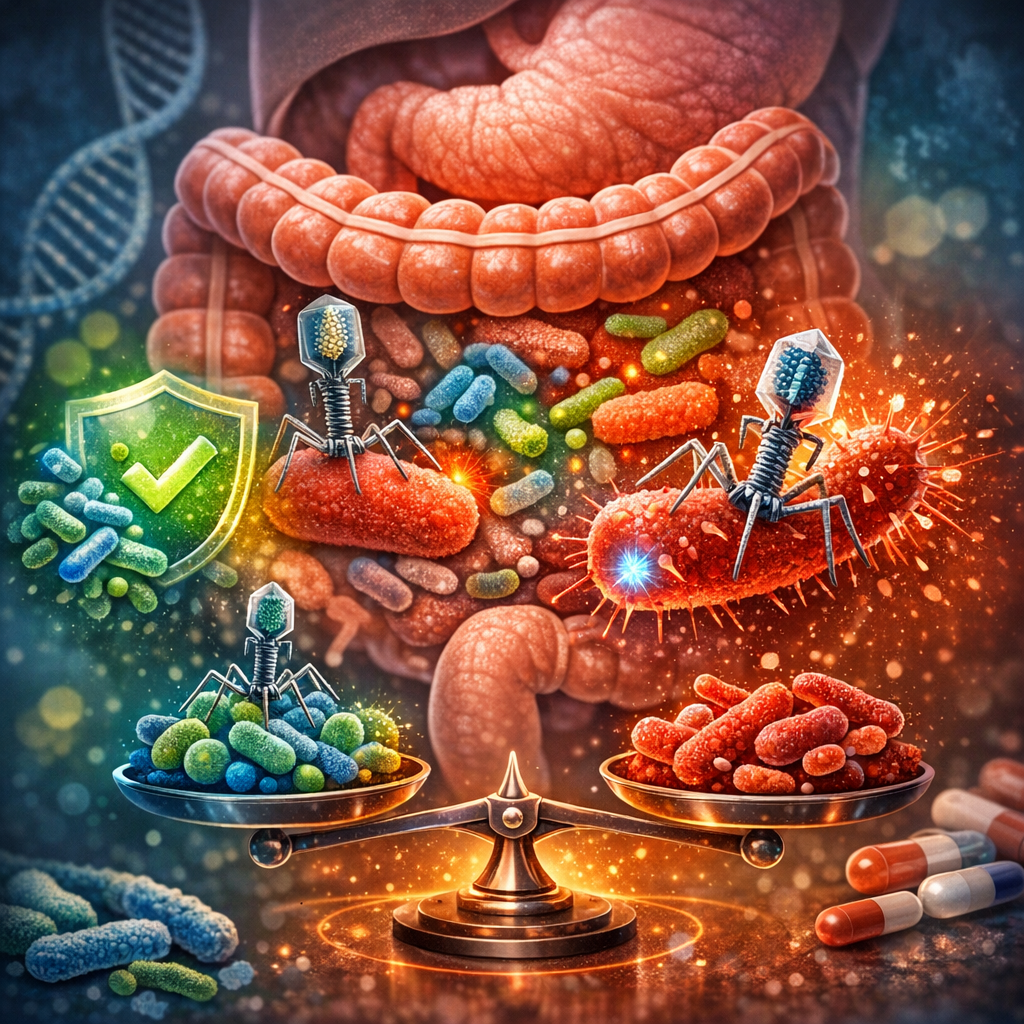
Enter bacteriophage therapy—a less-known yet increasingly promising avenue for gut microbiome restoration. Bacteriophages, or phages, are viruses that specifically target and destroy bacteria. They play a naturally occurring role in regulating bacterial populations and are considered the most abundant organisms on earth. This specificity offers an intriguing approach to selectively target pathogenic bacteria in the gut, potentially offering solutions to antibiotic-resistant infections and imbalances that probiotics might not address.
Unlike antibiotics, which disrupt both harmful and beneficial bacteria, leading to further dysbiosis, phages can be fine-tuned to attack only specific pathogens. This precision ensures the survival and flourishing of essential bacterial strains, thus promoting a healthier microbial balance. Bacteriophage therapy’s potential extends beyond mere suppression of harmful bacteria; it reshapes the microbial landscape, fostering a resilient gut health environment.
As our understanding of the microbiome deepens, so does the opportunity to integrate phage therapy into holistic gut health regimens. This burgeoning field may soon become as well-recognized as probiotics. The focus of the medical community and researchers is beginning to include phages in discussions about long-term gut health strategies, paving the way for their increased use in clinical and health optimization settings.
Features
Scientific exploration into bacteriophage therapy is gaining momentum, with several studies highlighting its potential as a component of gut health strategies. A landmark study published in Nature Reviews Microbiology explores phages’ capacity to influence gut ecosystems, delving into the dynamics of bacterial-phage interactions and their implications for dysbiosis management.
Further research conducted by Bikard and colleagues, as published in Cell, demonstrates how phages can be engineered to specifically target antibiotic-resistant bacteria, offering novel solutions in tackling resistance issues that plague conventional antibiotic use. This tailored approach underscores the ability of phages to not just complement but also amplify the effectiveness of probiotics by targeting specific pathogenic strains without collateral damage to beneficial microbes.
A clinical trial examining phage therapy’s impact on Escherichia coli-induced dysbiosis revealed encouraging outcomes, with participants reporting significant reductions in gastrointestinal symptoms and restored microbiome balance, as detailed in Frontiers in Microbiology. The specificity with which phages can correct microbial imbalances provides a blueprint for future targeted interventions.
Moreover, phage therapy’s inherent adaptability is supported by its natural existence in various environments, including the human body, which harbors a diverse array of phages intrinsically. Their established symbiosis with human microbial flora implies a long-standing evolutionary partnership, which researchers are now beginning to harness therapeutically.
Despite these promising findings, the clinical application of phage therapy is not without its challenges. Professionals in the field are striving to address factors such as phage-host specificity, potential immune responses, and the regulatory landscapes governing phage therapeutic products. Ongoing research and technological advancements such as synthetic biology and CRISPR-Cas systems are paving the way for optimized and safer bacteriophage therapies.
Conclusion
Bacteriophage therapy emerges as a powerful ally in the quest for gut microbiome restoration, holding particular promise in areas where probiotics and antibiotics fall short. Its targeted precision, ability to combat resistant strains, and natural integration into human microbial ecosystems make it a compelling complement or alternative to existing therapies. As research continues to evolve, the practical applications of phages in clinical settings may very well revolutionize our approach to gut health. Embracing phage therapy within holistic treatments could catalyze new advancements in medical science, providing tools not only for restoring balance but for advancing our understanding of microbial harmony. As with all emerging therapies, critical evaluation and evidence-based studies will be essential to underpin their role and integration into everyday health practices.
Concise Summary:
Bacteriophage therapy offers a promising approach to gut microbiome restoration. Unlike probiotics, phages specifically target harmful bacteria, addressing antibiotic resistance and dysbiosis effectively. Recent studies underscore their precision in promoting microbial balance without harming beneficial bacteria. Ongoing research into engineered phages, such as targeting antibiotic-resistant strains, suggests that phage therapy could complement or surpass traditional probiotics. While challenges like phage-host specificity and regulatory hurdles exist, advancements in synthetic biology and CRISPR are aiding their development. As understanding deepens, phage therapy could revolutionize gut health strategies, necessitating thorough evaluation and integration.